

Joseph Woll Explains Time and Place when VH Might Save RVH Fail
With Joseph Woll
Maple Leafs goaltender uses "old school" technique as he walks us through save vs. Vladimir Tarasenko

The #1 goalie vision & cognitive training tool trusted by over 50 NHL & AHL goalies.
“Vizual Edge has added a quality element to my preparation as a goaltender. I use the game day drills every game before heading to the rink. It’s a combination of recognition, reaction and focus that activates my brain and eyes to feel ready for what’s to come.” — Jordan Binnington
Save 10% on Vizual Edge monthly and annual plans using code INGOAL at check out! (InGoal Members receive a 20% discount – why not join today? )
Joseph Woll recently signed a three-year, $11-million extension with the Maple Leafs, which when added to the remaining season on his existing bargain contract for just $766,667 means the 29-year-old will be in Toronto for four more seasons.
Which means we have plenty of time to roll out more of his often-brilliant video breakdown sessions in a Maple Leafs jersey, but we didn’t want to waste any more getting back to Woll for another Pro Reads entry from our extended sit-down last season.
THE SCENARIO
We’ll continue with Woll again facing an Ottawa Senators power play, and the puck out at the hash marks near the boards to the right of the Maple Leafs goalie:
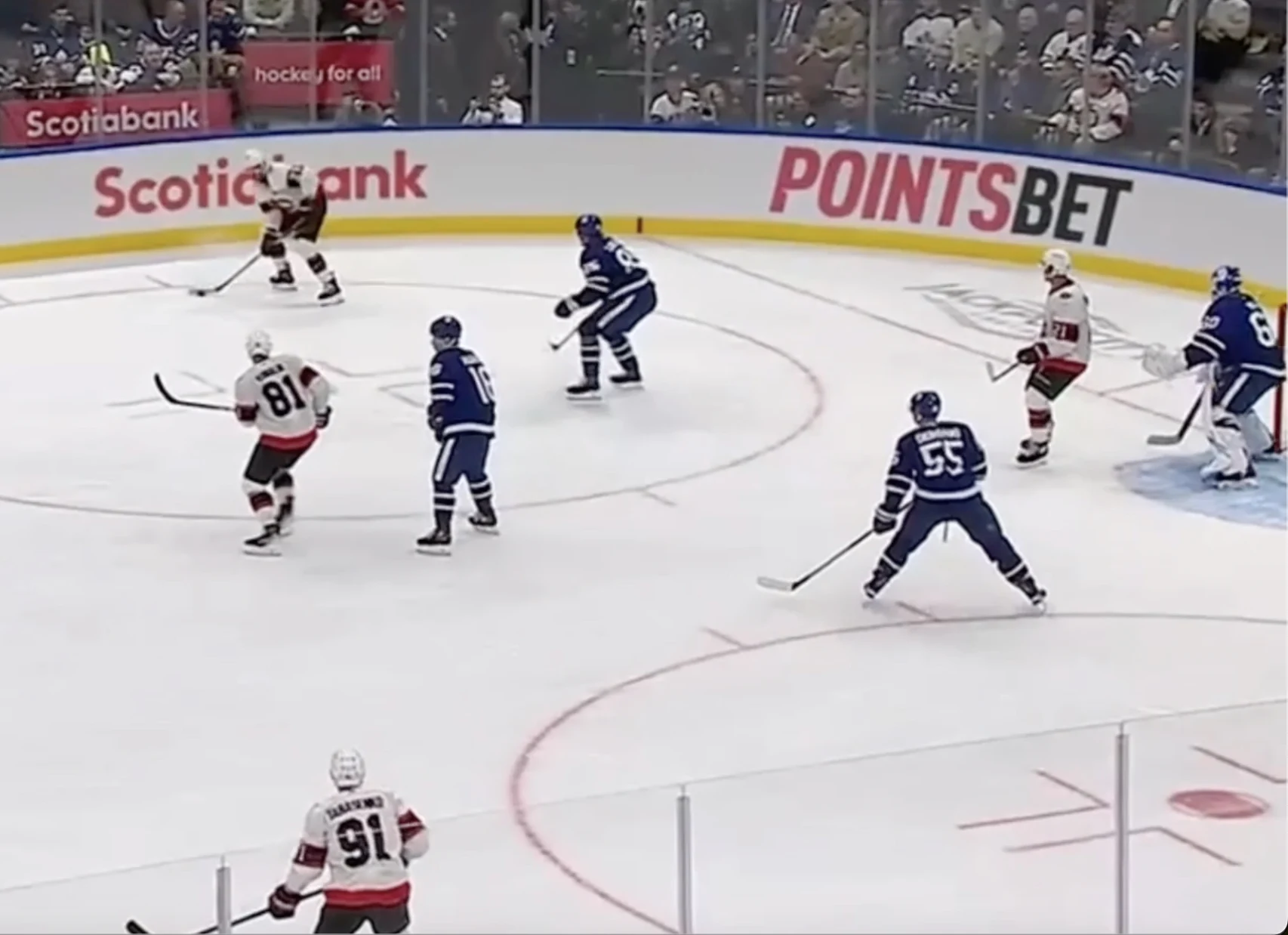
What options does the puck carrier have here? What ones would be the most worrisome to you as the goalie? Given that information, what do you make of Woll’s positioning here?
At the risk of giving too much away in terms of answering those questions, let’s take a quick look at where the puck ends up and the next threat in the sequence:
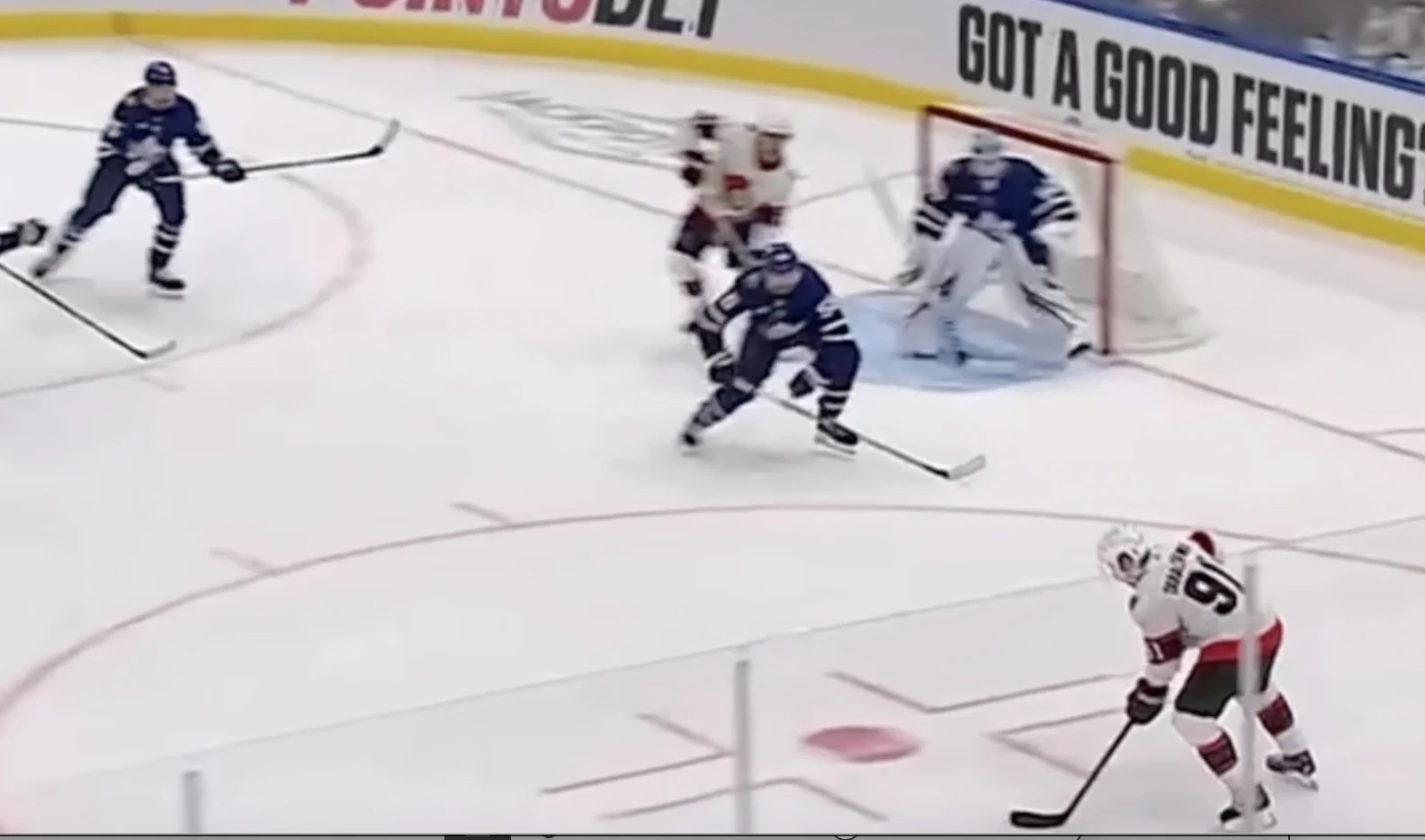
With the puck making its way to Vladimir Tarasenko (now a two-time Stanley Cup champion after being traded to the Florida Panthers in the months after this game), ask yourselves the same questions? Who is the most dangerous threat at this point? Are you thinking pass or shot? What factors, besides Tarasenko’s body language, affect your read as a goalie here?
THE SAVE
Ask yourself the same questions as you watch the entire sequence play out:
At what point did you determine Tarasenko was shooting? How early? And why?
What did you think of Woll’s decision to use a more old-school VH at that point?
What benefits of a VH instead of an RVH can you see here?
What did you like — or dislike — about how Woll executed it here?
THE PRO READ
Now let’s check in with Woll to get his answers to all those same questions:
Members see the full video with Joseph Woll breaking down the play in detail.
Still ahead in this article:
Woll's first answer lands immediately — and the word he uses to describe how he makes that VH-or-RVH call in the moment reframes what Pro Reads are actually for.
15+ years of goaltending film & coaching
Already a member? Log in
Think you're seeing this in error? Contact support
Keep reading
15+ years of goaltending film & coaching
Already a member? Log in
Think you're seeing this in error? Contact support
Comments
Comments are for InGoal members.