

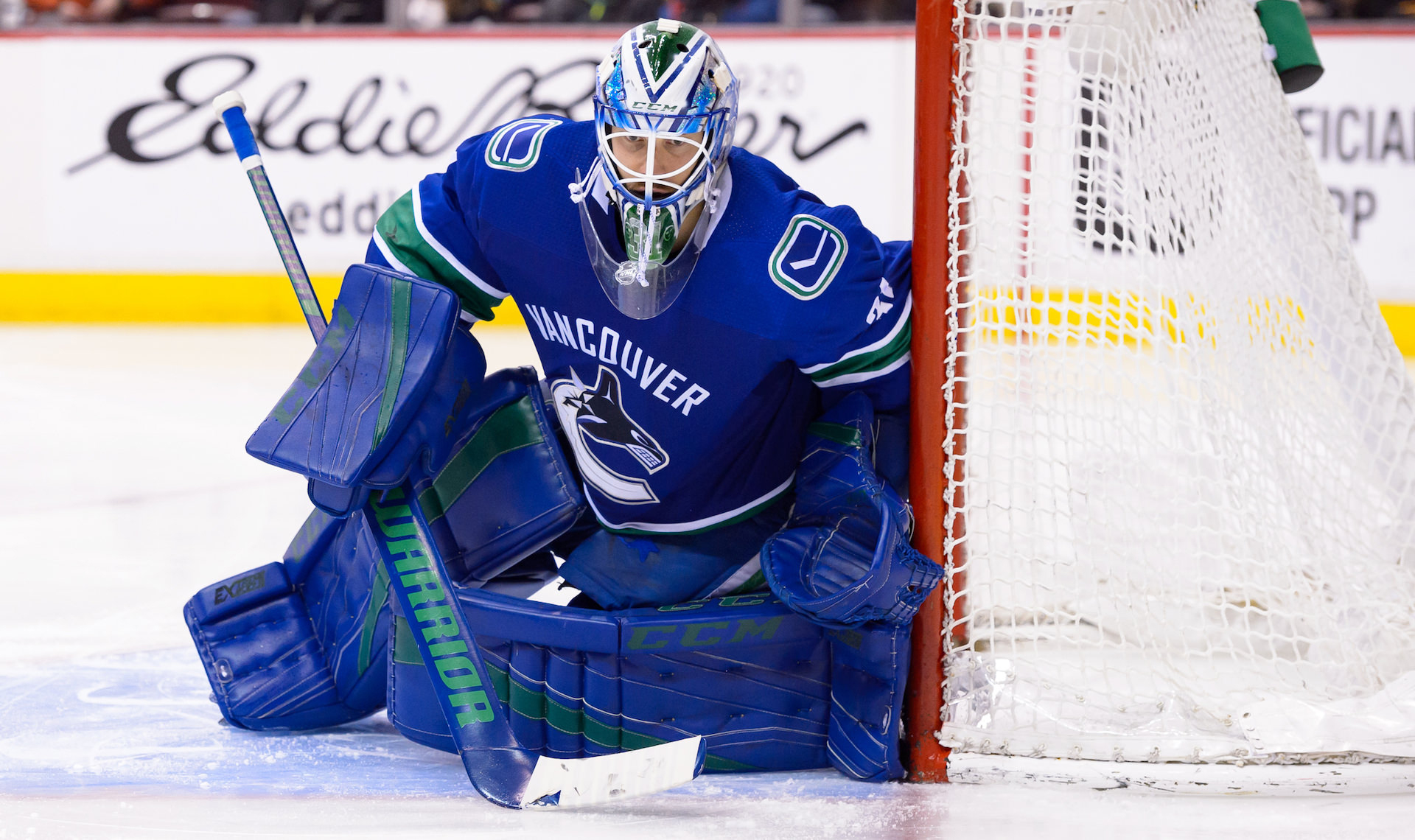
How Sweden Invented the RVH
Linda Blomquist makes one thing perfectly clear when it comes to inventing what is now know commonly as the reverse-VH, or RVH: the real credit belongs to her goaltenders.
“It started with the goalies as always,” she said, “Everything comes from the goalies.”
The goalies may have inspired it, but Blomquist was the one introduced as the inventor of what the Swede’s call SMS at the Network Goaltending Symposium two summers ago in Nashville, Tennessee. The 36-year-old stressed that any credit should be shared with fellow goaltending coach Daniel Henriksson when she sat down with InGoal Magazine at the event to explain how they developed the technique way back in 2010.
“We had a goalie at the men’s team who used it on wraparounds and started thinking, well if I use it on the wraparound on this post why can’t I use on the first post instead of the one-pad, or the VH [Vertical-Horiztonal],” said Blomquist, who is in her 10th season as a goaltending coach with Lulea Hockey in northern Sweden. “So, we started working on it and sort of figured out this was something really cool because none of us liked the VH. We liked the edge but we had trouble staying by the post, we had trouble with the rebounds, we had trouble with getting off it, so we started working on this.”
Blomquist, who spent four years as a part-time goalie coach while also working as a teacher before switching to full-time goalie coaching the past five seasons, used the new technique for her final presentation for the national goalie coaching accreditation program run by the Swedish Ice Hockey Association. It wasn’t well received at first.
Become a member to read the full article, which includes two full-resolution videos on-ice of Linda demonstrating the technique and discussing its origins and challenges with Kevin Woodley.
Still ahead in this article:
The three concerns Blomquist and Henriksson had to solve before the technique could survive — passive goalies, the gap over the shoulder, immobility off the post — and exactly how they worked through each one comes next.
15+ years of goaltending film & coaching
Already a member? Log in
Think you're seeing this in error? Contact support
Keep reading
15+ years of goaltending film & coaching
Already a member? Log in
Think you're seeing this in error? Contact support