

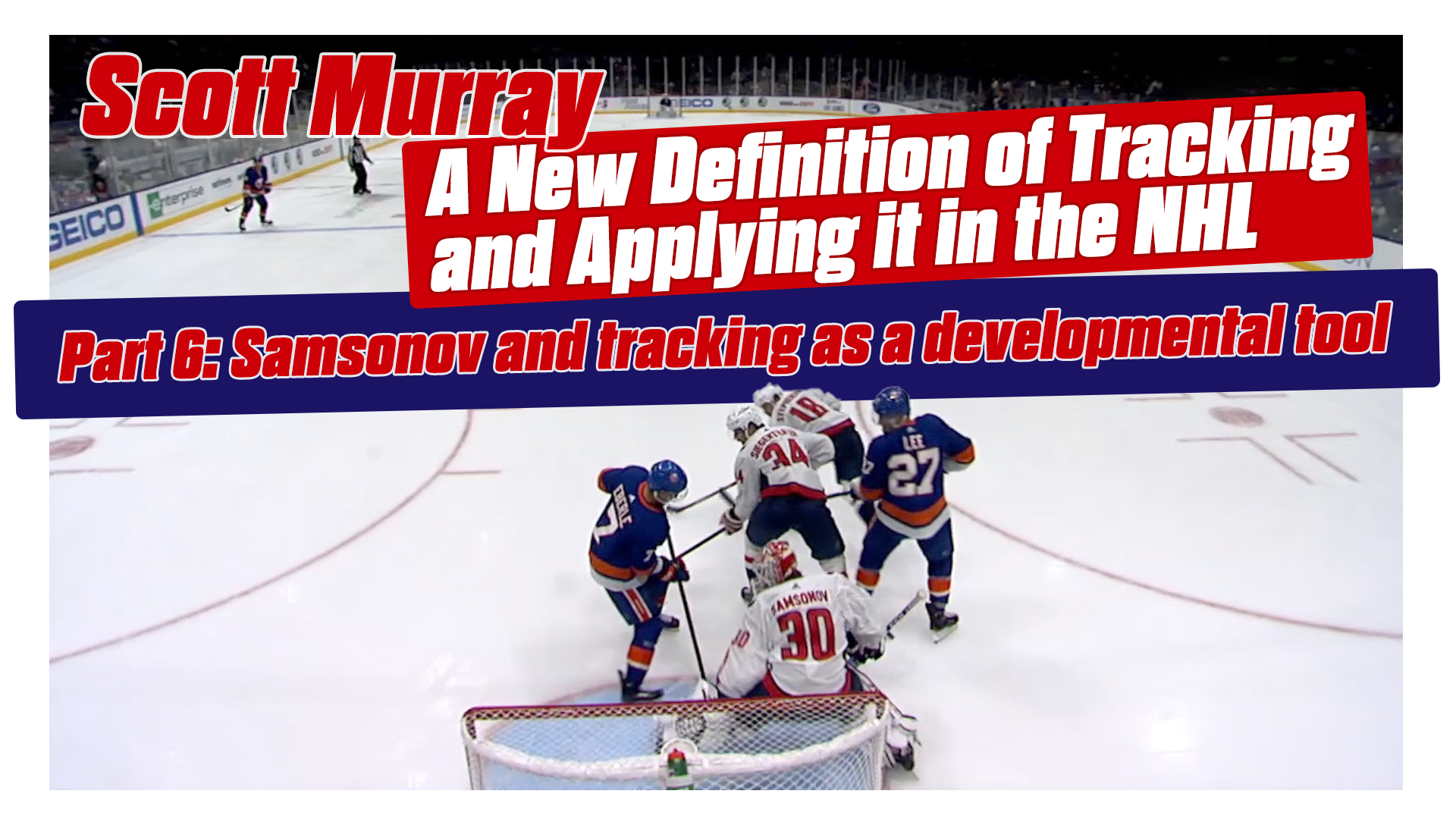
Scott Murray on new definition of tracking and applying it in the NHL
Part 6 of 7 in our series on Head Trajectory and modern tracking.
← Previous: ISO-track drills eliminate the shot, and the movement delays
We started this six-part series on modern tracking with Washington Capitals goaltending coach Scott Murray examining how he used situational specifics to implement some of the new movement mechanics with Braden Holtby leading into their Stanley Cup run.
Then in Part 2, Murray shared the foundational approach to tracking he used with Pheonix Copley before taking a closer look at a series of drills he used with all four Capitals goalies in Parts 3-5. Today, Murray returns to another specific application of these new concepts, this time using a developmental approach with highly touted first round pick Ilya Samsonov.
Murray uses before-and-after videos to highlight the changes that helped Samsonov go from struggling to begin his first season in North America to excelling in the second half. And while some of that was undoubtedly the result of Samsonov adjusting to a new culture and language, Murray and Alex Westlund, the Capitals excellent development and AHL goalie coach, used tracking as part of the on-ice changes, including a January visit from consultant Lyle Mast, who also worked with Murray and Holtby in Kelowna the summer before the Cup win.
“The way he played and the difference in the game and where he played in his net and trying to stay within an area that allowed him to maximize coverage and get into space had to change,” Murray said, “And we used tracking as that developmental tool to help him transition, to help him calm his game down so that he could maximize the stuff that he brought to the table.”
In Part 6, Murray shares some video of that transformation and how it manifested itself in specific scenarios, including broken plays, east-west, recovery mechanics and post play:
Thank you for visiting! Previews of many articles are available; Full InGoal Premium content is only available to our Members – join today! Already a member? Login here
Still ahead in this article:
The before-and-after breakdown of what Murray changed in Samsonov's tracking — and the specific moment in the season where it clicked — is in the next paragraph.
15+ years of goaltending film & coaching
Already a member? Log in
Think you're seeing this in error? Contact support
Keep reading
15+ years of goaltending film & coaching
Already a member? Log in
Think you're seeing this in error? Contact support