
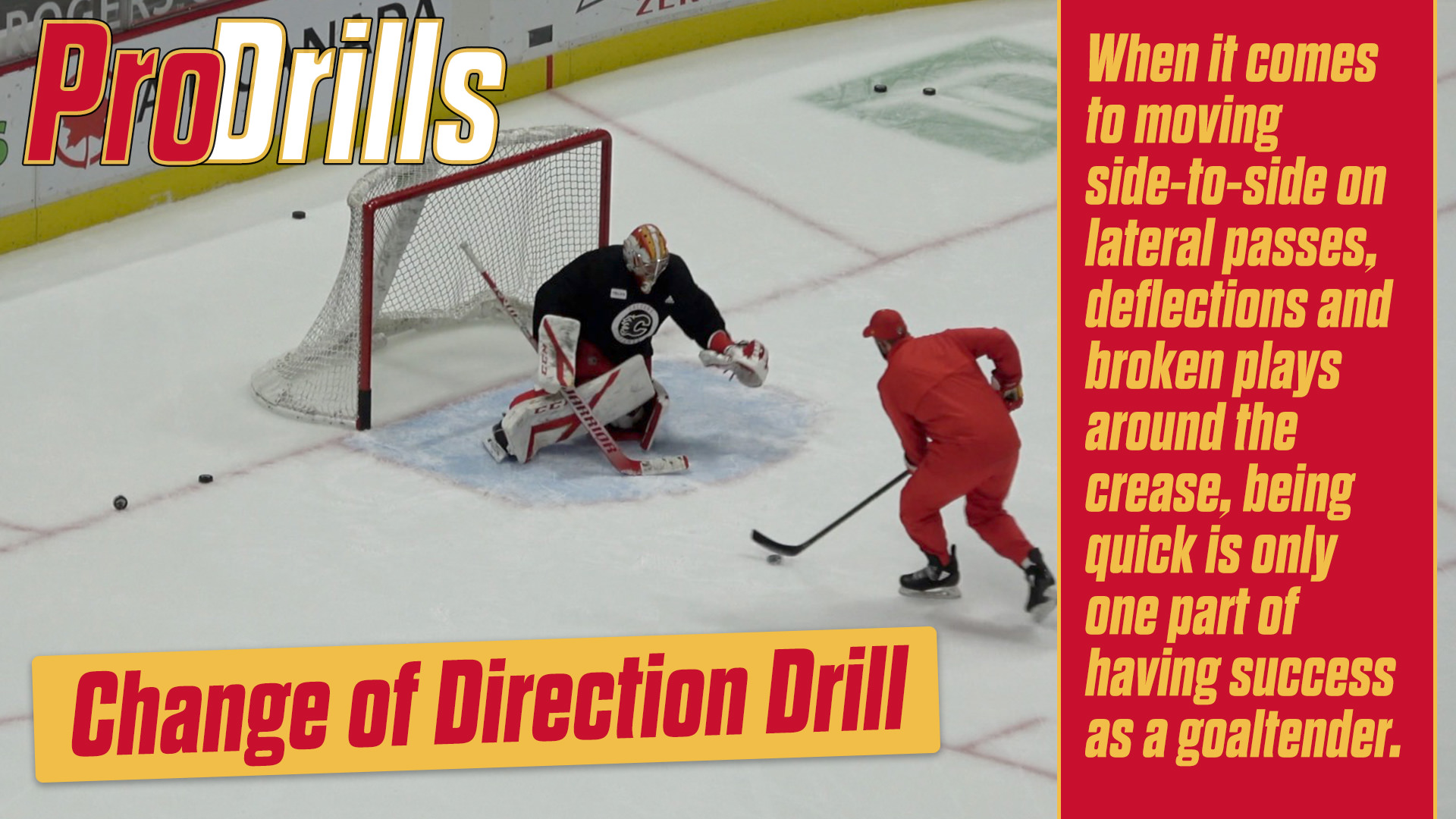
Change of Direction Drill
When it comes to moving side-to-side on lateral passes, deflections and broken plays around the crease, being quick is only one part of having success as a goaltender.
As Calgary Flames goaltending coach Jason LaBarbera explains while walking through a change-of-direction drill with former Flames goalie David Rittich from earlier this season, the ability to go from side to side under control, without opening up holes unnecessarily or chasing plays outside the framework of your net, can be just as important as moving fast.
“A lot of times on plays in tight guys want to reach and open up,” LaBarbera said. “It’s an edge-work rotational drill, working on change of direction on plays in tight and broken plays around the net, and then keeping tight around the crease, not reaching and opening holes. It’s about staying down and on top of the puck on those plays in tight while being able to move.”
This simple drill, captured in mid-February, can help with that. Here’s a quick sample:
Still ahead in this article:
The exact starting position LaBarbera sets Rittich in — and the specific trigger he uses to launch the drill before a word is spoken — is in the next paragraph.
15+ years of goaltending film & coaching
Already a member? Log in
Think you're seeing this in error? Contact support
Keep reading
15+ years of goaltending film & coaching
Already a member? Log in
Think you're seeing this in error? Contact support