

James Reimer Pro Reads: Defensive breakdown leads to difficult desperation save
With James Reimer
Reimer notes "I can tell you what I did wrong" - but can YOU tell?

The #1 goalie vision & cognitive training tool trusted by over 50 NHL & AHL goalies.
“Vizual Edge has added a quality element to my preparation as a goaltender. I use the game day drills every game before heading to the rink. It’s a combination of recognition, reaction and focus that activates my brain and eyes to feel ready for what’s to come.” — Jordan Binnington
Save 10% on Vizual Edge monthly and annual plans using code INGOAL at check out! (InGoal Members receive a 20% discount – why not join today? )
The best part of breaking down this save sequence with current Carolina Hurricanes goalie James Reimer was his first reaction after watching it on video.
“I can tell you what I did wrong,” Reimer said with a chuckle.
It’s why almost all NHL goalies will tell you their best saves are definitely NOT the ones that make the nightly highlight reels or top-10 lists. Those are most often desperation stops predicated by a mistake that made it necessary, and that’s exactly the case on this lunging stop against Ottawa Senators defenseman Thomas Chabot in tight at the end of a rush.
Despite that, there are valuable lessons to be learned in watching Reimer, who was still playing for the Florida Panthers at the time, break down his mistake(s) in this exclusive video review session. In fact, identifying where the error occurred is part of the learning experience.
The Sequence
This starts as a 2-on-5 rush for the Senators, with all five Florida players back in their own zone well before Chabot. The ensuing scoring chance is not only a good chance to break down how Reimer handled this play, but also a pretty good indication of the type of defensive play that submarined the statistics of both him and Roberto Luongo two seasons ago, and left Sergei Bobrovsky with one of the NHL’s lowest expected save percentages this past season.
This is how things looked at the puck was passed wide across the blue line:
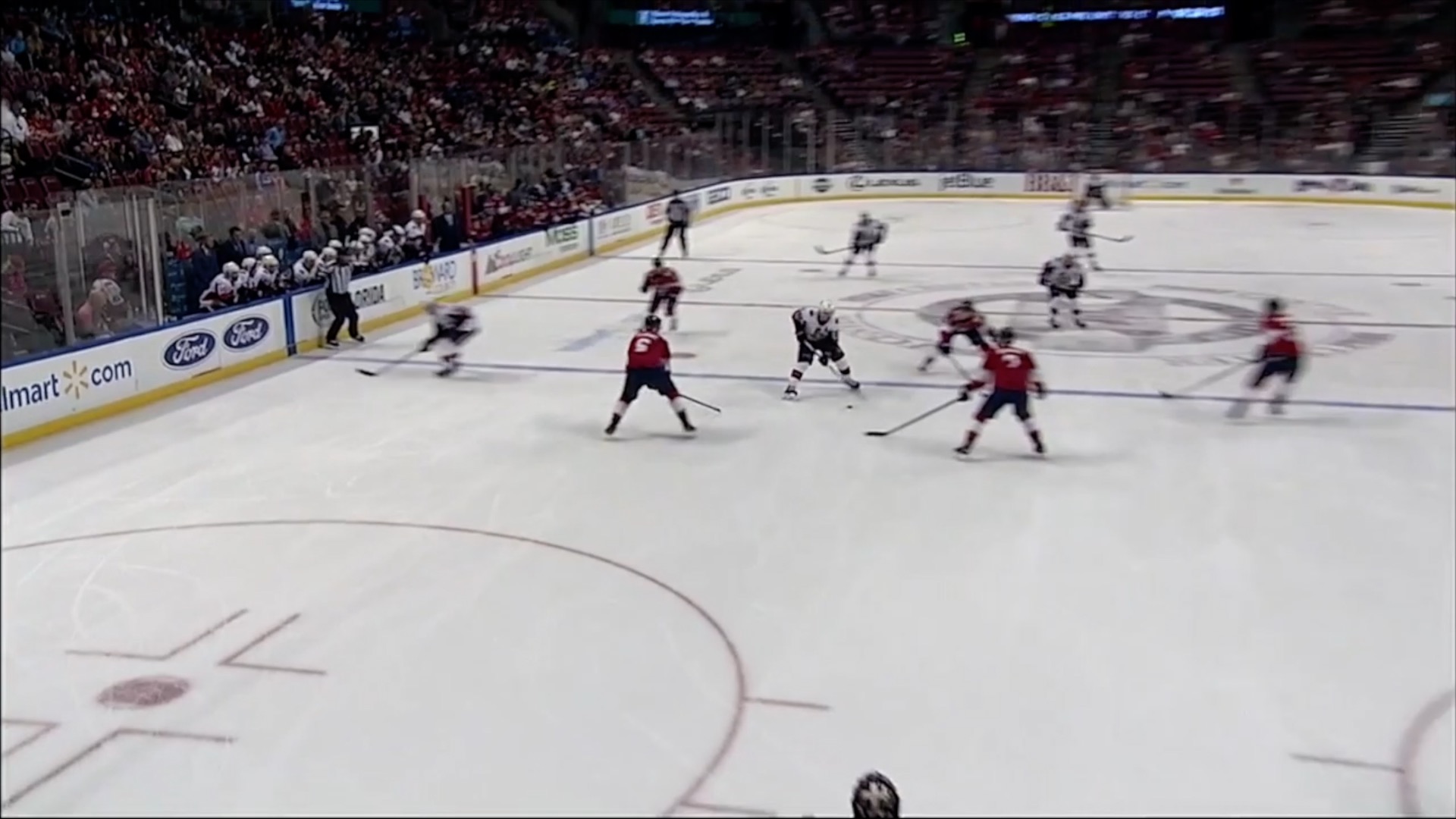
And this is how things looked just three seconds later:

As fast as things broke down, it’s the second clip that we’ll dig into a bit more before watching the entire save sequence at full speed. You already know from the introduction that the puck ends up on the stick of Chabot as the trailer cutting to the net on the backside, but what you don’t know yet is how it gets there or what “mistake” Reimer makes in between.
The Save
As you’ll see in the save video below, the puck moves quickly from the wall to the player cutting through the middle, and down low to Matt Duchene below the left face-off circle. Reimer reacts by dropping into a reverse-VH on his post as the puck is sent down to Duchene, who as you’ve probably guessed by now sends it across to a wide-open Chabot on the far side.
Take a look at the entire save sequence and try to pinpoint the mistake Reimer identifies:
Watching it at full speed, do you think the mistake is using reverse-VH in that instance?
The Pro-Read
Now that we’ve seen the save, let’s listen in on Reimer’s reads, starting with the original rush chance, and finishing with the play down to Duchene and then across.
See if the mistake he identifies matches your read:
Still ahead in this article:
Reimer names the bigger mistake — and it isn't going down early into the reverse-VH, it's what he failed to do at the goal line just before that, which left him lunging instead of pushing across.
15+ years of goaltending film & coaching
Already a member? Log in
Think you're seeing this in error? Contact support
Keep reading
15+ years of goaltending film & coaching
Already a member? Log in
Think you're seeing this in error? Contact support
Comments
Comments are for InGoal members.