
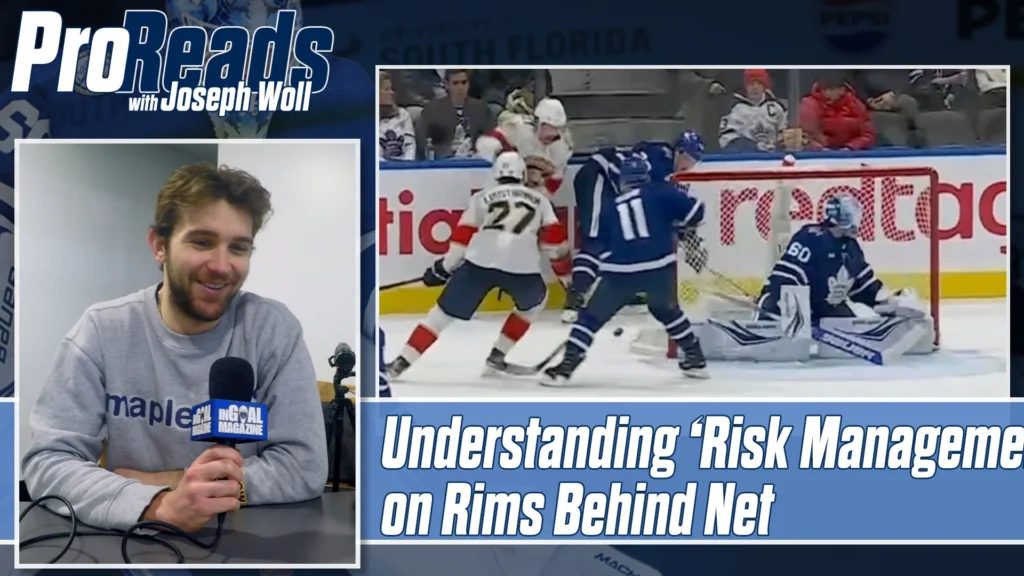
Joseph Woll ProRead 12
With Joseph Woll
Understanding ‘Risk Management’ on Rims Behind Net

The #1 goalie vision & cognitive training tool trusted by over 50 NHL & AHL goalies.
“Vizual Edge has added a quality element to my preparation as a goaltender. I use the game day drills every game before heading to the rink. It’s a combination of recognition, reaction and focus that activates my brain and eyes to feel ready for what’s to come.” — Jordan Binnington
Save 10% on Vizual Edge monthly and annual plans using code INGOAL at check out! (InGoal Members receive a 20% discount – why not join today? )
Joseph Woll may be battling early season injury, but always brilliant in these video breakdown sessions, and we didn’t want to waste any more time getting back to the Toronto Maple Leafs standout for another Pro Reads entry from our extended in-season sit-down.
THE SCENARIO
Woll is facing a behind-the-net play against the Stanley Cup Champion Florida Panthers:

As this puck gets dumped behind the net from the point, what do you make of Woll’s decision to default into what he calls a “Split,” but others might refer to as a Double Seal or Reverse Track? Even if a lot of goalies may not be able to do this, why do you think he does?

As Woll shifts to his left post, what do you notice about his Reverse technique? Maybe think back to one of his recent Pro Reads where he talked about how he likes to enter and use his posts with the toe box – can you see a difference here? Can you think of why he might choose to use skate-on-post in this situation?
Also, where are the primary threats? Is the puck carrier the most dangerous option now?
How could the answer to that last question affect the one prior to it?
THE SAVE
Watch this sequence play out in real time and on the replays and ask the same questions?
Can you see why he might have defaulted down right away? Can you think of a reason he might have chosen skate-on-post instead of toe box for his Reverse entry on this particular play?
THE PRO READ
Now let’s check in with Woll to get his answers to all those questions.
Members see the full video with Joseph Woll breaking down the play in detail.
Still ahead in this article:
Woll's first answer goes straight to why he drops down when most goalies wouldn't — and the reasoning behind that default is in the next paragraph.
15+ years of goaltending film & coaching
Already a member? Log in
Think you're seeing this in error? Contact support
Keep reading
15+ years of goaltending film & coaching
Already a member? Log in
Think you're seeing this in error? Contact support
Comments
Comments are for InGoal members.