
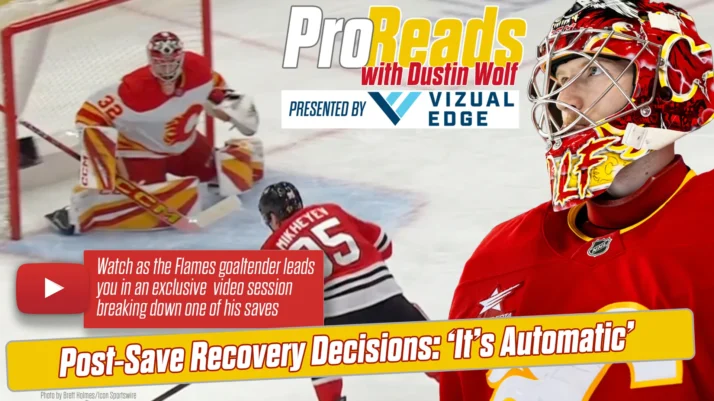
Dustin Wolf ProRead 8
With Dustin Wolf
Post-Save Recovery Decisions: ‘It’s Automatic’

The #1 goalie vision & cognitive training tool trusted by over 50 NHL & AHL goalies.
“Vizual Edge has added a quality element to my preparation as a goaltender. I use the game day drills every game before heading to the rink. It’s a combination of recognition, reaction and focus that activates my brain and eyes to feel ready for what’s to come.” — Jordan Binnington
Save 10% on Vizual Edge monthly and annual plans using code INGOAL at check out! (InGoal Members receive a 20% discount – why not join today? )
Dustin Wolf is coming off an impressive first full season in the NHL, earning a finalist nod for Rookie of the Year, and keeping a Calgary Flames team that was supposed to be rebuilding in the playoff race until the final days of the regular season.
Wolf was kind enough to sit down with InGoal Magazine again as he prepares for his second full NHL season, spending close to an hour breaking down film for his second Pro Reads session. This is the third installment from that extended video review.
THE SEQUENCE
This sequence against the Chicago Blackhawks starts with a pass out of the corner and continues with a breakdown of both his movement patterns and rebound recovery decisions. We’ll start with that play out of the corner:
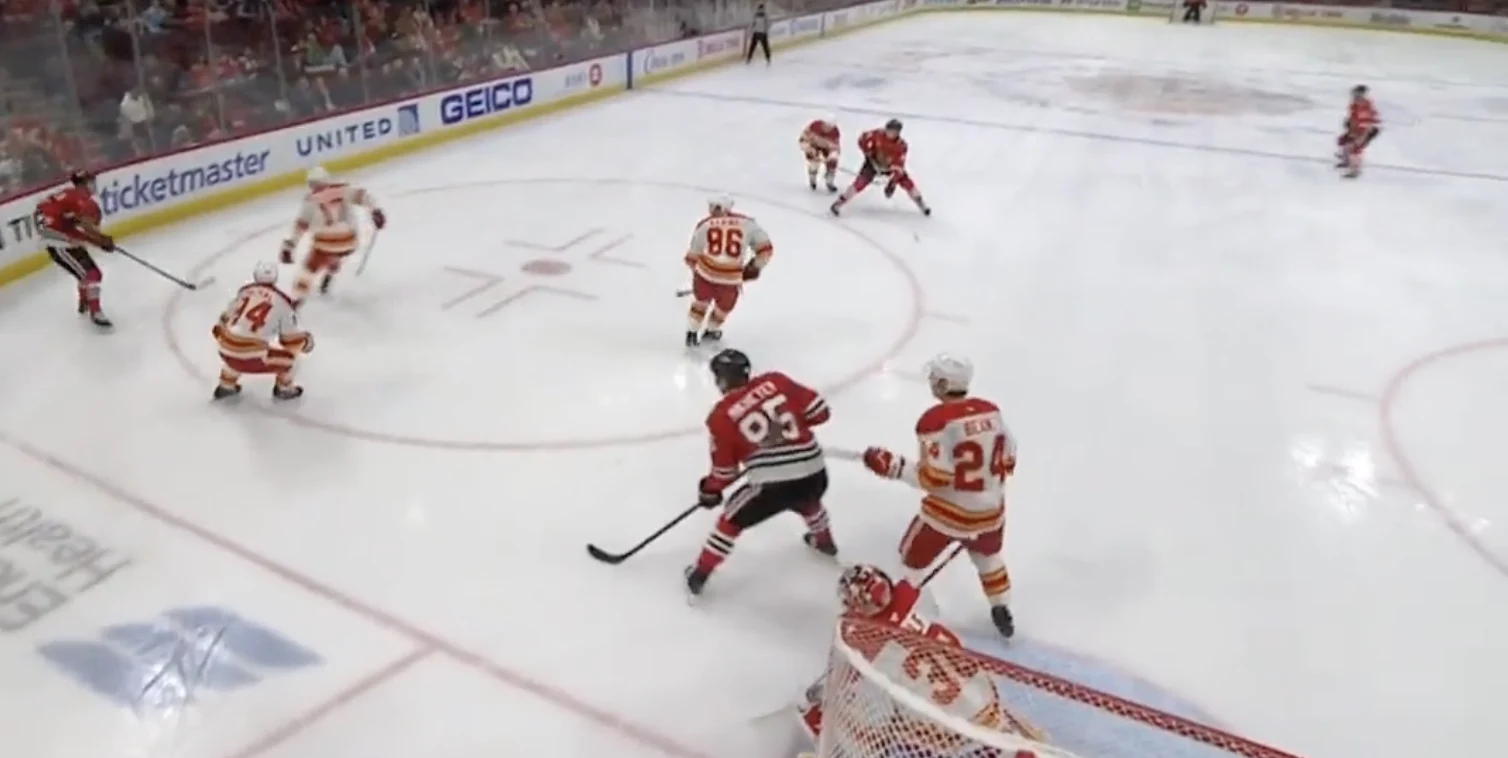
Wolf was down in Reverse just prior to this, but looking at the freeze frame above can you see why he makes the decision to regain his edges and get back up?
Keeping in mind this is 5-on-5, what are the primary threats? What are your priorities in assessing them and how would they affect movement.
Without intending to give too many of the above answers away, look at this second freeze frame, which comes just after the shot, with a rebound in the middle:
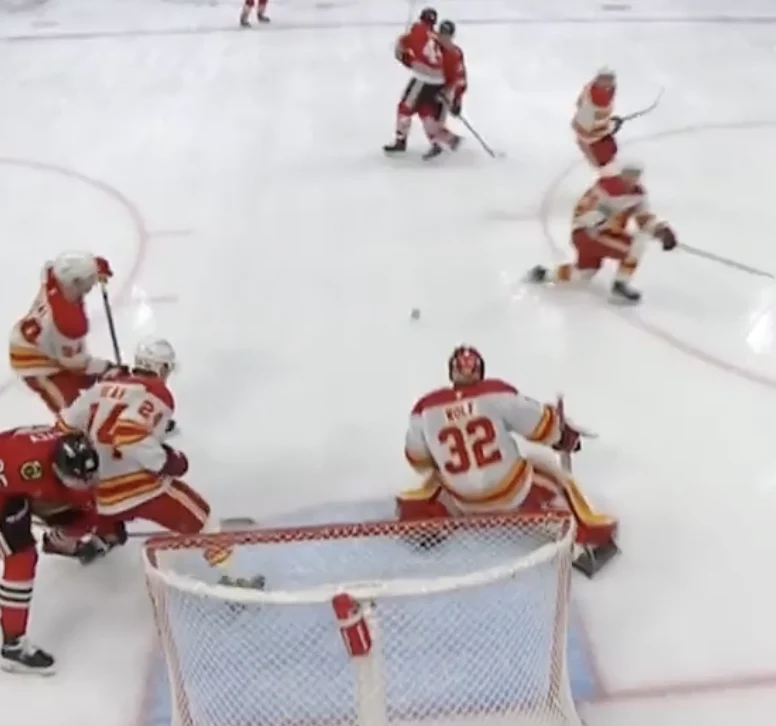
While they appear to be colliding, those attacking players get into a shooting position by the time the rebound arrives. With than in mind, are you sliding here, or recovering to your feet? Explain why you might make either choice.
THE SAVE
Watch the save and replays below now and ask yourself all the same questions.
Okay, we may have been a little tricky with our first freeze frame given the actual threat was out of the freeze frame still, but the key was 5-on-5, meaning there was still a playoff unaccounted for, which Wolf was fully aware of.
As for the movement to that initial shot, what did you like? Was there anything you didn’t like? Remember, Wolf will be the first to point out his own mistakes.
Lastly, what do you think of the decision to get back to his feet on the rebound?
THE PRO READ
Now let’s hear from Wolf’s thoughts on why he played it this way:
Members see the full video with Dustin Wolf breaking down the play in detail.
Still ahead in this article:
Wolf explains in his own words why he made the move — and the preference he names is one that keeps coming up throughout this session.
15+ years of goaltending film & coaching
Already a member? Log in
Think you're seeing this in error? Contact support
Keep reading
15+ years of goaltending film & coaching
Already a member? Log in
Think you're seeing this in error? Contact support
Comments
Comments are for InGoal members.