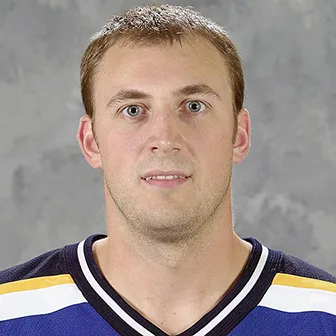
Born Oct 5, 1979 · Owen Sound, Ontario, Canada — Undrafted
| SEASON | GP | W | GAA | SV% | SO |
|---|---|---|---|---|---|
| 2007-08 | 16 | 4 | 2.83 | .898 | 0 |
| 2008-09 | 19 | 7 | 2.59 | .906 | 1 |
| 2011-12 | 36 | 10 | 2.60 | .911 | 1 |
| CAREER | 144 | 47 | 2.72 | .904 | 6 |
Curtis Sanford
Career Statistics
| Season | Team | GP | W | L | OT | GAA | SV% | SO |
|---|---|---|---|---|---|---|---|---|
| 2011-12 | Blue Jackets | 36 | 10 | 18 | 4 | 2.60 | .911 | 1 |
| 2008-09 | Canucks | 19 | 7 | 8 | 0 | 2.59 | .906 | 1 |
| 2007-08 | Canucks | 16 | 4 | 3 | 1 | 2.83 | .898 | 0 |
| 2006-07 | Blues | 31 | 8 | 12 | 5 | 3.18 | .888 | 0 |
| 2005-06 | Blues | 34 | 13 | 13 | 5 | 2.66 | .908 | 3 |
| 2002-03 | Blues | 8 | 5 | 1 | 0 | 1.96 | .912 | 1 |
| Career | 144 | 47 | 55 | 15 | 2.72 | .904 | 6 |
Curtis Sanford was born on October 5, 1979, in Owen Sound, Ontario, and spent parts of his NHL playing career with the St. Louis Blues, Vancouver Canucks, and Columbus Blue Jackets before transitioning to goaltending coaching. Over 144 NHL games, he recorded 47 wins, 55 losses, 15 overtime losses, a 2.72 goals-against average, a .904 save percentage, and 6 shutouts.
After his playing days, Sanford moved into player development. He served as the Vancouver Canucks' goaltending development and AHL goalie coach before being named goaltending coach for the Toronto Maple Leafs. InGoal Magazine has covered Curtis Sanford in one podcast appearance, four drill breakdowns, and one InGoal article.
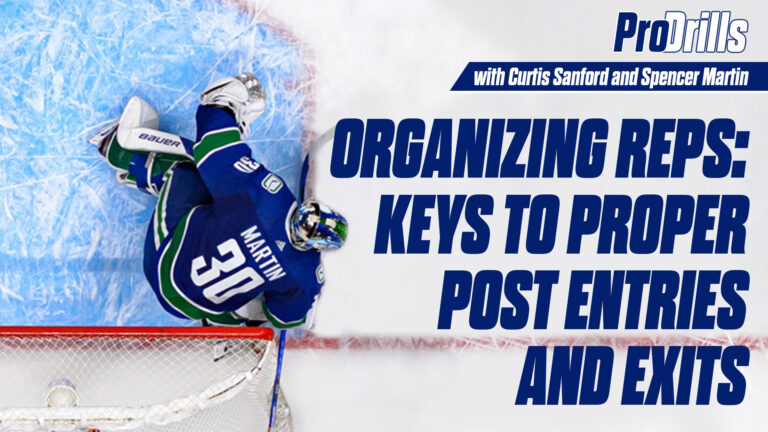
Much of InGoal's coverage of Sanford focused on his work with the Canucks during the summer of 2022, when he filmed a series of drill breakdowns with goaltenders Arturs Silovs and Spencer Martin. In the first of those sessions [1], Sanford introduced what he called "Organizing Reps" — a drill centered on repeatedly getting a goalie organized at the post with consistent priorities. "How quickly can we rebuild our organization, how quickly can we rebuild our coverage, so that we are set and ready for that next play to come," he said. "Building those good habits and those good quick details within our game that really becomes the heart of our system."
A follow-up piece [2] focused on the technical components of post entries and exits. Sanford's emphasis was on arriving at the post already in proper alignment rather than making adjustments after arrival. "We want to multitask and use our inside edge to get aligned properly upon arrival versus bang into post and then use it like a rudder to pull back into alignment after arrival," he explained. One of the Canucks' specific focal points was keeping the goalie less than 45 degrees from the goal line. "This lets us establish next angle faster," Sanford said. "The most important part of goaltending is the quicker we can occupy important space, the better off we are going to be."
A third drill breakdown [3] addressed how goalies manage plays behind the net, a situation Sanford described as challenging because it requires goalies to temporarily give up their visual connection with the puck. He emphasized the importance of quick eye movement when switching sides. "The key is how he works through his progression with his reverse tracking but even more important is the quickness he uses his head, the quickness he is able to pick these pucks up moving side to side," Sanford said. "Because if we're delayed picking them up moving side-to-side, we're going to be delayed picking it up from behind the net to the front of the net." That session also included a section on how Sanford uses mental framing to push goalies late in practice, when fatigue is a factor. "I know you're tired but it's OT and we need these saves," he said of the cue he gives them.
A fourth drill [4] combined the post entry and exit work with reverse tracking on plays behind the net, adding a "track down" component and a longer pass-out sequence. Sanford described his reasoning for building drills this way: "Trying to put these guys into situations they're going to see in a game, so when they see it in the game, it's about having a tactic but we're also working on the technical bundle that goes into the tactic." He also explained his approach to giving goaltenders freedom within structure: "They need to work all these different ways into their game. They have to be adept at tracking down on their feet. They have to be adept at knowing the timing and execution of dropping feet into a reverse… I let them ad lib that first part. As long as we're quick, light and clean to set ourselves up for the play, we've got work on a whole different array of skills and set ups."
A fifth session [5] looked at a three-puck drill built around the balance between control and desperation on quick lateral plays in tight. Sanford walked through the biomechanics of extending without breaking the seal along the ice. "Every time you reach with the toe your knee is coming up," he said. "That's why it's super important to not only have a good rotation but drive through that lead knee… if you drive through that lead knee, you're going to have that flush coverage that is necessary." By the time that drill was published, Sanford had already moved to his new role with the Leafs, though the footage was shot while he was still with the Canucks.
Sanford also appeared on InGoal Radio [6] in October 2021.
People Are Asking About Curtis Sanford
How old is Curtis Sanford?
Follow the goalies, not the noise
InGoal Magazine covers goaltending at every level — gear, technique, and the goalies behind the numbers. Get our free weekly newsletter — plus 3 free premium reads to start.
Go deeper with InGoal
Members get every Pro Read — NHL goalies breaking down their own saves — plus full gear reviews and the deepest goaltending coverage anywhere.
More on Curtis Sanford from InGoal Magazine
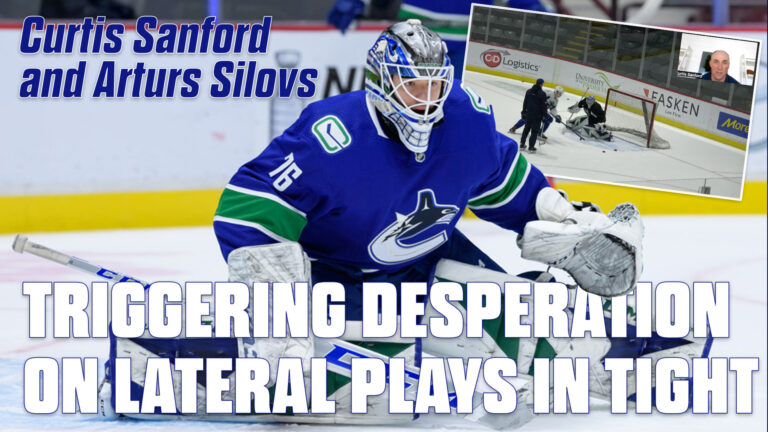
Pro Drills featuring Curtis Sanford and Arturs Silovs
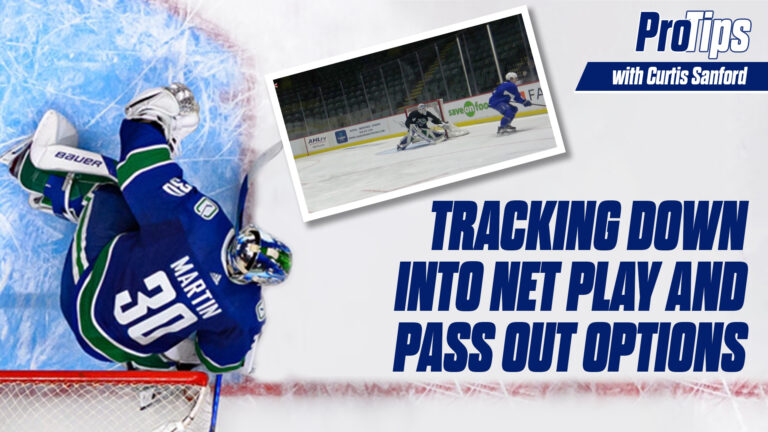
Pro Drills featuring Curtis Sanford Spencer Martin and Arturs Silovs
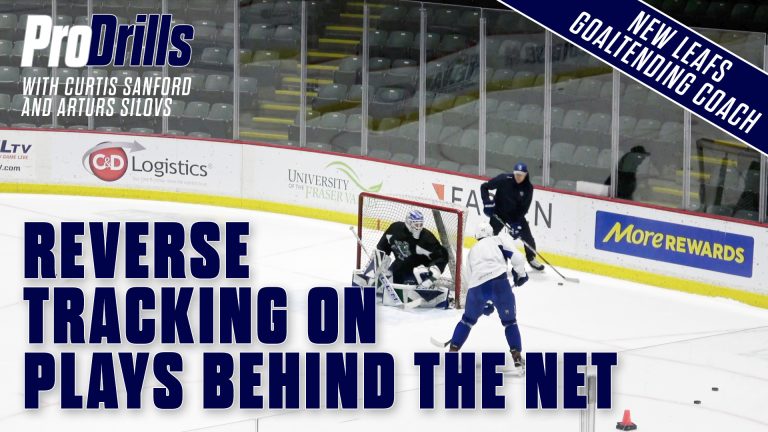
Pro Drills featuring Curtis Sanford and Arturs Silovs
InGoal Radio Episode 143 with Curtis Sanford
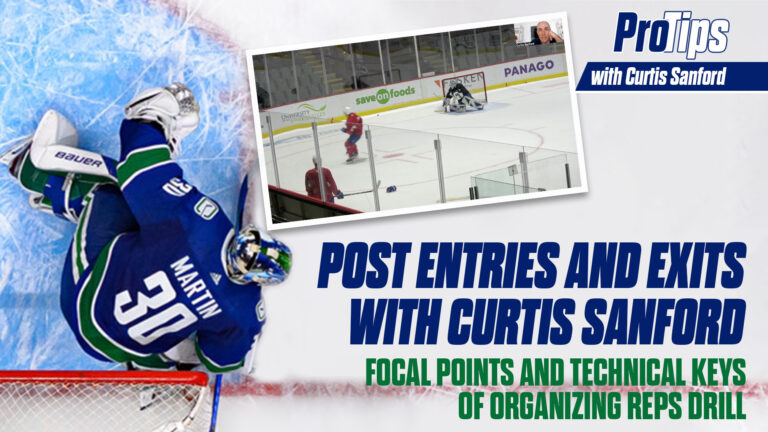
Pro Tips: Post Entries and Exits with Curtis Sanford