
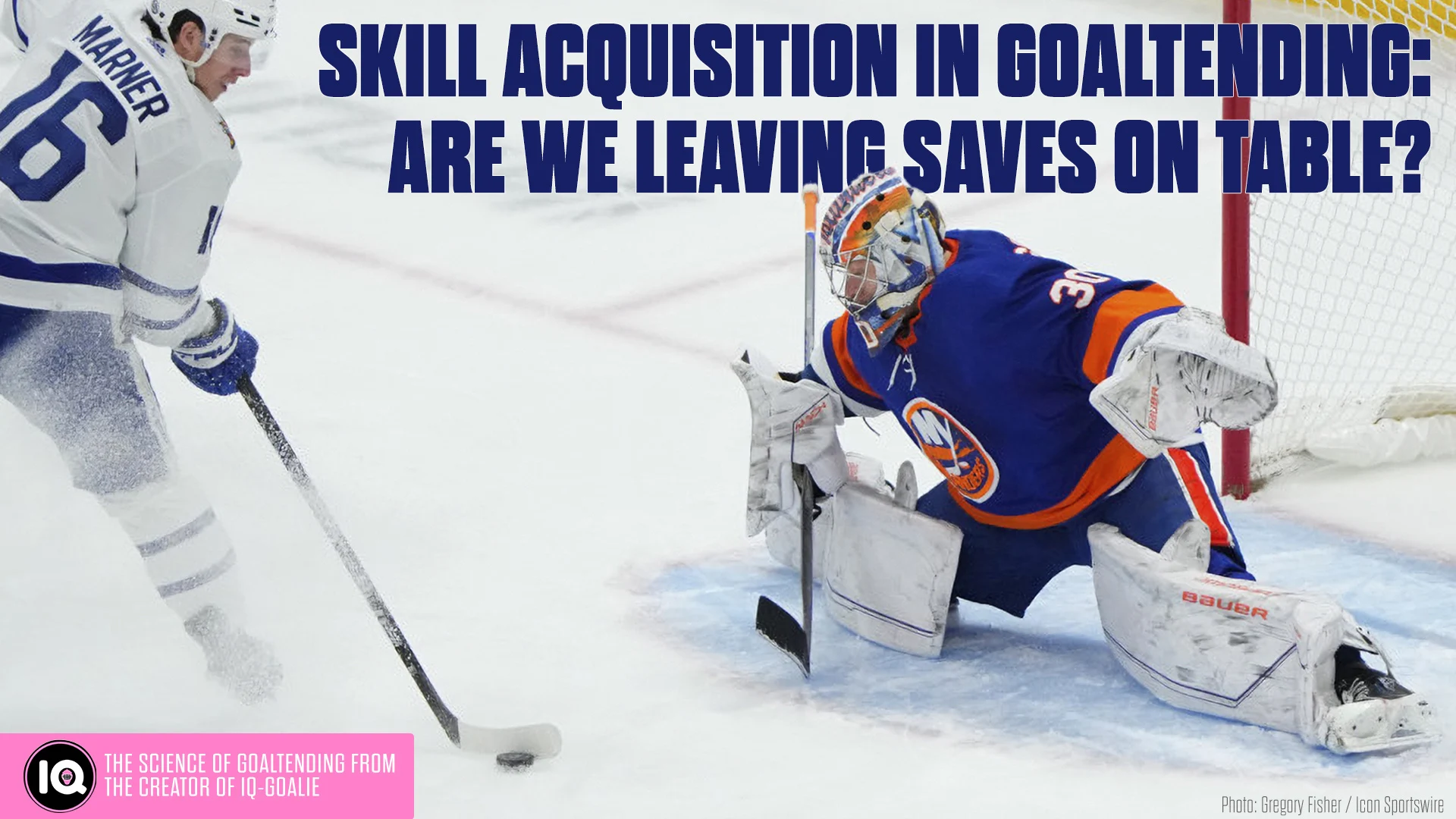
Skill Acquisition in Goaltending: Are We Leaving Saves on Table?
 This article in our Goaltending Science series is from Brandon Thibeau, inspired by his work as the founder of the IQ Goalie e-digest newsletter series. Instagram: @IQ_Goalie
Thibeau is a former Canadian Hockey League and Canadian University goaltender. He has a Bachelor’s degree in Psychology and a Master’s of Science degree in Physiotherapy. He is currently coaching U18 in Nova Scotia and is a Scout in the QMJHL.
Whether we are training tracking, movement, positioning or tactics, the goal of any practice is to improve a goalie’s skills so that they can be transferred to gameplay.
As goalies and coaches, can we say we are always practicing in a way that optimizes skill development and transfers to game situations?
To find the answer to this question, we must first understand how the brain and body learns new skills.
Still ahead in this article:
The answer starts with two types of memory — and which one most goalie practices are accidentally training is named in the next paragraph.
15+ years of goaltending film & coaching
Already a member? Log in
Think you're seeing this in error? Contact support
Keep reading
15+ years of goaltending film & coaching
Already a member? Log in
Think you're seeing this in error? Contact support