
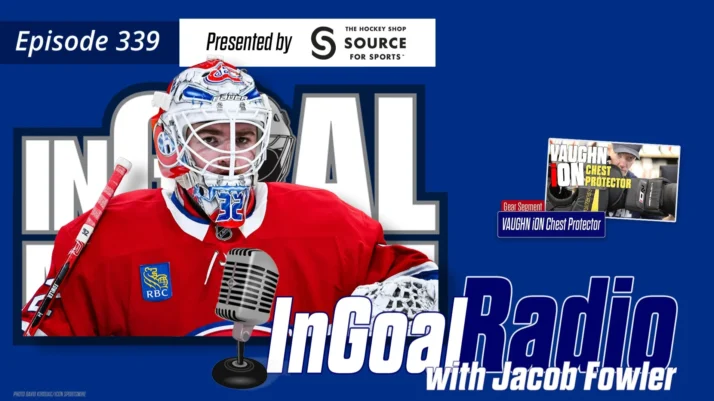
Episode 339: Jacob Fowler

Please subscribe and leave a rating — it helps us reach more goalies!


Jacob Fowler grew up in a non-traditional hockey market in Florida, making long drives to the rink before earning a Mike Richter Award at Boston College and gold medals at both the World Junior A Championships and World Junior Championships. The 21-year-old Canadiens prospect won a USHL title and was named MVP and top goalie before turning pro and joining the Laval Rocket of the AHL.
- Jacob Fowler credits a multi-sport background and late specialization as key to his development as a goaltender.
- Growing up in Florida meant unusually long drives to the rink, drawing comparisons to Carey Price's remote upbringing in Anahim Lake.
- Fowler won the Mike Richter Award as NCAA's top goalie at Boston College and was named MVP and top goaltender in the USHL before turning pro.
- Help young goalies engage coaches directly — the episode advises age-appropriate strategies for goalies to have productive conversations with coaches, with or without a parent present.
- Dustin Wolf explains his post-exit options and keys to handling screen shots in this week's Pro Reads segment.
Episode 339 of the InGoal Radio Podcast, presented by The Hockey Shop Source for Sports, features a fantastic interview with top Montreal Canadiens puck-stopping prospect Jacob Fowler (and a couple shorter chats with southpaw Andrei Vasilevskiy, fellow fighter Alex Nedeljkovic and veteran Jake Allen).
Feature Interview
presented by NHL Sense Arena
In the feature interview appropriately presented by NHL Sense Arena, we catch up with Fowler shortly after returning to Laval of the AHL following his first big stint up with the Canadiens and get to know the 21-year-old and his unique path to pro, including growing in a non-traditional hockey market in Florida, long drives to the rink that reminded us of Carey Price's early years (minus the plane), and playing a wide variety of sports long after many of his peers were specializing in one. A gold medal winner at the World Junior A Championships and World Junior Championships, a USHL champion, MVP and top goalie, and a two-year standout at Boston College, including winning the Mike Richter Award as the top goalie in the NCAA, this is a can't miss get-to-know-Fowler interview.
Parent Segment
presented by Stop It Goaltending U
In the Parent Segment, presented by Stop it Goaltending U the App, we follow up last week's conversation about how to handle vague critiques with a longer look at how to help your young goalie engage in conversations with their coaches — with or without you, depending on age.
Pro Reads
presented by Vizual EdgeWe also review this week's Pro Reads, presented by Vizual Edge, which features Dustin Wolf of the Calgary Flames explaining post-exit options, as well as his keys to shifts off screen shots.
Weekly Gear Segment
presented by The Hockey Shop Source for SportsAnd in our weekly gear segment we go to The Hockey Shop Source for Sports to continue our look at the new Vaughn Ion line, this time with a closer look at their latest chest protector.
Episode Transcript
Intro
Welcome back to the InGoal Radio Podcast presented by The Hockey Shop Source for Sports. I am Kevin Woodley, and the fact you're hearing me first tells you that Millard is on assignment. I'm here with David Hutchison, cofounder of InGoal Magazine for episode and appropriately, Episode 339. I think that is a perfect segue to the outdoor game in Tampa Bay yesterday where we saw we were talking about this last week, Hutch. Six years between goalie flight fights, and now we go two weeks, two goalie fights.
Jeremy Swayman, Andrei Vasilevskiy, what do we think? We all had a good time.
[crosstalk] Yeah. Wasn't wasn't much of a fight. It looked like two very awkward guys in their Michelin man suits bumbling around out there though, didn't it? I mean I I thought it was so I mean, I'm of two minds on it when I when I see these things of course is, one is it's fun because because I am a fan of some of that stuff and, and two, I see my son loving the idea of getting involved in one of those and it makes me cringe because that's the last thing I want to see happen. But it's, it was fun.
One of the things that stood out to me, course, was just that the referees even allowed it to happen. Again. Because so often we see those things get stopped. And they did keep their helmets on until they got away from the officials, so maybe that was a piece of it. I think that was your theory last week,
I do think taking the helmets off early give them an opportunity to gain their but... I actually asked Alex Nedeljkovic about that since we last talked it. San Jose was through town, and he didn't think it was so much about the helmets, although he wasn't entirely sure, as the fact it happened well most of the linesmen were engaged. And so there was an official that was that could see this coming and didn't step in, but I'm not even sure if that was a linesman or a referee, and the linesmen were involved
I think it was
in the other tussle. And, we'd actually we should probably pull your son in, Matthew, and ask him if there's rules about referees versus officials at that level getting involved. If it's just the linesmen that are supposed I honestly don't know. At the end of the day, we went from none in six years to two in two weeks. And I think from what I saw and and actually read afterwards, it sounds like Jeremy Swayman needs to update his InGoal Magazine subscription, listen to the podcast a little more because he got caught off guard about the fact that Andrei Vasilevskiy is a southpaw.
That's right. That's right. He is the southpaw. Although a lot of people wouldn't know it because he holds his his stick in his right hand like all the rest of us or many of most of us.
Course, seven years ago now. So and we're just joking about Jeremy and subscriptions. He not even seven years ago, Jeremy wasn't even in the league seven years ago. He's probably still in college, but seven years ago
I think he's got a subscription too, Kevin.
Seven years ago, Andrei Vasilevskiy told us that he's a lefty and that he actually should catch with his right hand, and he explained why he didn't. We figured we'd dig the audio out of the archives, out of the vault. Let you listen listen to the big cat himself explain it why we weren't surprised when he came out throwing southpaw, but everybody else was. Let's listen.
The funny thing is that, I'm, like, left handed all the way. Really? So, like, I'll do everything with my left, Like Like, right? Literally everything. My so yeah.
But so I basically should have played, like, like Like like like yeah. Basically, like, we but at that time, because, you know, it was a Russia, you know, it's tough time and that stuff. So we didn't have a Equipment? We didn't have equipment for right handed go you know, like, a right right hand goalie. So, basically, I had no choice, and I just got you know, I got used to play with left left block. So but Really? Yeah. I had never heard that before.
Yeah. I had never heard that before.
Yeah. I had never heard that before.
But base cash should have played like we now. Does that make By the way, we we but we had no equipment at that time, so that's why.
So there you go. Andrei Vasilevskiy should be a full right goalie, but they didn't have and and even though his dad was a professional goalie in Russia, did not have access, could not get a glove to catch with the right hand. So that's why we see the big cat catch with his left. And speaking of catching, Jeremy Swayman caught a few lefts.
I mean, the first thing that jumps out about that is, can you just I mean, it's hard enough to become a professional athlete with the hands that you're used to working with. Can you imagine switching hands and becoming merely the best on the planet at what you do? The second thing that jumps out at that for me is, shouldn't he be one of the best puck handling goalies in the league then?
Yeah. That's Because he's a natural There be a study there on nature versus nurture Because, you know, I don't know that that was something he necessarily worked on to the same degree that we see younger goalies now, especially in North America working on the puck handling. And it's it's not that it's necessarily weakness for him, but it's not a strength the way everything else he does is. And you're right considering the handedness.
Based on hand, you might the flip side of that though is, I'm a natural left handed golfer and all I had access to was right handed clubs and you've seen how that worked out for me. Yeah. It's not easy
to switch. Would say that, I mean, I I I didn't have to switch clubs, and I suck just as much. So, there might there might just be something about our relative athletic talent and the and the game of golf that it's more a statement of. So, anyways, that was that was a fun one. I'm now thinking I should probably dig the audio up from our friend with the San Jose sharks out in Nedeljkovic talking about his fight.
We just keep playing NHL audio at the beginning of this interview. I've got a clip there. Let me see if I can just beep, beep, beep, dig into the archives here for us.
A little bit of everything exciting, chaotic.
Was that on the bucket list? Like, there are guys that had it on their bucket list.
Yeah. I don't know if it I don't know if it would have been on the bucket list. I don't know. It just was something in the moment. Right?
It felt like it needed to whatever. You know, I needed to felt like I needed to step in. I wanted to step in there, and I didn't expect, you know, Bob to come all the way down for whatever reason. Right? I just didn't think, and then all of a sudden turn around, and there he is.
So and, you know, there's no going back at that point. So We've seen
guys try and get stopped. Mhmm. I think that's a helmet thing because players can't figure out their helmets. So Willys instinctively do it, and then the referees get in. Yeah.
Do have any idea why it was allowed to go? Like
I honest, I think it was just in the moment.
Because it happened so fast? Because it happened
so fast. I had, like you know, there wasn't like, the, you know, guys were scrubbing around, so the two linesmen were already in there. Right? And then everybody's back was turned to the corner. Yeah. And, you know, I think the linesmen or whoever it was, Wes or Bo, like, they got me the the refs, they got me out of they got me out of there, and everything was calm. Right?
And all of sudden,
boom.
And then all of sudden, Bob was there. So, like, there was that I think it was that split second that nobody had us The chance to stop you. So, yeah, at that point, they're like, k. We're going. Seen a
few, and they're like Yeah.
Three is like, I think as soon as I got that I've noticed in those moments, as soon as the guy takes this helmet off, refs right now. Yeah. I guess the rules technically the say..
Right. But I think that's the thing was, like, we didn't Like this.
Yeah. We Your premeditation.
Yeah. We didn't, you know, we didn't square up, really. Right? Like, you know, Bob came flying in, and and he was just gun like, gun ho, and I saw it that you know, and at that point, like, yeah, I think he he grabbed mine and and I so I tried to just take it off because I didn't want it being, like, an issue.
Yeah. Don't hurt.
And then I I look up and there's his still on. It's like, hey. I gotta get it. Right? Like but but it it everything happened so fast.
As soon as I got his off, he kinda came up and then started throwing and and shoving. So I'm like, well, okay. Here we go. But, yeah, I think it just happened so fast. Okay. So two fights. We're not entirely sure why they were allowed to happen, but I think despite the cringe factor and we did see Swayman sort of getting his left hand looked at at the end of it.
Okay. So two fights. We're not entirely sure why they were allowed to happen, but I think despite the cringe factor and we did see Swayman sort of getting his left hand looked at at the end of it.
I believe his left hand. Maybe it was his right. Like, you do worry about guys chucking nucks and bouncing it off a heavy piece of equipment.
Oh, big.
And he's had it if you like. Can you imagine? As much as the the place was going nuts, 65,000 strong in the atmosphere, and and I thought they did a great job with that game. And I love that that that Swayman and Vasilevskiy were willing to to do it. Can you imagine if his Olympic hopes, like the chance to go to Milan Cortina the following week ended because he splits open a finger in the wrong way?
Like, it Oh. There is a risk there that makes me cringe a little bit as much as I enjoyed as much as the next guy.
Well, haven't haven't we heard people talking about some players maybe taking a pass on blocking shots these days because they don't want to, miss their trip to the Olympics?
Yeah. There's there's been some loose defensive plays and lanes not filled by forwards and defensemen alike headed to the Olympics that some coaches have noticed of late. It's, but no fear from no fear from Jeremy Swayman in that one. So, I don't know. Is it like, I've been asking goalies because you guys planted the seed after the last fight between Bobrovsky and Nedeljkovic, and maybe this is just a Florida thing cause that's where both of them happened.
Everybody's just angry in Florida right now. I don't know.
Angry. That's right. But
the trend, I started asking goalies which one they would rather have. Like a goal.
Well, that was in the Skinner interview last week.
Or a fight. Yeah. We had it in the Skinner interview. And and Ned had them both, so we asked him that. So, anyways, now now it's gonna become regular because my argument in asking the question was it's such a rarity these days to have a fight, and now it's no longer rare.
So that's the only downside of this. It's it's it's cost me potentially a column down the road here.
I don't I don't think it's yeah. I think it's gonna stay rare. I think it's gonna stay rare. It's a bit of a coincidence, I think, that we've had a couple this fast. Yeah.
I just can't imagine them keeping it going as much fun as it is for some people, just not the parents.
Speaking of fun, we'll have the Olympics. By the time we talk for the next episode, it'll be just getting ready or getting started, ready to kick off. I had an interesting conversation as we sort of head into breaks because I do think, like, there's a three week break now for goalies and players alike if you're not headed at the Olympics. I've had a lot of goalie coaches in the league tell me that when they come back out of this break because they are allowed to practice for seven days. There's a seven day window ahead of the restart of the season where the guys that aren't over in Italy will be on the ice with their teams practicing.
And I've had a few guys say, like, I got a guy that needs a reset. Like, it's gonna be like training camp. We're gonna go back to basics, and we're just gonna sort of grind out some details on his game that I haven't been able to because of the busy nature of the schedule. And we've talked in the past on this show and with some of our guests about the risk of chasing change for the sake of change. You know, when things aren't going well, you really need to take a hard look at it and figure out whether you need to like, sometimes they'll just guys will look for changes because, hey, things aren't going well.
But if you actually look at the video, you break it down, it's like, should I have played that any differently? Like, it's a it's a frozen sheet of ice, a frozen puck with an odd shape that bounces all over the place. Like, sometimes
Great lesson for people at all levels to think about that.
Exactly. And so this takes me we're gonna get to our featured guest, by the way. Oh, talk about burying the lead.
Who's our featured guest?
This is what happens when I get to drive the bus. It's all over the road. Our featured guest presented by NHL Sense Arena is Jacob Fowler. So we can tie that into the former Montreal Canadiens goalie I'm about to introduce for something else, but we had a great discussion with Jacob Fowler after he got back to the American Hockey League. I got a chance to watch him play in the American League later that night, and man, is this kid impressive.
But we'll get to him in a minute. That's our featured guest. Before we get to him, I had an interview with Jake Allen, former Montreal Canadian. And sort of rambling all over the place wasn't meant for the podcast, but one of his answers brought me back to that concept of chasing change for the sake of change. Or sometimes something gets hot as a trend, and as goalies, we all want to adopt it because the guys at the highest level are adopting it.
And the importance of having a pause and asking yourself, like we talk about tools in the toolbox, is this tool for me? So without further ado, let's get a quick one with Jake Allen and a great anecdote about why sometimes it's important to stick with your foundation, your equipment as you've always used it rather than chasing change for the sake of change.
Do you have a longer paddle? Like, can Longer paddle. Yeah. I noticed.
I've used this since I was a junior, so I've never changed. I actually
Everybody's going the other way.
Yeah. One mistake I made in my career with the stick, I had my paddle When I was my first year junior, I went to the U18's. I had sort of my coming out party. Got tournament MVP. We won the tournament.
Next year, we come in and play Montreal in June. I moved to Montreal, playing junior. And then in December, I decided to change my paddle for some days. And I was 18. I was a dumb kid.
Right? I, you know, thought I'd change my length of my paddle, like, three and a half inches because I use it really shorter.
Shorter. Okay.
And then I end up going to World Junior camp, and, like, I had a great start to the year. I think I was expected to make the team at the time, and I was awful in training camp.
Cheers to your host.
Yeah. And, like, I remember that Pat Quinn was the coach and told me he's like, I remember as this is Patty. It is, like, said, son, I wanted to take care of the teams. I won the year before with them, and he just I just wasn't good enough, and that was the reason. Sure.
Yeah. And paddle, and then as soon as I went back, I swapped right back to my old one after that. There was a crazy change. Long that is? Like, just visually It's full. No. It's, Yeah. It's 26.
With the max?
Yeah. But all the sticks, they're measured differently. Yeah. Like, you know that. Right?
So it's the it's the max height. Like, me versus, obviously, Markstrom, it plays a totally different style. Right? Like but it's just I can't do it because my hand is so used to that position. So, you know, it's like Yeah.
That's just it for me. So I've used it. I made one mistake for a month, caused me another chance at the world juniors and yeah. So yeah. And then I immediately once he told me that, I got back and I it went right back to my other stick.
Yeah.
And here we are. Yeah. Yeah. And here we are. Exactly.
I thought that was really interesting from the perspective of the change, as you said, Woody. But it also gets me thinking about the mindset of a person when they are always chasing change. It's not just about, you know, if if your stick is different than it was before, you're not necessarily prepared to deal with it, it changes your game, it doesn't work as well for you, you end up in this endless cycle of chasing change. But consider the mindset too because it makes you a person and I'm not saying Jake Allen is because this was an isolated case, but it can make you a person who is never satisfied with who you are, who is never settled with who you are, who can never develop the confidence about your ability to play the game because you're always looking for what went wrong. This isn't working. I gotta find something else. That isn't working. I gotta find something else. How about just go out and play the game?
Or in this case, I think this was more of a trend. And when we saw this
No. And I wasn't talking about him specifically.
Right? Absolutely. And then and as he says in that clip, a great lesson that he learned early in his career, not to make changes in this case because everybody was just going to shorter paddles and he tried it at a really bad time and learned the hard way. But you're right. You're right.
Like, you have to we want goalies to be open minded to adopt new things, tools in the toolbox. Try it. See if it's for you. But it is a very fine line between that philosophy and always looking for the next thing and never really establishing in your own mind and and where that confidence comes from your foundation, what it is that makes you special. Because, you know, especially at the NHL level, you've gotten there for a reason.
I've I've had this conversation with a lot of guys over the years. It can be difficult at times, especially when the numbers start to slide the other way to not look for things to change. And sometimes the best way to do it is to have a real honest look at the video and try and figure out, is there anything that I would do differently on this one, on the next one, on the five that went in on 20 shots the other night? Do I need to worry about it, or do I need to just go back to my foundation and keep playing?
Agreed. I mean, we we talked about that in the parent segment at one point, how you can have a discussion with your kid and have them be able to walk away from a game and be satisfied with what they did even if it was five goals. Because exactly the same questions you were just asking there, think is so important. And I just want to reiterate, I think some people might think, well you won't get your foundation because you know, I'm a five eighty goaltender, I'm a twenty six inches paddle goaltender or I wear these particular pads. I don't think it's about that.
At least the point I was making is that it's a mentality thing as well. You just can't always be dissatisfied and looking for the mistake. It reminds me of some conversations we've had around testing gear. When you're out there on the ice with that new piece of gear and it's spinning through your head all the time, you know, how does this feel? How does that feel?
How is this different from what I wore last week? I'm not suggesting a goalie who tries a glove with a different break is going to be like that automatically but if you're always looking for what it is that's wrong, your mind is not where it should be.
And if your mind isn't where it should be, you'll end up where I am, which is nights where five on 20 feels like a decent outing and nobody's recording video for you to look back on later. You're certainly not chasing change. You're just chasing a post game beer that's chilled in the locker room. As they say, all roads lead to beer league. But you
know that takes a lot of maturity. I mean, even at beer league, but also for young kids because you and I might be able to look at something and say, Yeah, that was actually pretty good. I couldn't have done much differently. But you know there's a head coach, a GM, and a player and other parents in the stands saying, Well, you know, you just gotta find a way. Can't have six.
We need to save somewhere. Oh, don't get not a mentality for a goaltender.
Don't get me started on that. I don't have to worry about that in beer league. Thank goodness. But yeah.
Oh, get started, Woody. Get started because you know I'm thinking about it.
Well, listen. I mean I mean, the key here as you get older is just to make sure you're the guy bringing the cooler. And that way, they'll never look to get rid of you as the goal. Woody, was my philosophy throughout.
Pro tips article for beer leaguers.
How to make sure they don't kick you off the team by Kevin Woodley. That's right. One, order the jerseys. Use your connections at the Hockey Shop to make sure you get great jerseys for your team. Two, be the team manager, The team manager that takes care of the rosters and all those.
And three, never mind hauling in all that goalie gear and the pads and the sticks over the shoulder, including your warm up stick. Also, drag a cooler in full of liquid refreshments for afterwards. This way, they can never get rid of it. I gotta say, I was gonna go to the parent segment because your wisdom was so good, and it has become one of my favorite parts of the podcast. As I said last week, the best part of the podcast.
Thanks to the listener that echoed that with the email. We wanna pump Hutch's head up here as big as we can get it so it won't fit through doors, much like our friend at the Hockey Shop, Cam. His head gets a little tough fitting through doors once we made him a star.
He'll sell you a cooler too. You know, they've got some beautiful ones there.
Gear
They got Yetis there. You know what? They had everything there. And I think that's an important thing to remember as we get set to introduce this week's Gear Segment brought to you by the Hockey Shop Source for Sports, thehockeyshop.com. We're gonna talk about Vaughn Ion chest protector.
We've had our eye on the pads, the gloves, and the pants with the pee pee protector last week. Now we're going to the chest protector. But before we get there, you're right, Hutch. Whether you need Olympic jerseys from almost any country, they've got them. Need a cooler?
Yeti? They've got that. I talked about exaggeration. The jerseys that I had done for the Beer League team, I'm pretty sure kept me on there for a full decade because they were so nice. Couldn't get rid of me after I pulled that off.
Team sales at The Hockey Shop Source for Sports is exceptional. They do major organizations, whether it's hats like our InGoal hats, hoodies to match your team jerseys, or head to toe socks, uniforms, you name it. They've got it. If it's for a team of 20 or an association of 20,000, they will take care of you at The Hockey Shop Source for Sports. I don't know if there's any associations that big, but I know they work with the biggest ones in Canada.
So I'm guessing they've got some big orders. They will get you taken care of and squared away at The Hockey Shop Source for Sports. And, of course, not to be outdone and forgotten over in the goalie department, our friend Cam Matwiv has got you covered with items like the new Vaughn Ion chest protector and a reminder, when the new stuff comes in, the old stuff goes on sale, including all Vaughn SLR three and four remaining inventory. So without further ado, let's go to Cam and find out about the Vaughn Ion chest protector. Welcome back to the Hockey Shop Source for Sports.
We've been doing the Vaughn, Ion, pro select. Cam has yet to tell me what the other levels will be, but this is the pro select. Remember, he is in fact useless.
Really?
Yes. But maybe you can help me with
this one because I know nothing about it. So chest protector. Already done the crabs. My usefulness.
We did the gloves. We did the pants. Make yourself useful and tell me about the chest protector. Wow. Don't make me golly again.
We have the new ION Select just replacing the older SLR four from Vaughn. So basic basically, ION replaces the SLR launch.
Yes. We haven't already established that. Yes. So what's changed? What's a
little bit different? So stock off the bat, you still have a similar shape and overall profile we didn't get in that SLR four chest.
So Really rounded at the top. Like, lot of segmentation.
Lot of segmentation, but still maintaining good adjustability. Should we start the little Velcro straps at the top there? Being able to open that up a little bit more. One unique option since we are on the talk of shoulder floaters in particular. You can order wider ones.
You can order wider ones at custom. How much wider? Wider. Wider. Wider.
[crosstalk] Wider. What did I say about Cam? Segmented front plate. So you can tuck in the sides, but leave that front flap over top of your Partial tuck. Partial tuck.
Partial to a half tuck. Half tuck. Partial to the partial. Still have that strap at the front to be able to tie your chest down too as well. So everything's still there.
You still can fully tuck this if you wish. Oh,
I like when you get the buckles buckles. So
suspenders up and over top. That is an option to be able to pop them over your shoulder floaters. And you can just Tie them down. Yeah. Keep in mind, again, you're taking your shoulder floater and making it droopy droop, which I mean, hey.
Personal preference. Need term droopy droop. Droopy droop. So something that is gone from this unit versus the older model would be there was those button snaps to be able to shorten the arm length on the chest a little bit. So arms are gonna be what they are.
They are no longer adjustable up or down or Well, mean, they're no longer adjustable, but you've got some play here within the fabric. Right? Like, there's no little lays on the legs. It's not totally fixed. Right?
Yes. Like, you don't have the same level of adjustability. Improved arm padding.
I was just gonna say, like, super VP through here,
and I like the way they've segmented the two different shoulder pieces. This is a nice piece here.
So once again, Vaughn's trying to separate itself from that stereotype of, you know, mobility, but at the sacrificing of
protection. The sacrificing.
Sacrificing. I made that one up when it's new. The old word was that it was they were
mobile right out of the box. Yes. But you were gonna feel it. Right? Like, Correct.
We had the we've told the Henrik Lundqvist story before walking in and The bruises. But we're bringing him a new unit to try. That's one of my favorites.
We still have that mobility, but add a beefier package.
Notice there's some extra padding under here. Removable. Yes. Within
Not removable. Just adjustable. Adjustable. Okay. Yes.
So you get a little bit more of that yeah. It's safe. Again, I get a It's useless. Useful again. He's useful again.
K. Back of the chest. You still get that arm adjustability in terms of being able to tighten that up a little bit more on your arm. Around the top side too. Wraparound.
Yes. Trap protection in particular. Protection down around the wrist. So your wrist.
Lock in the elbows pretty good. Adjustability at the back in terms
of for your body with a unique system. They did kinda come out with that SLR chest. Get rid of the buckles. Nothing to break. Correct.
And just a different kind of style of a fit in terms of on the backplate itself versus some of the
other chest we see on the wall. Okay. Island, Pro Select.
What if I had questions about the other lines that are coming, Cam? You can call me, and I'll be extremely useful at (604) 589-8299 or 1-800-567-7790, or you can check us out at the hockeyshop.com. Available to order custom as well if you like. Don't have to wait till
the spring, folks. Vaughn's new line is available now. They've got it in store at the hockey shop source for sports and the hockeyshop.com. Vaughn, Ion, Pro Select.
So I was at my son's game the other day looking around the stands and lots of Vancouver Golden Eyes jerseys. Maybe they got them at the hockey shop. Don't know.
They've got them there for sure. The entire league A 100%. PWHL, they've got great inventory. Jerseys, official jerseys, hats, hoodies, everything.
Yeah. I know. It's so cool to see the impact that PWHL is having around the game of hockey. Then to add to that, you know, they have those chuck a puck things at junior hockey games often at the intermission. Everybody buys a couple pucks.
They throw them at a target. Whoever gets closest wins a prize. So often here, that prize is to hop on a helicopter and go over to a game of another Vancouver team. But this time, they were giving away tickets to a PWHL game, and everybody was excited to get those as well. So it's having a huge impact.
Oh, 14,000 strong at the bank the Pacific Coliseum here in Vancouver to watch the Golden Knights on a on a regular basis. Their last game, and they didn't have a lot of home games in the month leading up to the Olympics. By the way, congratulations congratulations to Emerance Maschmeyer who's headed over to represent Canada. Many of our guests on the InGoal Radio Podcast headed over for the women's tournament at the Olympics. Sandra Abstreiter, who we had on recently.
Trying to think of like, there's there's a long list of InGoal Radio Podcast guests that are headed over there. But you're right. The like, fantastic atmosphere, fantastic crowd, and no shortage of merch available from our friends, The Hockey Shop. Source for Sports Langley, thehockeyshop.com. So one more plug for those guys before we get over to the parent segment, mister Hutchison.
Again, we're gonna follow-up from last week's, which was a really good one brought to you by Stop It Goaltending. If you wanna have twenty five years of NHL goalie experience at your fingertips, you wanna tap into the goalie parenting expertise that helped Joey Daccord reach the NHL, that's what you get with a subscription to Stop It Goaltending U the app. All the knowledge from Brian Daccord who has been an NHL goalie coach, scout, and director currently with the Detroit Red Wings, as well as all the insights and expertise from his staff at Stop It, which last year celebrated twenty five years as one of the world's top goalie schools and includes a long list of coaches that are working in the NCAA, all delivered in easy to digest chunks, including five short daily primers, weekly style analysis, and breakdown videos, as well as drills that you can take on the ice with your team and goalie coach. Plus, you get a subscription to InGoal Magazine premium, all included. So check it out now at the App Store or Google Play Store.
Parent Playbook
Stop It Goaltending U the app and get yourself a InGoal Magazine subscription when you order. Hutch. Woody,
Last week we talked about, well, started from a question from a parent about their child getting some, let's call it vague feedback from a coach and had some advice for how to deal with that. And part of it was helping the child to advocate for themself. But we didn't get into a lot of detail. I promised I'd come back with a few tips for how you can help your child in that regard. I call it support rather than fighting their battles.
And what I would say is one of the most important and admittedly uncomfortable rules for goalie parents is knowing when to step back without abandoning your child. When feedback from a coach is unfair, vague, emotionally charged, the instinct as a parent, of course, is to step in and fix it. The old helicopter thing. We want to explain to the coach. We want to defend our child.
We want to restore, you know, whatever balance was there before. But as the goalies move up, that instinct often works against the very independence we want to build and and heaven knows that the coaches and GMs, could even hold it against your child if you're jumping in there trying to save them. So the long term goal here isn't to protect our child from hard conversations, and I think this is a good lesson for life, not just hockey. It's to help them learn how to handle those hard conversations. Now, how that looks, of course, depends on the child's age and their maturity.
For a younger goalie who often don't have that courage or even the language to have that conversation, you know, they're not ready necessarily to advocate for themselves and that's okay. That's normal. Expecting them to handle adult level feedback on their own is it's unrealistic. But you can often should just go with them as support. But the key is letting the child lead the conversation when they are able with the parent, you there to help them translate, clarify, or step in, but only if needed.
So here's how to help a younger child giving them support without fighting their battles. First, like I said, be present, but let them speak first. If your goalie wants to talk to the coach, you can go with them, especially when they're really young, but give them the chance to ask the question or share their confusion about the situation before you jump in. And, you're the just there as the backup. You're not the spokesperson, but you can be the translator.
If the conversation gets a little too technical for the child, a little too emotional, you can help reframe it for them. Say, what do you think coach meant there? Was there anything specific that you could work on? We're helping them to process the situation. We're not trying to, you know, fight the case for them.
We can also give them words before we we run off and give them independence. Courage comes after they have the language. So parents, you can rehearse some simple safe scripts at home. Can you show me what you want me to do differently? Is this about the games or the practices?
Remember, we'd last week been talking about a child accused of losing his work ethic. And even if they don't use the specific words yet, they're learning through conversation with you what advocacy can sound like. You should also normalize the fear but not take away the challenge. You can say, look, it's okay to feel nervous talking to your coach, but you shouldn't say, you shouldn't have to do this. One of them builds resilience, the other builds avoidance and that's not what we're trying to do.
And like I said, only step in if the child's really feeling overwhelmed, confused or sometimes look, maybe they're even emotionally shut down and then you might need to ask some questions yourself. But ideally, even if you're the one who has to do it, it would be great if your goalie was there with you so that they understand this is for them. Now, for the older goalies, the ones who can advocate for themselves, even if it's a little uncomfortable, your role shifts again as a parent and for some of us that's even harder. You have to move from the protector to the sounding board. Your job isn't any anymore to solve it.
It's just to listen to your child beforehand, maybe have a conversation. What do you want to get out of this conversation with your coach? What would handling this well look like to you? You can let them own the problem and they can own the response. And it's okay for the conversation they have with their coach to be imperfect.
As parents, that's one of the hardest things for us, isn't it? We want to jump in there and make it all perfect. Well, they're not going to be perfect. They might be misunderstood. They might come away frustrated, but that's not failure.
That's good practice for your child to go through that because they'll be better next time. Rescuing them from every awkward interaction, that's just going to prevent growth. Now, reinforce the trust though, for sure. Say to your child, I trust you to handle this. That's probably the most important message you can give them.
It's going to give them confidence as they're going forward. And you have to stay out of the echo chamber as we often talk about. Avoid at home relitigating the situation, how fair it is, how unreasonable the coach's comment might have been. That's not gonna work. We said that last week.
That just keeps the emotional wounds open and trains you to dwell on things instead of deal with them. Support means helping them move forward, not sit around replaying the moment. So so that's about it. Just to sum it up for everybody of all ages, the lesson's the same. Not all feedback from a coach will be fair.
Not all feedback from a coach will be clear, but goalies don't need us as parents to jump in and fight every battle. They need us to believe that they can handle the discomfort and believe that they're able to deal with it on their own with us standing there beside them, whether it's metaphorically or or in reality for the younger kids. That belief of theirs is gonna come over time and that would be the real win for us.
Well said. I kinda wish I had a lot of these parent segments for myself when I was parent coach not coaching, but being a parent to my young volleyball athlete. There's so many good lessons in here.
It's easy to preach. It's easy to preach.
You don't but you don't think about them in these terms a lot of the time. And, last week, you had numbers and, like, everything was sort of backed up with not just because, but, you know, some real concrete stuff. I mean, it's it's great and it's nice to have that perspective because in the moment, it can be really hard to sort of step back from a lot of these situations and look at it objectively because you are caught up in the echo chamber and in the emotions.
Funny, Woody, my father's a clergyman and I watched him give sermons every Sunday. And I never thought to myself that I would end up giving a sermon every week, and here I am. A little bit of a different topic, but, it is interesting to be preparing sermons every week.
Church of goaltending. Can I say that? Is that is that that's okay? I haven't crossed any lines there sacrilegiously?
Probably no matter what we say, we're crossing a line with somebody, but I don't
think you are there. No, Woody. It it we we worship at the altar of the crease. I'm just gonna keep going until I end up in hell.
You're probably gonna end up in hell pretty quick because somebody's gonna talk about you worshiping false gods or something and then we're in trouble.
Okay. Well, I mean
That's not me. I'm not jumping on you. It's all good, buddy.
His name was Carey Price. Only Jesus saves more, I believe, was one of the t shirts that we had.
Think that started with Bernie Parent, actually.
Sweet. There you go. See? I'm learn I'm once again, the parent segment has Kevin Woodley learning about goaltending and the history of it. Hutch, that was great stuff.
Thanks, buddy. From the
From the parent segment, we go to the ProReads. So another great resource over at InGoal Magazine. These ones are brought to you by Vizual Edge. And before we get to everything that Vizual Edge can do for your game, I wanna talk about Dustin Wolf, who is our feature in this week's ProReads segment. And Wolfie does a great job at so many things, these days, but I think this week, his ProReads was focused on his couple of different things.
Post exit mechanics, which I thought was interesting, and then his sort of keys on shifting on screen. So last week, I gave up way too much information. I should just say go to ingoalmag.com and read the latest from Dustin Wolf. But first off, Hutch, was there anything as you were editing that video that you liked about his post mechanics that we start with?
Well, let's not get into the specifics of it, but what I liked about it was that he gave two different ways he could have dealt with one situation. We'll give that as a little teaser. Like Right.
He walks you through both.
Yeah. And don't we always say here, you this is your your mantra really. There's there's many ways to play goal and not necessarily one right way. And, and here's a guy that people look to as a a model for how to move around the crease and and even he's got a couple of different ways. But but, I love it.
I love that on a relatively, dangerous play where he's gotta go east west, he still finds time to regain his feet. I love some of his conversation about how he is shifting because I think, for a young goaltender learning that shift into a shot that's being dragged and the angle has been changing on it is, one of the biggest challenges for a young goaltender. So, yeah, there's a ton in there for people to learn from this week.
And I love the idea of a shift versus a slide. Right? Like, because we do see that quite often. And I wanna just say young kids. Like, I'm watching the Vancouver Canucks have a relatively young, new to the NHL goaltender Nikita Tolopilo, who's learning that at the National Hockey League level.
Six foot six. When he is subtle with his shifts and stays in the net, he is incredible. When he starts sliding and chasing some of those plays a little too much, pretty soon none of that six foot six frame is actually between the pipes relative to the puck. So it is such a subtle thing. It's important.
And having a guy like Dustin Wolf walk you through it, especially as a as a, quote, unquote, undersized goalie who can't afford to commit too early and needs to do more shifting, I I, you know, I just think it's a great lesson, and it's all there as as we have every week in the ProReads at ingoalmag.com. Hutch, you had something you wanna throw in there before I get to our friends at Vizual Edge?
For sure. I just wanna mention that, this is the first of our ProReads that is showing up in a new format. We've redesigned the site completely, reengineered the site completely, but some of the internal content, the individual articles will take time to to move along the road with the rest of it. But Dustin Wolf was the first one of the ProReads and there's a few things in an individual ProRead I'd like people to take attention on. One, there's now a search bar in there.
So if you're in there, you're looking at Dustin Wolf and you're thinking, oh gosh, there was another one of his I wanted to see. Just type it in real quick and you'll you'll find it very quickly. At the top, if you're a mom or a dad reading this and you quickly think to yourself, I want little Johnny or little Susie to be able to watch this. There's a little share button up at the top so you can send it along to them. I really encourage you to do that.
And then just a reminder that the ProReads main page that you get to from the the front of our website has got all sorts of ways of searching through the individual, ProReads. You can look by topics. You can look by goaltenders. You can just look by specific terms. You can hide the ones you've already read so that you can find the next one and get credit on our tracking system that looks after how many ProReads you're on a streak of reading.
Just a whole lot of cool stuff going on on the site these days. A lot of it revolving around, one of our favorite topics, which is ProReads. So, do have a look and let me know what you think. If there's anything you think we should do to make it better, let us know.
Where can they let you know, mister Hutchison?
Oh my gosh. Let's go info at ingoalmag.com. There are so many ways to get ahold of me. But, yeah, please do that. And and the last one, by the way, I need Kevin to get in there and do a little bit of tagging of all these things for me.
But if you do happen to search under a particular topic, say breakaways, you might also get the option to find some pro drills that match the ProRead that you've been looking at. So lots of cool stuff in there for coaches, parents, and goalies.
Feature Interview - Jacob Fowler
Speaking of cool stuff, do you want the puck to look like a beach ball? Every goalie has that night. We all know what it's like. Puck looks huge. You're ahead of every play.
You feel calm, patient, in total control, much like how Dustin Wolf plays. Then there are the nights where you're half step late. You see it, but you don't really see it. You're reaching. You're guessing.
You are fighting it. That's not your technique. That's your eyes and brain not processing the play fast enough. Vizual Edge fixes that. It measures how well your eyes track and process the game, then gives you a custom plan that trains improvement.
Three fifteen minute sessions a week on your laptop or tablet, even lying on the couch. It's what NHL goal is used to make the game slow down when it matters most, and you can get it at a discount using the code InGoal, I n g o a l, all caps, or if you're an InGoal Magazine premium member, just log on to any ProReads, and it will show you our member exclusive double discount code to save even more on Vizual Edge. Vizual Edge helps you see the puck and the game better. ProReads helps you read the play better. The perfect combination, Vizual Edge and InGoal Magazine.
Make sure you check out. If you're a subscriber to InGoal Premium, check out the ProReads and get your double discount code from our friends at Vizual Edge. Well, we kept you waiting long enough. It's time for the feature interview, and this is a beauty with a beauty. I know everybody's gonna enjoy Jacob Fowler, Montreal Canadiens prospect.
Got his first taste in the National Hockey League this year. Handled himself very well. Is an all star in the American Hockey League this year. Fantastic approach. Fantastic background.
And, man, I gotta tell you that I love watching this kid play in that that one game I got to see live in the American League. Just to be honest, his save execution, patience, and edge work setup and just the way he he handles shots, the way he uses reminds me of Ilya Sorokin. Like, there's a smoothness and a calmness to it that is just chef's kiss. But before we get to the feature interview presented by NHL Sense Arena, let's hear from mister Hutchison on our friends over at NHL Sense Arena.
I didn't get to ask you a question about Jacob Fowler and what you saw, but that's okay. We'll come back to it after the feature interview. But first, I do want to tell everybody about NHL Sense Arena because they do sponsor, they do present all of our feature interviews. We are so thankful to think back to when they began. It was a cool cool thing to be able to work with and it it just told us what the future was at the time.
We felt like we'd hit this massive home run getting the opportunity to work with such a neat product. And yet today, it's absolutely night and day from where they began to where they are now. It's like, I don't know, Pong versus a modern day video game with all the incredible bells and whistles because they work on it all the time. There are small releases all the time. Every year, there's a major new release.
It is just an incredible product that is used all the way up to the National Hockey League as we know. What a tool it is. And even though it's a tool, it's fun. We love to play with NHL Sense Arena because we got to remember hockey is about fun and it's why we play the game. And NHL Sense Arena is no different.
You put that headset on, You can walk into your favorite NHL's team's dressing room. You can play on an outdoor rink or in one of the rinks that you've dreamt of playing in as a child. You get to get your name up there in the jumbotron, see these incredible stats, join in on competitions like their NHL Stanley Cup mode. It's there's so many things you can do with NHL Sense Arena that keeps that game fun all while you're training, while you're learning, while you're becoming a better goaltender. That's what we all hope for as parents for our kids and as beer leaguers, we want to get better as well.
It's there for everybody. So if you want to put more fun in your game while you're becoming a better goaltender, head over to sensearena.com to learn more and use the code I g m 50.
I think we're actually gonna have more NHL adoption of NHL Sense Arena over the Olympic break. I've been talking to a handful of goalie coaches as they come through town about the difficulty of getting back up to game speed coming out of this break for guys even with seven days of practice because the reality in practice is, yeah, okay, we can talk about doing screens, but nobody's hammering away from the the point at the risk of hitting teammates. Nobody's going to the net with the same type of determination and authority willing to eat those shots when when it's their own team, when it's just a practice situation. It's really not realistic. And it's so realistic in NHL Sense Arena that I think you're gonna see more guys.
They've they've been sort of humming and hawing like, hey. This is the time to give it a shot. Let our guys see some pucks through traffic without putting anybody in front of them at risk as they get comfortable to be getting comfortable on the ice in practice, but can we get them up to game speed with some virtual reality? So it'll be interesting to see how many guys come out of it that are talking to me about it now, come out of it having tried it over the break, coming out of the break, and whether they see a major difference in it. I can tell you my friend Mantar Bandol, who is the play by play for Hockey Night in Canada Punjabi, He loved it.
Finally got it after listening to us talk about it all these years. And his exact quotes, NHL Sense Arena is insane. Finally got it, and I am blown away. So that's the type of reaction you get from NHL Sense Arena, which reminds me a little bit of my reaction watching Jacob Fowler, our featured guest in the American Hockey League recently. Let's hear from young Jacob Fowler.
A great background, a unique background comes from a nontraditional hockey market, and I think a lot of his passion and energy for the game comes from that. I think it comes through in this interview as well. Let's listen. First off, congratulations on the American Hockey League all star game. That's a big one at a young age.
It's it's cool. I found out a couple days ago, and it's hard when you're up there and they tell you because it's conflict of interest, but it's an honor, like, to be here and in this organization. It's not, you know, unusual for a lot of rookie goalies to be able to do that, and it's just kind of a reflection on the whole organization and everyone in this room because Marco touched on a lot. You don't do that without everyone else in the organization and on your team. How how is your like, you've been there a lot has been
asked of you at a very young age. You've accomplished a lot at a very young age. How has your game evolved as a pro in the last year and a half? Because it is a bit of a different game from college. What kind of things have you paid close attention to?
What kind of things have changed? What kind of things are the foundation that never changes?
Yeah. I mean, I think first and foremost, the thing that never changes is you're always the goalie first. You know, I kinda grew up in a nontraditional hockey market. Didn't have a lot of ice time availability that I from a young age, I just played other sports. You know?
I just played other sports. You know? Being from Florida, hockey is not a very big big sport and, you know, I played basketball, soccer, lacrosse, baseball. Like, hockey was kinda on the side, you know, on a day to day basis when I knew that was my priority going forward, but it just forced me to cherish every opportunity I got on the ice, and I've brought that with me through junior, through college, and I think that's kinda what's allowed me to play free and kinda just play with that kinda young heart and young mind that I try to play with because I just I loved the game.
I was kinda taught to just kinda play what was available to me. Being from Florida, hockey is not a very big big sport and, you know, I played basketball, soccer, lacrosse, baseball. Like, hockey was kinda on the side, you know, on a day to day basis when I knew that was my priority going forward, but it just forced me to cherish every opportunity I got on the ice, and I've brought that with me through junior, through college, and I think that's kinda what's allowed me to play free and kinda just play with that kinda young heart and young mind that I try to play with because I just I loved the game. You know, my favorite goalie growing up was Fleury, and, you know, you see the way he just approaches every day. You know, being at pro hockey now, I'm I have more of a taste of it.
It gives me even more of a appreciation to see the love that he brought. And tech technicality wise, I feel like the game is you know, it's so fast. Like, you get in the NHL, you get in the American League here. Guys, you know, can make high end plays every single night, and it's more just being ready. You know?
You can't really think during the game. You know, your preparation's done ahead of time, and, you know, it kinda gives you that newfound appreciation that you go out and kinda just play fun and play free, and it's just decision making at that point. That's not really thinking too much.
I was just gonna say, like, that balance between because obviously, as you get older and you evolve, guys ask you to do different things technically, tactically, and yet that freedom, finding that balance between trying new things and maintaining that freedom in your game. What how how have you struck that balance over the years? Because we kinda see it
when you play. Yeah. I mean, it's it's kinda playing with fire. You know, you gotta give and take a little bit. You know, you can't be just running around trying to poke check everybody, but I think I love to play a simple game where it frustrates guys when maybe I'm not moving too much because, you know, I love to play forward, you know, either in the summers or just free ice whenever it's available or now in Montreal with the snow and everything playing pont hockey.
So, like, I I just love being around the game and playing as a forward too. It allows me to see kinda what players think, you know, being here and in the NHL. Like, I picked up stuff that players do on a daily basis and understand why they do it. And I think until this year, it was more just you saw guys just do it because they're creative when you realize there's a purpose kinda for everything that guys do. And as a goalie in pro hockey, you're trying to look for that edge every day because, you know, the harsh reality is no one's gonna watch the game if a goalie had a shutout, you know, every night.
The game's never gonna be zero zero. So, you know, any little piece of, you know, work or knowledge you can pick up and, you know, I'm fortunate to have Capo who's such a, you know, good veteran for me and have Marco here as well. It's it's been great. You know, I don't think I could have asked for a better setup since I've entered pro hockey in the last couple months. K. So Quick, get to know you. You've mentioned Florida. How how Goal, like, how did this come to be? It's it's become more and more for full circle as I've been playing longer, and my dad picked up hockey elite, you know, probably in his thirties, early forties more. And when I was born, the lightning won the cup in Florida. So go figure. Hockey just kinda was growing and growing, and they win the cup the year I was born, and I just stuck with it.
K. So Quick, get to know you. You've mentioned Florida. How how Goal, like, how did this come to be? It's it's become more and more for full circle as I've been playing longer, and my dad picked up hockey elite, you know, probably in his thirties, early forties more. And when I was born, the lightning won the cup in Florida. So go figure. Hockey just kinda was growing and growing, and they win the cup the year I was born, and I just stuck with it.
It's it's become more and more for full circle as I've been playing longer, and my dad picked up hockey elite, you know, probably in his thirties, early forties more. And when I was born, the Lightning won the cup in Florida. So go figure. Hockey just kinda was growing and growing, and they win the cup the year I was born, and I just stuck with it.
I always my first memory kind of of being alive were being at the rink watching my dad play. You know, I got little mini skates from the time I could walk, and I always knew hockey was gonna be a big part of my life. People always looked at me and my family like we were crazy, you know, missing every kinda Thursday, Friday of school or maybe Mondays if we were playing in championships, but there are a lot of sacrifices. You know, I lived four hours away from where my team in Florida played, and every week, it was you know, my mom would have to leave work at, like, noon and we drive four hours to practice. And then Sunday night, drive back, get home at midnight and, you know, you learn a lot of what it takes for them, you know, to sacrifice kinda their lives to put mine first and it's been cool to share all that hard work and, you know, I don't wanna say the destination, but to be in the NHL and share that with them is it kinda makes it feel like everything that they did was, you know, worth it and it all has paid off.
But that's a little quick get to know me, but
What about goalie? Like, what what drew you to this position? Did dad play this?
So both my parents went to college in West Virginia, and growing up in that area, my dad has spent a lot of time there. And in West Virginia, you kinda either root for Pittsburgh or you root for Philly, and he always grew up rooting for Pittsburgh. And Pirates, Steelers, Penguins, he was more in the Lemieux era era, and, you know, I was obviously born in had Crosby, Letang, Malkin, Fleury. Like, those are the guys I've idolized my whole life and go figure my first NHL games against them and first preseason game too. So it's just been crazy, kinda every little memory of watching hockey and playing hockey.
You know, Marco trained Fleury growing up, and a few weeks ago, I sent him the clip of the Fleury double push, you know, save on to win the cup. And I told him, like, kinda jokingly, but seriously, like, that save made me a goalie. You know? Like, that save was when I saw that, it was I played kinda house league as a goalie every once in a while and played forward, but that save and watching Fleury. I I was obsessed with the gear.
You know, I wanted to be a goalie, and I ended up making the switch completely when in house league, I was so mad that we were losing every game because our goalie wasn't very good. And I told my dad, I was like, I hate losing, and I was like, I could do better than this guy. And I ended up playing goalie, and I we must have done well. And I was kind of addicted. And It is addictive, is getting more into the detail stuff, but this is a fun stuff.
This is the part people like. I don't wanna get in trouble with Bauer. You know? They treat me really well and have a good partnership, but I grew up when, you know, again, I was a Fleury fan and where the Reebok, Revo, and those were out. I think I it was something going on.
I had, like, a doctor's appointment. I really didn't wanna go. And my dad was like, if you go, I'll buy you the Reebok pads or whatever. And I ended up going, and they did they took care of everything, and I ended up getting a set of pads, and it was kinda rest was kinda history from there. I knew I was gonna be a goalie, and there's been bumpy spots, but it's it's kinda just part of the journey and have been loving it.
Okay. So not traditional market, probably not a lot of coaching access. I know your parents drove you to a lot of different things. Like, nowadays, like, kids get goalie coaches at, like, seven, eight years old. What was your experience, and how did you go about learning the game?
Like, were you just watching Fleury out of joy? Did you start to look for things like the double push? What kind of things you know, where did you sort of develop start to develop how you play the game?
I mean, yeah, I always watched a lot of hockey. Like, my dad would always subscribe to the NHL app or whatever, and you could kinda watch from any angle of the game possible. And it was like, I love the overheads. That was what it was. Like, it was a lot of the overhead stuff where you're really just watching the crease and but beyond that, I just I loved hockey.
Like, that felt like that was kinda my like, who I was that not a lot of people where I'm from understood it and, you know, I felt like I did and it made me different. And, you know, growing up, I just the dream was always to play in the NHL. You know? It was never to play in college or do whatever. It was just I wanted to be in the NHL and be a goalie at that level, and my dad was a big proponent.
He would always have either phone videos or something, and he didn't wanna make it too like, he was doing too much. Like, he kinda wanted me to figure it out on my own, but if I wanted more, he would help me do it. And some nights, we would sit down at the computer, and he would show me clips when maybe I was nine years old, but it was, like, nothing serious. Any little video that he thought could help me be a better goalie, but it was really just I was so hot. I was really obsessed with the game.
Like, again, like, earliest memories kind of of hockey is, you know, where my dad worked was right by where I went to preschool, and he'd always let me play on his phone and kinda watch YouTube videos. And there's a couple of Crosby or Lemieux videos he'd always show me, and it was more just there was really no technicality to my game. It was kinda just there's a puck and I was the guy who wasn't supposed to let it pass, man. I was kinda just as I got older, it was a little bit more and a little bit more each year. And not to say I never had any goalie coaching.
I feel like part of my game now is that I can kinda make unorthodox saves at times of need not just because I feel like it, it's more just I can be simple but if there is a need to make a crazy acrobatic style save, you know, playing different sports and my brother played baseball growing up, like, stuff like that when I go home, There isn't a lot of hockey. You can kinda get away from the game, but also kinda just be a kid and really enjoy it because the game's supposed to be fun.
I would do a couple clinics, but it was never I never had one set goalie coach that I worked with and playing for the Florida Alliance, we would only do tournaments, you know, once a month. So you only had once a month where you were really playing games and it'd be seven, eight games packed into one weekend and three weekends out of the month, you'd be traveling, like I said, four hours per practice. So if you put it all together, I was really only skating, you know, nine practices a month, you know, which looking back on it, was always looking for more ice more ice when it kinda allowed me to become a better athlete. Like, I feel like part of my game now is that I can kinda make unorthodox saves at times of need not just because I feel like it, it's more just I can be simple but if there is a need to make a crazy acrobatic style save, you know, playing different sports and my brother played baseball growing up, like, just stuff like that when I go home, There isn't a lot of hockey. You can kinda get away from the game, but also kinda just be a kid and really enjoy it because the game's supposed to be fun and I that's try what's kinda what I try to spread to to the game.
Have you read some or seen some of the stuff about Flower talking about fun and how bad like, funny. I just talked to Gustavsson a couple weeks ago, and he talked about the mentorship of Fleury and how his game hit another level once he remembered that, that it's all about that.
I I I think that's something I try to do on a daily basis. Like, I haven't been in pro hockey very long. You know, in college, I was fortunate to be around a lot of guys similar to me who just loved kind of the silliness and the fun of the game or funny moments stuff. And I I don't know. I always look at it in the sense of if I give up a goal, unless it's a really, really bad goal, it's more or less like being in the NHL, it's even harder because you try not to overrespect guys like, oh my god.
I've watched him my whole life. It's more like, you know, New York, Aho scored a penalty shot goal, and I it's just laughing all my buddies. Like, you know, that's why he is who he is, and you can kinda laugh it off in a bit, but, you know, you learn from it. You know? And I think for me, it's not getting down on myself or losing confidence.
It's more of just like, you know, I know what I'm capable of. I understand what the game means to me and what I am without the game as well, and it allows me to just play free and kinda go out and just enjoy the beauty of being able to play because nobody would wanna watch hockey, like
I said, if the goal is, you know, made every save. Yeah. Zero zero games aren't we like it as goalies. Not every yeah. Not everybody else, though.
So you study you
have conversations with shooters? Like, you're trying
to learn from them? Like, that give and take between shooters, your teammates, you're talking about what they're seeing, what they're looking for. Like, it feels like you read the game at a really high level, and I'm sort of starting to get a sense of where that comes from. You always evolving it by making sure you're having those conversations with the guys on your team about those types of things, and and like you said, playing it. A little bit.
Like, I think a lot of it just goes back to, you know, I didn't have a ton
I feel like a lot of guys nowadays think they need to make every save perfectly rather than just keeping the puck out of the net.
of goalie coaching, like I said, growing up that I really never had a ton of confidence that I had elite technical skills. You know? It felt like for me when I got to kinda use 16 to maybe going to the junior, it was like, hey, maybe I'm not as strong with my feet as other guys are, but I feel like I can read the game and be more simple that I don't have things that are moving parts. And I think that basis of when I realized, like, when I was 15, 16, like, you know, it's really bad to say but it really helped me mentally understand what I was giving up versus I feel like a lot of guys nowadays think they need to make every save perfectly rather than just keeping the puck out of the net. And I think for me, it was I was never gonna make it look beautiful and, like, it wasn't gonna be something people wanted to post on Instagram for highlights or you know, you always see, like, the videos that are just supposed to look cool on Instagram.
And, you know, once I kinda got that through my head of, hey. Maybe I'm not gonna look the best on video, but I can stop the puck better than the other guy they're looking at, then that's all I can do. And growing up with that attitude, when I got better and better and had more coaches and ice time available because I loved the game so much, I was just kinda addicted to being on the ice and always wanted a little bit more. And he's gotta pull back a little bit on sometimes with me, wanted to watch. I just I love to watch elite goalies and, you know, even when I was up, it was hard to not wanna watch all the morning skates with guys and because you see what makes him good.
It's being able to do the little things, you know, just the little basic habits over and over and that's just that's what the game is.
Last one. As you, like, you add those technical layers, like, is that almost like the you have all these extra things. You can just add these little bits without getting carried away by not obsessed by it. Like, there's still little things you can add details that'll help, but not losing who you are and all those elements that make you special. Is that kinda where you're at right now?
Yeah. I think I was so fortunate to sign at the end of my college year last year and come and work with such a good goalie coach that Marco is and be in pro hockey, and I was lucky. We I was on a really good team that I got to be in some situations with guys who had played at that next level for a bunch of games, and it was hard at first, you know, because you wanna be you you're always chasing perfection. Like, as a goalie, you're always chasing to maybe give up one less goal or make one more save a game, which is it's hard mentally. When for me, it was I was a young kid, you know, I was 20 years old.
You know, I thought when I signed that I was ready to make every save in pro hockey and you get to your first practice and you kinda get lit up pretty good and you kinda have a decision to make of whether you're gonna go down or you're gonna get better every day and he's been great understanding that it's very process oriented. You know, growing up, I never really had it on paper, had the mindset of everything's a process, but it was kinda how I lived. You know? Now it's I kinda know what everything means and it's similar to what I did when I was younger. But the moral of everything was when I signed, I wanted to just try to take every piece that I could and execute because I was only there for a couple months and had the whole summer that I wanted to make sure when I showed up for camp that I could show them, hey.
This is what three months looks like. You know? Now I'm in the zone of, like, man, I feel this good now. Like, what's six months, nine months, twelve months gonna look like? And, you know, I've been fortunate to have a lot of opportunity at an early age, and now it's how what can I do to keep improving every day that in a year, three years, ten years that you don't leave anything on the table?
You kinda just be the best version that I can be.
Oh, so well said and so mature for the age. I'm I'm so impressed. Thank you so much for spending the time with us today, Jacob. It was a real pleasure.
Thank you. I appreciate that.
Outro
K. Woody, I love the way you described your experience watching Jacob Fowler, your usual literary flair with it describing what it's like. But can you put that into terms for a mom, a dad, a less experienced goaltender, somebody who's a fan of the game? What is it specifically that you see that impresses you so much that makes you say that you love the way he executes a save, the way he moves around the crease? What?
Edge work you mean?
Edge work
in shouting tip maybe.
Edge work inefficiency. So What does that mean? I mean, it it means that he's always got his feet underneath him. He beats plays without looking like he's making big you know, we see, like, the big dramatic pushes where guys have these big open movements. He doesn't have that.
He's just really quick with his feet, really fine with his edges, always seems to get there and be square. And then when he's making saves, like, there's just there's a patience on those same edges before he commits down and a smoothness with the glove. Jonathan who scored the other night on Joseph Woll against Toronto Maple Leafs from just above the hash mark with just a wicked shot. Like, the one thing this kid does, he's not established as an NHL, but he was drafted as a first rounder for the Vancouver Canucks because of how well he shoots. He absolutely walked into one from just above the hash marks against Fowler, labeled it top glove, and it's almost like he didn't move.
It was just such a small short motion to cut it off. Not a lot of, like, dramatic extra wasted movement. Just a lot of efficiency. And it reminds me a little bit of Sorokin in and when he's on, he this is gonna sound cliche, but he just makes it look easy because he's not opening. He's not chasing.
He's not trying to hard too hard. It just looks like he's letting it come to him, seeing it, and just trusting the reactions and trusting that, hey. If I'm in position and my feet and my edge work have gotten me there, then my hands don't need to be dramatic. I don't have to reach. That puck is coming at me, and it doesn't require a big dramatic opening and close movement for me to access it.
Just and listen. Like, it might have been the opponent. It might have been a night where he's beating every play, and he never got behind on anything. And, obviously, at the American League level coming off a stint in the NHL, maybe the game slowed down for him that night. Whatever it was, it certainly reminded me of Sorokin who, as we've said, is our not just our Vizual Edge winner through the first half plus of a season, but our our our arguably an MVP in the National Hockey League.
I see that. Doesn't mean there's not things tactically to work on. There were a couple times where he was in an overlap, pass went across. As a matter of fact, Lukárov, he scored a goal, and he almost got there. And I would argue in going back and looking over the play that if he's not overlapped outside his post, he does get there because the extra foot and a half that he has to travel is the difference between it going in his glove and going a couple inches past the the edge of his glove.
Screens, managing traffic. There's tactical elements that with experience and time, he will improve and get better at. But just that efficiency off the release, the way he moves around the crease and sets himself up to look so calm and patient. I think it's largely footwork, but then the patience with the hands on top of it. It was just like I said, I was standing behind his net pretty much the whole time, two of the three periods.
I just went behind his net, parked and watched, and just an absolute pleasure to watch him play and just makes me think there's a really bright future for these young men as all those other sort of dots and patterns get connected.
when you have that efficiency of movement and when you arrive early and you're set in square and you're able to be calm about it, well then there are fewer rebounds because you're able to control the puck far more than another goaltender.
And I think some of those things you pointed out there, they have they have sort of knock on effects that I don't think people realize. Somebody might say, well, I don't care how he makes the save as long as he makes it. I don't I love those flashy saves. They're really exciting. But when you have that efficiency of movement and when you arrive early and you're set in square and you're able to be calm about it, well then there are fewer rebounds because you're able to control the puck far more than another goaltender.
You've got time to think about what might be happening on that that next save. It's it's not just about making the one save. We we often hear coaches talk about when you see a goal, it's not what they did on that individual play, it's what happened in the two or three steps before it. And a goaltender like a Jacob Fowler, if he's moving the way you're describing it, is giving him a chance further on down the line as well.
I mean, every time you get to one play early, you're less stressed. You're not under duress. You don't add tension into your body, but you're also able to look. Not that you're not that a guy at the dot not you're not scanning the zone when a guy's got the puck on his stick at the dot in his head up. But if you're set in early and he decides to pass off that, you just have more you have the ability to sort of have more visual awareness.
Like, everything just sort of the game slows down because you've sped up to each spot in a way. And when Fowler doesn't, it doesn't look like he's panicking to get there. He's just, you know, Demko's like this when when he was healthy and at his best in Vancouver. He was never behind a play, and he had elite visuals that allowed him to stay ahead of it. Fantastic footwork.
In his case, the movements were more explosive, bordering on violent, and you gotta wonder if that's part of why the body hasn't held up. But it fueled that vision and that early arrival fueled everything into his next movement. He was always ahead, which allowed him to sort of process the play, look patient off the release, or be ahead of the next pass because he's not panicked getting to the last one. And at the end of the day, I've worked really hard to try and describe it for you, but it just put a smile on my face to watch it. You just you know, I've had to think about it a little more because of the nature of my job, but when you're watching it, it's like when you're watching Sorokin.
When he's at his best, you just know it's good. You don't you everything looks easy. And sometimes that is a cliche, but sometimes there's a reason for it. And so I went looking for the reasons, and that's what I saw in Fowler's game. And it's exciting.
And as you got to now meet the young man through the InGoal Radio Podcast, he's already got a ton of fans in Montreal. The future is bright, and I think we gave you a little glimpse into some of the roots that sort of made him who he is, not just as a goalie, but the way he approaches things as well. And it's, it's an exciting time for him and for the Montreal Canadiens in the future.
Isn't it great when we've got new young goaltenders coming into the game and things are changing up? Think back to when we started all this sixteen, seventeen years ago. What a changing of the guard and it just keeps everything fresh. New guys, new ways of playing the game, new women now with the PWHL. I just love how the game and the sport just keeps evolving.
You know what was the same though, buddy? What's that? Our friend Marky Marco Marciano was there and I think
we with us since the beginning too,
hasn't he? Since the beginning. And with with Laval, Montreal Canadiens, American Hockey League affiliate since the beginning of of InGoal and had some time with the Canadian National Women's team as well back in the early days when we got started, has always been a great resource, and congratulations to him. We we hate that it's at the expense of anyone else, and Eric Raymond, may not have appeared in InGoal Magazine because just some some rules around it, but was always kind when I saw him at the rink. And so we feel for him, but congratulations to Marco Marciano moving up to be the goalie coach of the Montreal Canadiens.
So excited for him. He's had such success down in the American League with a number of these young goaltenders. So great to see him be able to make the transition with them. The future is bright in Montreal.
Alright. That's it. I don't have a sign off. Last time I had to host, I recognized at the end I had nothing to say and needed to come up with something witty. I don't have it.
Just come back next week. I promise the host will be better because Daren's back in charge.
Have a great week, everybody. InGoal. That's the one.
That's the one.
Comments
Comments are for InGoal members.