
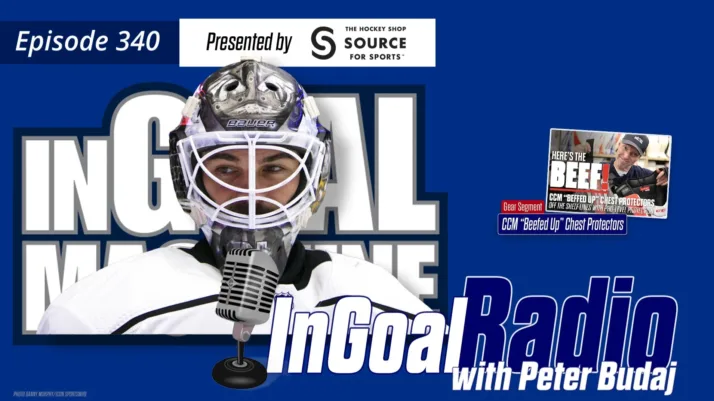
Episode 340: Peter Budaj

Please subscribe and leave a rating — it helps us reach more goalies!


Peter Budaj, a 13-year NHL veteran now in his second year as Anaheim Ducks goalie coach, credits sustained fitness and embracing the backup role as keys to his longevity. Having played alongside Carey Price, Jonathan Quick, and Andrei Vasilevskiy, Budaj emphasizes finding your own game rather than mimicking elite partners — a lesson he now passes on to the Ducks' goaltenders.
- Succeeding as an NHL backup requires a defined identity — Budaj learned to develop his own game even while partnered with world-class goalies like Carey Price and Andrei Vasilevskiy.
- Fitness is a critical and often underrated factor in goaltending longevity, according to Budaj, whose 13-year NHL career survived two prolonged AHL stints.
- Breaking into pro hockey alongside Patrick Roy shaped Budaj's early development, offering a rare firsthand look at elite goaltending standards.
- Telling young athletes 'you can do anything you put your mind to' may set unrealistic expectations — the Parent Segment explores healthier, more honest goal-setting for goalie development.
- Eric Comrie breaks down RVH decision-making when managing a bumper threat on the power play, offering pro-level insight into a common in-game read.
Episode 340 of the InGoal Radio Podcast, presented by The Hockey Shop Source for Sports, features 13-year NHL veteran and second-year Anaheim Ducks goalie coach Peter Budaj.
Feature Interview
presented by NHL Sense Arena
In the feature interview presented by NHL Sense Arena, Budaj takes us through some of the most important lessons — on and off the ice — from an NHL career twice derailed with prolonged stints in the AHL, and the transition to coaching. From breaking into pro hockey alongside boyhood idol Patrick Roy, to finding your own game while playing alongside some of the world’s best — his partners included Carey Price, Jonathan Quick and Andrei Vasilevskiy — the importance of great fitness, and how to succeed in the backup role, Budaj shares several great lessons for goalies of all ages and skill levels.
Parent Segment
presented by Stop It Goaltending U
In the Parent Segment, presented by Stop it Goaltending U the App, we dig into the potential dangers of statements like “you can do anything you put your mind to” for young goalies.
Pro Reads
presented by Vizual EdgeWe also review this week’s Pro Reads, presented by Vizual Edge, which features Eric Comrie of the Winnipeg Jets breaking down RVH decisions while managing a bumper threat on the power play.And in
Weekly Gear Segment
presented by The Hockey Shop Source for SportsAnd in our weekly gear segment, we head to The Hockey Shop Source for Sports for a look at some special order CCM chest protectors with added protection for CHL and NCAA goalies that are now on sale.
Episode Transcript
Intro
Presented by The Hockey Shop Source for Sports Langley, thehockeyshop.com. This is InGoal Radio Podcast. Welcome back in, everybody. David Hutchison, Kevin Woodley, the cofounders of InGoal Mag. We are looking at the Olympics. The women's tournament is underway. The men are arriving. This is gonna be fun. Can't wait.
Can't wait. How's that for deep analysis?
That was great. Yeah. I'm like, I'm the anti Woody. I just listen. I'm I I got tasked with pre Olympic breakdown, so I'm in the midst of them right now.
So I'll be excited once those are done and the game start, and I can just enjoy it. Right now, it's just no sleep, buried in data, having a good time with that.
Are you doing all, goaltenders for every team?
Just the NHL ones because I couldn't find some of them without a map beyond that. And that's with all due respect. I just would never be able to find the video or the data, that would allow me to do it productively. And so I have access to, obviously, footage and goal footage at the NHL level, and it's still a monumental task with that. It would be impossible to try and do it, without, some type of proprietary access to outside video.
On our list of things to get to today, the NHL Sense Arena feature interview, Peter Budaj, from the Anaheim Ducks say he has an Olympic connection. I just I just love watching, the Olympic Winter Games, and the enthusiasm from athletes and the fans. And it can be from any sport, but you you look at the start of the women's tournament, and, you're reminded that we're gonna see some really cool setups, at this, 2026 game.
Well, how about pretty much the debut of CCM Tacks and Alpha Surge? Like, not not only are you seeing some great setups with the CCM all out graphics, but you're and Bauer too with with, with the Digiprint, But you're also seeing, like, two entirely new lines basically make their debut, at least publicly. We know of one NHL goaltender that's been wearing Tacks all year but skinned as Axis. But you're basically seeing two new lines that'll launch this spring on the international stage as well. So that's that's kinda cool.
I mean, I it's it's an exciting time, and I love watching all the new gear. But it's interesting how like, have you guys noticed how how little goalies need to wear this stuff in the NHL before they go over?
Like, once? Guys do Twice. Wear their stuff once in a morning skate and and wear it in a game now.
And that's like, it's funny because we've just accepted that as the new norm. Right? Like, you're right. It is. That's you know, I was talking to Wade Flaherty, he's like, yeah.
His guys use, I think, Hellebuyck's three, Comrie's three or four skates. But if if Connor gets up a pair that he likes, he'll wear it in morning skate and wear it in the game at night. And, like, that increasingly is the way of the world in the National Hockey League. But the last time that the NHL was in the Olympics and, yeah, it's twelve years ago. I guess that's a long time for these changes.
But I talked to Ryan Miller, and he was basically Buffalo Sabres gear with pad skins. If you remember the twenty ten games here in Vancouver, Miller in the gold medal game wearing buffalo he may have been playing for Team USA, but he was in blue and yellow pads, Buffalo Sabres colors. Henrik Lundqvist told me that in o six, he wore the same blocker for the entire season. And the equipment manager, TPS blocker, the equipment manager for the New York Rangers covered up the red with yellow for the Olympics, and then he went to a red and white set instead of red and blue after the Olympics, and he switched it over to white. So same block for the entire season, including winning the gold medal at the Olympics.
Like, it wasn't always the case that guys were able to just wear equipment once and feel comfortable going on the ice. Like, this is a sort of new development. So theories, guys? I mean, I I kinda cheated. I asked Lundqvist and Miller, so I've got ideas.
But any theories? What what do you guys think that is?
Well, you get more consistent manufacturing for sure because it's not just, sewn by hand in somebody's basement. You've got, guys wearing much stiffer gear than they were in the past. So when you're wearing stiffer gear, I don't know what it is that you're trying to break in. With gloves, we see an increasing attention, from the manufacturers to having a broken in glove when it's delivered. People like you and Cam sit there and play with the gloves and reviews and insist that they have to be ready to play as soon as they hit the shelf.
And, as a result, the manufacturers are are accommodating all So I think I think the manufacturers are just doing a great job of producing gear that can be worn right away. That's that's that is definitely part
of the answer. You hit two of the main points there, Hutch, at least from the answers I got from Henrik and Ryan Miller. And the manufacturing process obviously chain remember, Bauer kinda changed the manufacturing process with how they build a pad, taking a core and wrapping a skin around it as opposed to inserting, internals into a core. The stiffness of the pad, which means that the pieces going into the core, like, they're just that it's just easier to sort of put those pieces together together and have them all sort of be consistent. You're right on the glove manufacturing.
That's definitely one of it. Those are all key points, and stiffness is a big thing for sure. Goalies want it to be super stiff now. Like, there are very few goalies left in the league that wear a soft pad. Like, even if you look at, like, the EFlex line in the National Hockey League, Dustin Wolf is the only one that's sort of soft.
Everybody has a soft boot flex, but he's the only one that's sort of soft in the thigh rise. Everybody else, like, stiff thigh rises are the standard. And so in the old days, you used to have to break it in to get it soft and comfortable to where you wanted it. Nowadays, everybody wants it to be stiff, so it's actually probably better to have a fresh set out of the box. Any other theories, Daren?
Putting you on the spot, buddy.
No. I I like this the stiffness side of it. Whether the the pad can bend or move with you is irrelevant now. It just moves around you. So the the the pads are are a nonfact you you only really wear the pads once to confirm that they're good.
That that's the only reason why you do wear them once in a practice or a skate, and then you can wear them in a game. Gloves are a little different story. You can you can work on that, a little bit, behind the, the the curtain and and, just make sure that the the glove closes, alright. But just advances in in materials. That that would be my my biggest take on it is is what what the manufacturer can work with to make them easier and and better right out of the box.
Well, I know you can be like Carey Price. Right? Remember? Stick it in the stick it in the skate oven.
Yeah.
Just get it ready to go. There's one more, and I'm cheating here because, again, I have all the answers. So I like making myself look smart that we haven't talked about. And one of the reasons that guys are so used to brand new equipment and comfortable playing it so quickly is because they get so much more of it compared to ten years ago.
Third answer, I swear.
But your point is hadn't thought of that. I hadn't thought of that until talking to these guys and and Ryan Miller in particular, like because he played with John Gibson. And there were some issues the the one year, they were just trying to kinda dial in something for him. But one year, he went through 34 gloves, I was told. That's not from Ryan.
That was from another source, but Ryan pointed to how often he goes through gloves and uses
I can confirm that courtesy of the secondhand market, the the resale market.
They're everywhere.
Used. New used. New used. There's the same thing on Ryan Miller gloves, and there was, like, 20 of them.
It's but and and, like, honestly, like, goalies are getting, I think, on it depends. It depends because I had I I'm not gonna say which team or which goalie, but I walked into a visiting locker room recently, and the goalie had the the puck out. Like, he had his own supply of puck out and he's wipe wiping puck marks off the pads. I'm like, really? I didn't think you know, I I got no problem with it.
We know a lot. We've heard the stories about Spencer Martin and Vaseline and other guys using this, and some guys don't want puck marks. Jaroslav Halak, most famous example. So I get it. But I just said, hey.
Like, I I didn't think of you as one of those guys. And he basically said, well, on this team, they don't buy me that many new pads, so I'm take good care of.
I remember I remember that having to have his credit card on file at Brian's.
Yeah. Well well, that was Halak's. That was that was Halak's decision in terms of the credit card on file at Brian's. But it's it's totally changed. Like, 12 to 14 sets of pads.
I've heard several examples of that over a season. That's more than one a month. They get special events and and, you know, dark jerseys here in Vancouver. The canucks have the black skate jerseys. So the goalies obviously don't wanna be wearing, you know, green and blue and white pads with black skate jerseys.
Ryan Miller used to say, like, coming out of college and into pro, it was, like, maybe two sets of gloves for the year. Now guys are getting up into the teens and some, as I said, even higher. So when you're used to when the manufacturers are nailing your fit and feel every time and you're used to that as your base level, Ryan said when he was earlier in his career, he got used to a base level that was broken in because he got used to the glove that you've been wearing for two months.
So that's automatically a second set, maybe two depending on how often you wear them in a year. But goalies get new equipment all the time. And Ryan Miller used to say, like, coming out of college and into pro, it was, like, maybe two sets of gloves for the year. Now guys are getting up into the teens and some, as I said, even higher. So when you're used to when the manufacturers are nailing your fit and feel every time and you're used to that as your base level, Ryan said when he was earlier in his career, he got used to a base level that was broken in because he got used to the glove that you've been wearing for two months.
He says his hands are a mess now and he wished maybe he'd switched more often and not taken so many stingers in the palms, but that was just what you were used to. And nowadays, what guys are used to is brand new out of the box in part because they get so much of it.
My thought I was thinking about the so many sets of gear in a different way, Woody, and I I guess you're just saying they're used to receiving it new. I was thinking when you can have so many sets of gear, I certainly know of people who are, you know, rotating through two, three sets at a time so that they have, you know, practice sets, game sets, and so on. So you can just always have the rotation going.
That we see some of that. Some I mean, remember Jimmy Howard? We did the story on Jimmy Howard. He'd have three sets, and he'd like, a first period, second period, third period set, or maybe the first period was also the third period and second was also OT, and they had him on the glove dryer. But, you know, you get a a set of gloves to a a state.
We had guys that would be like, okay. I got these gloves perfectly where I want them. I'm not gonna use them in practice. I'm just gonna I'm gonna have another set in practice so that I can keep this set as close to perfect. There's still some of that around the league, but I think overall, just these guys' ability to you know, like like Luukkonen Dostal's True set, which is sick, by the way, I don't I think he only wore it, like, once he arrived or maybe one practice with Anaheim.
And if you look around the league and you start talking to guys, you know, I talked to Elvis was kind enough to return a message, Kevin Lankinen in about, you know, hey. How many times did you wear it? Like, it's one, two, max, three, and they're ready to go. And it's just I think we've I think a lot of young boys are like, oh, that's just the norm. Right?
And it's really not. Like, for for for a long time, it wasn't. So I found it a fascinating discussion, and there were certainly elements of that discussion that I hadn't thought of. There were also some interesting things that came out of it. You know, there are evidently skaters, like so so we're not going up through the goalie union here, but there are evidently skaters in the league that won't wear the same pair of skates twice.
What? That's what I was told. I started digging around and asking different questions. Me is
you mean by game, not game at practice, do you?
I'm assuming by game, but I didn't clarify.
It's by game.
It's by game. So I see Daren's confirming that I'm not wrong here.
And that's been around for a while.
See? I didn't know that. Shocked. Wow. Like, that's that's a like, that's a thousand dollars a game for your skates.
Although, I guess, you know, that's just two sticks, three sticks nowadays. So it's it is amazing you get used to it. Right, Daren? Like, if you're used to the super stiff skate and how it feels right out, like, we're just you know, that is part of the reason we're seeing this trend not to that degree in goaltending. Can you imagine a new glove every game?
Boy, the used market would just say, the old the old, the old, pro return market would be on fire for that one.
Okay. On on the player side, I know of of guys who, gonna get they get their Olympic, kits because around our group, guys are wearing gloves and pants, at practice leading up to the Olympic, games just to to get used to it. But some some players didn't, and they're like, I like new gloves. I would wear new gloves every game if I could, so I'm not gonna wear them a couple of times at practice here before I get over there. I want them to feel brand new when I get over there, on on a player side, which I I kind of didn't expect that side of it.
And, when we're talking about goaltending equipment and breaking in, I would assume all of the goaltenders would just wear shells over their pants and not wear brand new pants, at the, Olympic games or federation pants, because that would be that would be something you would wanna wear a few times, in in a practice or a game. Right?
I would think so. It depends on the you know, actually, there's a really good question. I know guys that hate pant shells. They find that that that they feel restrictive. Yeah.
Like, just hate them. So I would think that goalies might wanna take the chance to break in a new set, Daren. Although you're right, I never even thought to ask about that. And interestingly enough, same with chest protectors. And I think most people would be like, oh, you're just gonna wear the same one you're wearing in the NHL.
And I think most guys are, but I don't think the like, I don't know if you could go full KHL yoga blocks under the you know, stuffed into various parts of the gear, but I don't think there's sizing charts at the IIHF like there is in the NHL. Like, if I'm not mistaken, you don't have a nine inch rounded barrel mandate on pants in the IIHF. You don't have the same sizing. Like, I think goalies from the NHL, if they wanted to, could probably look a little bigger at the Olympics than they do when they're playing in the NHL by wearing a size up or and and I don't think anybody has in the past, and maybe that rule has shifted. I gotta be careful here, especially at the end of a week that started with me going on radio with some bad intel talking about is the trapezoid in the Olympics? It is, folks. I'm an idiot. Is. Momentary slip. But, you know, it's interesting.
Like, that balance between comfort and and performance. Right? I thought more goalies might bulk up the last time this was an option and talking I remember talking to them afterwards, almost none did. And so here we are twelve years later, I'm guessing the same thing will be in effect.
Akira Schmid got his new True gear for team Switzerland.
How many times did he wear it?
He wore the gloves in two skates, I believe. One for sure, but I believe it was two skates. I didn't see him wear the pads.
I I did see a picture of him wearing the pads, I thought. So
But but that's it wasn't a handful of times by any means.
Well, see and this is this is kind of this is the truth is the reason this is such a big issue is not just because new things fascinate me and because I wasn't aware of some of the you know, just thinking about it and how big a ship that had been. It's because they're making me look bad. Because that was always my excuse because we're always getting new goal at InGoal Magazine to test. And I could walk into the locker room knowing I'd probably suck that night and just say, hey, guys. I'm testing new equipment.
New gear. So Yeah. New gear. Blame it. Now I can't blame anything on it.
So that's just me sucking again. So damn you, Olympians.
I got the the the new CCM upper body. And I I will say this, thanks to you guys. It it so different than the lat now I had my last one for a while, and and that was slightly used when when I got it. The the break in period was, like, nonexistent. It was so easy.
And, Daren, that's a that's a sort of I don't think they use this term on the CCM models. They used to use it with Vaughn, but it's the quote unquote pro beef version. You got the Western Hockey League slash NCAA beefed up more protection, more padding version, and it still was out of the box easy. And by the way, good tease for the Gear Segment because that's the feature item in this week's Gear Segment are these CCM chest protectors.
It it was just it was perfect. I was blown away, by by how easy it was to move around it. So that that's another advantage that they have with they do wanna change an upper body. But, pads, yeah, I I I think you just wear it to make sure that all the strapping is where the strapping should be. That that's it.
They didn't accidentally shorten your shin and make your knee knee rise, like, in a different place? Like yeah.
Some some something like that, but there there'd be no other real reason to to go out there. No performance benefit
Well, let's be honest.
It. Let's be honest. I take them out of the box and just go straight on the ice and play. It doesn't affect my performance. I'm practically an Olympian.
Yeah. We're doing a great job of helping all the families with kids who now have to say, oh, but mom, I need 17 sets of gloves every year. It's just to be if I'm gonna feel right in it, that's just the way it's done.
Yeah. No. That's heaven. That's not the reality for for most. Let's and it's interesting because the extremes that we've gotten to amongst a bunch of the people I talked to, including some equipment staffers, the word wasteful was used more than once.
Well, yeah, because it's still good, and
you're gonna
[crosstalk] wear it
your equipment manager.
You're gonna wear it
for a week. Yeah. It's kinda crazy.
If you're the number one, you're gonna wear it for a week. If you're the three, you might never get a chance to use it in the game.
Yeah. It's, yeah. The Olympic year for sure. It's, but I mean, the the still the one skate per game one, that one really shook me.
That, shakes me big time.
I can't believe you you're surprised at that.
I did see, Daren, you're
in the inside. Honestly I I've heard of well, junior players get us a set of skates a year at least and I can't imagine even wanting to do that. To me, that is the piece that needs to feel perfect all the time and I'd rather wear an old pair of slippers, so to speak, than a brand new pair of skates. So it blows me away.
Yeah. It's again, that shifting mindset. Right? You get used to stiff, super stiff Mhmm. And you don't want it broken down.
It's it's it's fascinating.
Had the custom skates that we have today either. So
The skate oven is the most used item by an NHL team.
We have multiple now just like families that entertain and they're wealthy.
You're baking skates every day for guys to to put them on. I guess. Yeah. It's amazing that in today's technology that you still have to bake your skates. You'd almost think you'd get to the point with all the three d scanning that it would be perfect for you.
I don't think you have to with all brands. No? No. I think the process they use for customization is different.
So I don't believe you because you were surprised that people would just use them one and and go.
He's he's lost all credibility.
Yeah. I've been in one factory and I've seen how it's done. So
what what you get in this tournament, the men's and the women's is high intensity and massive drama. And in the men's tournament with the three pools, if you don't perform well in one of those pool games and you slide down in the qualification seating, you can have a big time challenge coming through a qualification game just to get to the quarter final.
That's why you need a goaltender who embraces pressure, and I think I found one. So let's what's the best part of the Olympics? Let's ask Henrik Lundqvist.
I always felt pressure playing in New York, but going to Olympic, it was just a lot of excitement. I also had to break it up. You know? You play a lot every other day, and you have your routines and schedule here, and then you go to a tournament like that. You know, it's an opportunity to get to know all the other players that you play against and have so much respect for and free countries.
So it's a combination of a lot of things, but it's just overall amazing experience and excitement around it. But I don't think I felt more pressure. I I've always felt pressure flying, but it was just that pride you felt wearing the jersey. That's why I started playing the game, you know, watching the national team on TV. So having that opportunity in the big tournaments like the Olympics is always special.
Yes. Always going into those four or semis finals, it's just one game. So, I mean, that's where the pressure comes in. It's come up playing to reach the finals, you're playing three game semis because it's just one game. They it's do or die, and You need to make sure you optimize, you know, whatever you're doing.
But that that itself made it also very exciting. Olympic gold medalist.
I I know I know Olympic gold medalist. I have his jersey hanging on my wall behind me from the Olympic gold medalist. And guess what I learned this week? He wore one blocker the whole season and including for the rangers and the Olympics, the old TPS blocker. So every time you now see that picture of him celebrating with the arms up in the air, I can picture it.
Know that that's not actually a Swedish blocker, that's a New York Rangers blocker. Wow. With little pad skins. I don't even think pad skins existed in 06. Some
version No. Of What did they use? That's that's interesting.
He used the words I think Ryan Miller used the word stickers, but he would've had Patton's kids by 2014. So Lead tape.
Duct tape. Duct tape way back. It wasn't much longer than that. I was using duct tape on my kids' stuff.
The, the idea that you would wear one blocker the entire season, it is, like, mind blowing and slightly concerning from an injury perspective.
Well, and the other thing that's changed now is the expectation that you pop out these giant rebounds. Like, guys can put pucks over the glass with their blocker now, and if it was a season in, there's no way it would. I I took a blocker we had here and we got a brand new blocker board for it and I think the the one that had been used for about half a season of minor hockey, I mean relatively high level, was about half the width of the brand new blocker board. So The foams compress so much.
I will say this. I don't remember whether the TPS blocker in 06 because I have trouble remembering what I had for breakfast this morning and that was twenty years I don't remember if it had a zipper and you could pull it out, but I didn't ask him whether he changed the board in that blocker. He just said it was the same blocker. Yeah. Fair.
So poor journalism on my part. I should have followed up. But, hey, anytime you get a chance to talk to Hank, that's good.
That is good. I I took one off a blocker yesterday, and it was it was perfect, but it hurt. Like, it was in the it was right in the middle of blocker, and and I could feel it. It it hurt. I'm like, wow.
That's it's it's amazing how fast they can shoot the puck now.
Yeah. Well, you're facing guys that are a little better than the rest of us, but still, I took one off the blocker recently, and I was like, I felt it. No. I didn't think anything of it. And then, like, the next day, I was like, there's something wrong with that knuckle.
Didn't work properly for two weeks. Although I'm old and weak and soft and all those things.
Mhmm. Yeah. So with, with Hank being an Olympic gold medalist, it it makes reminds you that Canada and The US, haven't just dominated, when NHLers have been in the tournament. Canada's won more gold than than anybody else. But this tournament is is open up beyond the two North American countries.
Who do you think could potentially challenge the the two heavyweights?
You know what? I don't know. Like
Like, Sweden has that blue line that is all globe, all solar system. It's so good.
Yeah. And, obviously, you know, again, Sochi in the final was Canada, Sweden. Right? Yeah. Shouldn't even bring that up on a night where we had, Henrik Lundqvist even for a one minute clip on the podcast because he was on the wrong end of that one.
The guy over my right shoulder was on the right end of that one, this the the signed price jersey. Like, I think of it, like, if you were thinking blue lines in total picture, yeah, absolutely, the Swedes. If I'm thinking a goaltender who's gonna mess up somebody's Olympic campaign, whether it's like you said, with a surprising win against the heavyweight in the round robin or knocking somebody out when they were underdogs in the in the in the, elimination rounds, I can't help but think of Luukkonen Dostal.
Yes. That's where I was thinking too.
The Cheks. Yeah. Like, his season, there's ups and downs in it, and it grades out. It's still good, but, like, it's it's not like he's in the running for the Vezina this year. But, man, he has moments where he just takes over games and frustrates opponents.
And you've seen how many times the ducks have been badly outshot this season, and they win two to one or three to one, and you look and it's like, oh, 40 plus saves for Luukkonen. The other team's just shaking their head at the end talking about not being able to solve them. Like, he's got that sort of game stealing. His ceiling is so high. When he's on, he has that ability to absolutely steal games.
And I think, in a lot of ways, you know, frustrate teams to the point where they can come outs outside of their game. Now they're missing Pavel Zacha who was a late scratch or or drop because of injury of the Bruins, and that makes them thin at center ice. But, man, just goalie stealing a game, give me Lukas Dostal.
Fins will be in it, but they've got some injuries too. There is a a big five, factor with the Olympic Winter Games and the men's tournament, over there. But, have fun. Enjoy everybody. The different, setups, by the goaltenders.
Gear
It will be, really cool to watch a little bit of surge in in your fashion sense of goaltending. Some seeing some of these these new takes and and spins on on the federations. And that takes us into our Gear Segment, presented by The Hockey Shop Source for Sports Langley, thehockeyshop.com. I think I know where we're going this week now.
You do. We sort of tease it. Although, I thought when you said a little surge, I thought you were I thought you were making reference to the history made by Martina Ferdel of Italy who we met, at our Warrior shoot in Montreal in early December because she was the first one to wear the Alpha Surge on the ice and also in that game got the first win ever for the Italian women's national hockey team. So I thought you were going there. Instead, we're going to the Hockey Shop Source for Sports where my friend Cam you know, we talk a lot about all the new inventory they get, how they're always on top of it, have it have deep stockpiles so they have all the sizes, a lot of colorways, like so many options because they're such a big store.
They've grown to such such great heights and size, and we talk about the wear all these things. We talk about the old stuff going on sale. You know what we don't talk about enough? The fact that they understand the game and they know how to get their hands on custom stuff. We we had the Bauer pro chest protector, which was the NHL version that didn't get discontinued, but it was the first sort of attempt at it, and there was an update.
So Cam got his hand on on all the old ones, and they got them there exclusively. There's also a whole bunch of CCM chest protectors, and we're gonna talk about that this week. There's a bunch of different models. They're not the newest models. There's some EFlex sixes.
There's some Axis twos like Daren's rocking right now, but they're all WHL slash CHL specs. NCAA. Like, they have extra protection in them. And Cam is always looking out for those kind of things. So whether it's Pro Return Sticks, beefed up chest protectors, custom options that you can't get anywhere else, make sure you check them out.
The Hockey Shop Source for Sports, thehockeyshop.com, including this week's feature items that Daren can attest to, CCM's beefed up chest protectors. Do you, do you watch, Ren and Stimpy growing up? I don't think a lot of
kids or people listening to this podcast and watch Ren and Stimpy.
Oh, anybody that did, all I'm thinking right now is, you idiot. Why is that? We've already done all these chest protectors. Why did you bring them all out for me? We've we've talked about act like EFlex five.
We're on the EFlex. EFlex six, we had like, what's going on?
Same same, but different. Different. Different. Cam, why are
there fight straps on all these chest protectors? Well, to make sure you don't fight because you're not good at it. Well, let me tell you. You're absolutely right there. Talk a big game, but let me tell you, there's no Why?
In this. Because we got some hidden gems in here.
Hidden gems. Hidden gems. Fight strap is hidden.
Well, that's a kind of a little bit of a segue.
And tease. The tees is that So why? Because these aren't our normal These are not spec jets. Okay. So these are these are special.
These are special just like you.
Thank you. I am special.
Yes. So what makes them special? Like beyond the fight strap, which would indicate to me these are for a higher level of hockey.
Yes. So as opposed to your regular inline off the wall Axis E Fex 5 Axis 2
and oh hold on
dropped one didn't you e flex six as well. That's just one generation old. Exactly. That's actually one of my favorite chesties.
All of these feature thicker padding. Thicker padding. Beefed up. Beefed up. Fight strap on the back.
So these are like college and WHL like major junior units.
These are exactly what these guys are. These are units. These are units.
They're in a little bulk, a little protective. And we have a plethora of them in stock here. Not every size and every model.
No, that's not correct. That's that's that's you know we know we are missing this. For example, this wonderful Axis 1 unit, beautiful, much beloved chest by every by all. Last one? Last one.
What size? Medium. Okay. So get that while that's hot. Moving on the line though.
This thing's gorgeous. So EFlex 5 beefed up unit. Alright. This is a nice chest. The only downside is I've only got these left in XL, but I've got quite a few.
So you bigger goalies, don't worry. We got you covered. You still have all of the same adjustability, all of the same fitment corks to the chest. Nothing else has changed that way. It's just beefier.
Just beefier. And, again, that addition of that fight strap.
So XL Another another, like, pop culture reference that the kids won't get. Where's the beef? It's all here.
That's that's going back. That is going back. I'm that old, Cam. So Axis 2. This one, I really, really like.
There's a lot of good mobility to this one. Improved overall fit with the, well, the fit hasn't changed at all. Sorry. But the overall feel wise with that extra beef up, definitely a great combination. You know, great unit for the guy looking for a little bit of exercise, but likes a little bit more of that snug fitting chest.
Okay. And they're all on sale. I just Large XL here. I was just looking at them like these are all on sale. They are.
So savings? Yes. Past generations, but beefed up for NCAA and Major Junior levels. Extra protection. All available while they last.
If you've got questions about sizing, you can't find out on the
website, where do they get you? (604) 589-8299 or 1-800-567-7790 or thehockeyshop.com.
[crosstalk] But, David, show off the EFlex six, though. Okay. EFlex Most recent, like, quick I mean, again, beefed up unit. I've got
it just looks the same except for
the fight straps. Mediums and XL's in here. Like, get them while they're hot. There we go. Burning hot.
On fire.
It's just light too. Light. And you can adjust that thing every which way. I I was finding straps, like, three weeks after I first wore it going, oh, I can I can adjust that? I can move that around.
And the arms fit snug. It it it wasn't like my old one where I just, like, a barrel put your arm through it. The arms really fit, nice and tight. Really cool. I I was I was surprised at how playable it was coming out of the box.
And right into NHL shooters too.
Mhmm. Hear me again. So
find it heavier with the extra padding? It still felt like it I guess when it's balanced, it doesn't feel too heavy.
No. No. It was it it felt felt fantastic. And I'll I'll take the extra padding all day long. Although, I don't get I don't get hit as much as I would like to get hit.
So I I'm probably not the perfect test patient for this.
You need extra padding. Some of us have it built in, Daren.
The the arms get get get hit, but the middle of my chest, I don't know whether that's got hit yet.
Oh, but remember the arms getting hit in the eighties, Daren?
Oh, the top of the shoulders or the elbows?
Oh, anywhere. Anywhere. I I played I had practices in university wearing the old quilted arms. It was just brutal. I would have I would have happily traded the gear we wore in the eighties for stuff that a five year old wears today.
And I think that's why you saw so many pucks caught. Oh, hundreds. Or or blockered instead of absorbing it in your chest or having it go off your arm. You just naturally made sure you got a blocker, a glove, or, both on it when it was coming towards you.
Yeah. I know the idea of putting your chest in front. We've had lots of guys discuss this, guys from the past generations. Like, that changed the game. The ability to actually try and stop it with your torso on purpose rather than pulling it out of the way to try and windmill a glove in front of it because it would hurt so damn much if it hit you in the in the chest.
Like, that's a that's a that changed the position.
Just like ProReads, brought to you by Vizual Edge on InGoal Radio, the podcast, where we sit down with goaltenders every week, and they walk you through the save selection. There are thanks for, Vizual Edge joining us on this journey.
Well, if you want like Millard does every time he lines up against NHL shooters, you want the puck to look like a beach ball? We've all had those nights here and there where the puck looks huge. You're ahead of every play. You feel calm, patient, in total control. Then there are the nights where you're half step late.
You see it. You don't see it. You're reaching. You're guessing. You're fighting it.
That's how I play goal. But it's not your technique. It's your eyes and your brain not processing the play fast enough. Vizual Edge fixes that. It measures how well your eyes track and process the game, then gives you a custom plan that trains improvement.
Three fifteen minute sessions a week on your laptop or tablet, laying on the couch, sitting at the kitchen table. Lots of options. It's what NHL uses. NHL goalies use to make the game slow down when it matters most. I forgot to ask him about it.
We had a guest on a couple of weeks ago, Stuart Skinner, big Vizual Edge user. So shout out to Stuart for that. Didn't realize it at the time. You can get a discount, 10% using the code InGoal, I n g o a l, all caps. Or if you're an InGoal premium member, double your discount using our exclusive code that you can find on every ProReads over at ingoalmag.com, including this week's ProReads from Eric Comrie of the Winnipeg Jets on how to manage bumper plays when you're shorthanded.
What do you think of the like, bump we talk a lot about elite bumper shooters in the NHL. We had one here in Vancouver. Bo Horvat was exceptional at it. As soon as they traded him, the bumper disappeared as a good option for them on their power play, and they had to change the way way they were running it. That quick pass download of the goal line and a and a quick low high out to a guy in the bumper, what do you guys think?
Tips on how to play that?
Being able to read the play.
Be big. Be big. Get hit. Yeah. In my
case Stay in the center of the net?
Yeah. In my case, don't get hit. And that's what makes it complicated because usually there's a lateral element, Like, it's not just the low high, but
Exactly.
It's not a huge lateral element, but it's a little bit of and, of course, when that play goes down to the goal line, you have a decision to make. Do you go to reverse? Knowing that if it goes back up to the bumper, you might be that much later to get there as if you stay on your feet. So there are a lot of different things you have to think about, and there are a lot of different factors that affect that decision. Handedness is one of them, not just the shooter in the bumper, but the guy in the goal line.
Anyways, we get into all of it with Eric Comrie, the Winnipeg Jets in this week's ProReads. Make sure you check it out at ingoalmag.com. And if you're a member, check out your double discount for Vizual Edge, which presents ProReads.
Hey. And if you're over at ingoalmag.com, check out the new ProReads page. Just click on ProReads on any menu, and you will be able to search by goalie, by type of play. In some cases, you'll even be able to call up, relevant pro drills that fit the situation. We have, we've done a ton to make it easier for you to find the kind of content that you need.
Parent Playbook
More great advice coming at you with the Stop It Goaltending U the app parent segment, with David. Stop It Goaltending U the app, providing all kinds of support for goaltenders around the globe and, at various, skill levels.
Twenty five years of NHL goalie coaching experience and expertise at your fingertips on the Stop It Goaltending U, the app. That's what you get with the subscription. You tap into the goalie parenting expertise that helped Joey Daccord reach the NHL. All the knowledge from Brian Daccord, his dad, who has been an NHL goalie coach, scout, and director, as well as all the insights and expertise from his staff at Stop It Goaltending, last year celebrated twenty five years as one of the world's top goalie schools and includes a long list of veteran NCAA coaches amongst its teaching staff, All delivered in easy to digest chunks, including five short daily primers every week, weekly style analysis, and breakdown videos, as well as drills that you can take onto the ice with your team and coach. Plus, you get an InGoal premium subscription included with your subscription to the Stop It Goaltending U app.
So check it out now at the App Store or Google Play and get the best of both worlds with the subscription to Stop It Goaltending U, the app, and an included subscription to InGoal Magazine premium.
How are you going to help us this week, Hutch?
Daren, I often get my inspiration from questions from other parents, around goaltending. This time, I was walking the dog, listening to a podcast, about not even another sport, but just sort of the concept of of effort and and how we expect kids to apply themselves and sort of think that they're gonna get what they out of it, what they put into it. And and I was thinking, I'm not sure that fits, you know. The message that you can do anything you want if just you put your mind to it. And you know, it sounds really empowering for a kid but I think that it can be dangerous because there are things in sport and life that are out of our control no matter how badly we want them or how hard we work.
I'm not trying to discourage anybody from enjoying the sport, but look, to use an absurd example, a jockey is probably never going to play in the NBA, and Shaq is never gonna win the Kentucky Derby as a jockey. Although, to be fair these days, he just might win it as an owner one day. But that doesn't mean that effort doesn't matter. It means that effort is just one part of a bigger situation. In hockey, especially in goaltending, there are other factors that we don't talk about nearly enough, namely luck.
You gotta be in the right place at the right time, the right team, the right coach. There is far more luck in this game that I think many people are willing to admit. You know, as a goaltender, you can train all the time. You can prepare properly, compete hard, be coachable, be a great teammate, and still, you might end up behind the wrong goalie on the depth chart. You might miss an opportunity because of timing or injury.
You might get passed over because a coach wants something different. And, of course, luck applies to every game as well. Two goalies are gonna play the same shot identically, but sometimes the shooter hits his spot. Sometimes he hits your glove. Sometimes that point shot gets blocked.
Sometimes it hits two shin pads and a skate and ends up in the back of the net. Sometimes you face a third pairing d man on a breakaway, and sometimes it's Connor McDavid. That's not a failure of your effort or your preparation. It's just reality. And the danger of saying that you can do anything you want if you want it badly enough is that, when things don't go well, kids often turn inward and make assumptions.
You know, I must not have tried hard enough. And that can lead to guilt, shame, or a quiet sense, honestly, as they get older that they've let everyone around them down even when they've given the game everything they had. And that's definitely not what we want, what we want as parents. A better standard, a healthier one I think is, give it your very best effort so that no matter how it turns out, you can feel proud and satisfied with the process. Similar advice I've given before, guys, about your games.
Don't focus on the goals. Focus on analyzing how you played. Disappointment is still okay. Losing still hurts. Getting cut still stings.
We're not trying to eliminate disappointment. That's part of caring. But we are trying to make sure that disappointment doesn't turn into regret or self blame for a kid. When some kids understand that things are out of their control, they can learn an important distinction. I can be disappointed in the outcome and still proud of my effort.
And I think that's a powerful lesson. In goaltending. Again, you know, you can, can control your preparation, your work habits, your attitude, how you handle adversity, but you can't always control timing, opportunity, what that puck is rebounding off, the coaching you're getting, just plain luck. And that doesn't diminish the work that you've done. It doesn't diminish what you've put into the sport.
Instead of saying you can be anything if you set your mind to it, consider a message that prepares them for the real world of sport. Give it everything you have, control what you can, and if it doesn't work out the way you'd hoped, you can still step away from it proud.
It just gives it some perspective. And as parents, our job isn't to promise outcomes or guarantee success. It's to help our kids pursue things bravely and honestly without tying their self worth to results that they can't fully control. So instead of saying you can be anything if you set your mind to it, consider a message that prepares them for the real world of sport. Give it everything you have, control what you can, and if it doesn't work out the way you'd hoped, you can still step away from it proud.
That's not lowering the bar. It's teaching resilience. And in the long run, that lesson's gonna matter more than any single result on the scoreboard.
I like your idea, er comment, that you can play the a shot the same way as the goaltender at the other end. And it it more depends at times on the shooter, whether they hit their spot perfectly or not.
A 100% because there are there are lots of situations. Wait, Woody sent something around to us this week in our little group chat, didn't he? About desperation situations and just trying to get as much as as you can into the middle of the net.
Does the Akira Schmid diving save.
Yeah. And that's not I mean, good on him for doing that but the player who shot it into him is conspiring on that play too. It is not a 100% on him.
I'm a firm believer you should always dive just to make the coach think that you're trying.
Honest, I swear there are people that do that. Yeah. Because if you play conservatively, maybe even the best possible way, they might just say, oh, he's not trying hard enough.
You gotta compete. You gotta come outside your box.
Yeah. It's ridiculous.
Too technical. Although hey. Listen. There's something to be said for that middle of the net thing, man. Oh.
Oh, don't disagree with you at all, Woody. I'm just saying that's not a 100% skill on a goaltender's part. It is great preparation. It is great tactically, but it takes two to make a big save there. Yes.
It takes a shooter and being afraid to miss an empty net.
The best part about the Schmid save was he he he was well, it was weird, strange because he was diving to his right. Normally, you see those diving saves going with your glove, to the glove side. So he had to cross his body, a little bit like a a shortstop or second baseman, but he caught it right in the middle of the pocket. And there wasn't any added angst about where the puck go or do I got it? It was in there, and he and there was a big smile on his face as as he slid through the ice.
Love the smiles. I'm good at I'm good at the diving saves, the attempts, just less so at the actual saves.
This is the 50th anniversary of Darryl Sittler scoring 10 points in a game, as we record this. Amazing. I just I I bring it up because of the timing of the Boston Bruins at the moment. Gerry Cheevers was coming back from the World Hockey Association, and I think it was his first game or second game back, and Don Cherry wasn't gonna play him and didn't play him at all that entire game. Dave Reese was the goaltender for all 11 goals that Toronto scored on that night.
Darryl Sittler was involved in in tandem. He never played again in the National Hockey League. He he had won a couple of games going into it. Boston was on a roll there, but that was it.
Probably went into counseling after that night.
Reminds me of that's why I booed because we can't be celebrating all these Nope. Offensive accolades here as much as I love Darryl Sittler. Reminds me of Markstrom getting it's funny because the narrative around Jacob Markstrom, his numbers are not great, But so much of that is basically they left him in for two terrible games where he had a tough night and everyone in front of him had a tough night. And so on his resume this year, he has an eight goal game against and a nine goal game against. Take them out and all of sudden and and you can't take them out.
I know that. But so much of his down year statistically is basically two games out of the 40 or 40 or so that he's played. Like, it's Well,
you could take them out and and look at where the numbers would be without those two and be able to feel a little bit better.
Uh-huh. On that You could also say, hey. Like, he had those two, but I just I mean, it's it's interesting to me that the narrative on him going into the Olympics is so much about his numbers, and yet they're basically submarine by by two goals on a guy who's who's played, you know, a lot of hockey this year. It's it's interesting.
I wonder if guys should should be left into battle more than than making the change.
Gosh, there's a fine line, isn't there?
There
is. There there's a place where I absolutely think you should be left into battle and I think sometimes it's just a gosh, you're talking about luck and sometimes the first couple just go in and it doesn't mean you're off, it's just the way it is. And getting that opportunity, especially as a youngster to learn to battle through things, emotionally is incredibly important. But then there's a number after that that it just starts to hurt and it just starts to damage your confidence and the confidence others have in you. Gosh, I don't know where that number is.
I can tell you in beer league, I wanted to skate off the ice when it hit eight. Mhmm. But, and and every kid and every team and every situation will be a little bit different. But, it's especially with the young goaltender, you've got to bring them on very carefully. And, and I guess you just have to know the individual because if you leave them in too long, you're gonna destroy their confidence.
If you yank them five minutes into the first period, you're gonna accomplish exactly the same thing. So just defend better and then it doesn't matter.
I was just gonna say, like, I don't think you're ruining Jacob Markstrom's confidence. You're just submarineing his
No. But you know me. I always take the parent tack on things.
Oh, yeah. I I just meant more if you're gonna ask your goalie to battle, I wanna make sure that my team still actually has some battle in them. And when I watched back that Islanders game that got to nine nothing, I mean, it was like tic tac toe all star game out there. Just, you know, Jacob Markstrom was playing behind. Oh, hey.
Seven nothing? The Washington generals are only down by seven. Like, it was just they were zipping it around. And so he wasn't he was maybe asked to battle through, but I didn't see anybody else on that devil's team with much fight in them by the end of it.
You wanted to leave after eight? I can't do that. I've I've got forty five minutes of ice left.
No. I know. I'm just saying that's the point where I just start to really be miserable. I think I could justify up to seven and be like, I can take it.
I just want more of a workout than than than fifteen minutes.
Yeah. And Kevin doesn't even know what eight is because he plays all these games up to five and then they switch ends.
Yeah. Exactly. But I did have one recently about three weeks ago where I was we were switching. We were switching off and we were switching early and it was because of me. And
That's the worst. I do the same thing, games to five, and that that's the new way you do these pickup skates. And you you wanna win on the board early, for yourself. You don't care about the the teams because they're they're we're we're independent contractors out there, basically, in in those situations. You just want one of those wins to the to to five early on so you can relax a little bit and you're not going o for that day.
Oh, I had a terrible I was I was frustrated to Hutch's point about wanting to skate off, but, like, this is a skate that I waited a lot of years to get invited to. Like, you can't quit. Right? Like, you you you can't just give up because you won't get invited back. So it's it it it's tough to find that line when you're so frustrated and you know you can't try harder and you're trying to figure out the reset.
It's and that's that's on a Friday afternoon, so I don't know how these guys do it on the biggest stage. I guess that's why I'm playing beer league, and and they're playing in the best league in the world.
In that same type of format, I play a cumulative game, along with the with the individual games to try and because sometimes that's a little lopsided between the two games. So I'm like, jeez, I okay. I I won nine six today. I may have lost the first one badly, but at least I won nine six, on that day, which also gives you an idea of how my mind works. Maybe I'm I'm worried about the wrong thing, as I'm going through it.
Feature Interview - Peter Budaj
We got the NHL Sense Arena feature interview, this week, chatting with Peter Budaj, who, I knew way back when he was playing major junior hockey, believe it or not. And now he's a goaltender coach, for the Anaheim Ducks, brought to us by NHL Sense Arena.
They are. NHL Sense Arena brings us all our feature interviews. And there are so many things in Sense Arena that makes it great because they just keep stacking on the features. I just wanna step back for a second and talk about something that they added in a little while ago. And that is to talk about the fact that great goaltending isn't just about movement.
It's also about decision making. Reading releases, managing traffic, tracking rebounds, and staying composed as plays evolve and it all starts with how well your brain is trained. Yes, Sense Arena isn't just about taking shots, it's about training your brain. They've got Hockey IQ at home checklists. Those really stand out.
They give goalies a clear structured routine that can guide their mental training, predicting plays, anticipating shots, scanning the ice, making better decisions under pressure. Those short weekly sessions that remove the guesswork and help build habits that translate directly to game performance. They also offer the Hockey IQ Hub. This one's a free resource. It's got articles, insights, and tools for players, parents, and coaches who want to better understand and train the mental side of the game.
You can explore the hub and download those checklists over at sensearena.com. And if you're thinking about a little meaningful addition to your hockey training as we head towards spring hockey, NHL Sense Arena is offering 50% off their annual plans. It's a training experience that will last all year long, not something that just ends up in a bag over on the shelf. It will make your goalie better and they're gonna have fun doing it. And don't forget to use the code I g m 50 at checkout to save even more.
NHL Sense Arena bringing us our feature interview with Peter Budaj this week.
It's a good one. And we get into his playing career. We get into the transition to coaching. It's funny. We I've been trying to get this interview for a while.
First time we caught up since he transitioned into the Anaheim Ducks goalie coaching job. He'd been working in the American Hockey League before that. We just ran into each other at the rink and caught up, and the conversation, like, his passion for the game and the position comes through. Like, you will you will hear it instantly. We had this incredible conversation, and yet I didn't have a microphone going.
I was like, ah, we need to get you on the podcast and rehash all of this. And it took, like, almost a couple years here, but we finally had time where we're both in the rink at a game after morning skate and not in a rush to get somewhere else or me on a deadline or him into meetings, and we had a chance to sit down for half an hour. From a playing career that almost ended a couple of times but made its way back to the to finish in the NHL after stints in the American League and the mindset advice that came from that, to what it's like to be a backup, embracing that role, playing with some of the best in the world and being careful not to try to do too much of what they do, the way he used physical conditioning to his advantage. There's just so much in this interview. So without any further ado, let's just get to Peter Budai and a whole bunch of great lessons that goalies, goalie parents, goalie coaches should benefit from hearing.
Really excited to welcome to the InGoal Radio Podcast, the guy we've been talking about getting on here for a little while. We finally caught up with him after an Anaheim Ducks morning's gate. Goalie coach for the Anaheim Ducks, Peter Budaj. I wanna talk to you about well, I mean, silly, the position, but the transition to coaching from playing after all those years in the National Hockey League. Did you know this was the next step for you all along or did you come to it over time?
Well, thanks first for having me on. I really appreciate it. I think it's great. I've been a fan of this magazine for a long time and for the website and everything else. Yeah, for me, after I retire, I kinda wanna stay in the game and I I I still still love the game and, you know, appreciate the game and what game of hockey gave me.
And I wanna kinda give back and also selfishly to be around the guys, be around the locker room, you know, feel the, you know, the camaraderie and everything else that the hockey game brings in. And, you know, I was very blessed that I was able to get here and I'm here. So, yeah, I don't know if that was always on back of my mind, but I always wanted to be involved with hockey. I think originally, I thought maybe some camps or doing the stuff like that, know, maybe some kids and helping them out and staying on the ice and doing that. But, you know, this opportunity came to me and, you know, I spoke with my wife, you know, I thought it would be a good thing to do.
How is it different from this side? When we talked during your playing career, you were a student of the position. Have you had to become more so or are you just leaning on some of the things you learned then? Is it constantly evolving around you?
It's constantly evolving. I think just like any anything right now in twenty first century, especially hockey, you know, the game's changing. It's becoming much much faster. You know, players coming in a league, and this is no offense to the older guys, but the younger guys are, you know, they have way more training, way more skill coaching, way more power score power power skating when they're like, I don't know, 12, 13. You know, I have a 15 year old and 10 year old, so they are on the ice way more than I've ever been or I'm sure the generation from before them because everybody's on the ice, everybody's skilled.
The game is becoming very fast. The game has become more East West game than compared to, let's say, twenty, thirty years ago, it was more North South. So, you know, the plays that are happening, you know, it's you know, the hockey game is more designed now for scoring goals than the situation, power plays, you know, skill plays, and everybody can make skill plays. You have players on the fourth line. You can do all those Michigan's or whatever it is called and all that stuff.
So you have to evolve with the game. Right? So I think, you know, for goaltending is same thing. You know, I obviously helped me that I played, you know, so I've seen certain situation before, but, you know, I have to evolve too as a as a goalie coach too and, you know, trying to to learn and study and be a student of the game. It doesn't stop because you played.
You gotta continue studying and as a coach and try to help your your goaltenders to help the team to win a game.
Without giving away any state secrets, and when we talk about the East West and the speed of it, like, do you see as the evolution on the other side? Like, how do we keep up as goalies?
I think absolutely number one for me personally. Maybe I'm wrong and people can disagree. It's it's skating. Your skating has to be absolutely amazing, I think. And I think that it has to be a constant work from early age and continue working on it once you either make it to juniors, to college, to to to pro hockey, or to NHL.
You gotta be able to beat the pass. You gotta be able to stay with it. You have to be almost there before the pass happens. You have to be set and all that stuff. So I think skating is the number one thing in my opinion.
You gotta continue on your edge work, on your skating, feeling comfortable because, you know, because of the game is being so skilled and so East West, you gotta be able to beat the pass. You gotta be able to stay with it. You have to be almost there before the pass happens. You have to be set and all that stuff. So I think skating is the number one thing in my opinion.
Have you seen the way goalies train skating change at all? Are we going back to a little more some of the old school stuff you might have seen growing up, like edge work, and it doesn't all it's not a I I see things that are more outside the crease now, whereas I I think when you came up, every time I watch goalie skates, it was in the crease, contained within the crease. There's more sort of, for lack of a better term, dynamic edge work stuff.
There's definitely that to it. And I think, you know, I I I grew up back home, and we had a, you know, we had a goalie coach when I was a very little kid. His son was on I was on the team with him, and and I got lucky because he was our assistant coach when I was six, seven, eight years old. But he was an ex goalie, I never played high league, but he played in domestic league for men league and all that stuff. And he always said, The skating is the number one thing.
So we did a lot of outside of the crease skating as well. I think crease skating is good when you're trying to hit your spots and do that, but you need to feel comfortable in your edge work first. I think that outside of the crease, all those things that you see the goalies do, shift weight or edge work. Know, Bobrovsky does it all the time. I'm gonna use him as an example.
He's like crazy in that and he does it religiously all the time, every practice, every pregame skate, every whatever, but I'm not saying that he is like the blueprint. Obviously, he's an amazing goalie, but I think he understands that his edges and his skating is what helps him to play better. That's why he continue working on it. Right? And I think the consistency is what is the key to become a better skater.
Know, once you do it twice or three times a week, and that's not enough depending on where you wanna go. You gotta continuously work on it all the time. It has to be everything. Then also you have to have your off ice workouts based on very specific goaltending, off ice workout too because I think it's very important for goalies to be, in my opinion, one of the best shape guys because you are on the ice the entire game. You are on your feet the entire game.
There is no time to to rest. So you need to be there, and the players are so good right now. Skills, fast speed, big shots are harder and harder all the time with the new sticks and new technologies and all that stuff. So you need to, you know, not just keep up, but actually grow as a goaltender with your skating and with your everything else that you do.
Fitness something that you were ahead of the curve a little bit? Like like, the old myth of goalies, you know, like, throw throw the fat kid in net. I mean, we're a long ways away from that, But, like, I remember you like, fitness was something that you were ahead of it felt like to me from the outside looking in, but just felt like that was something you were on top of from an early age. Maybe at a time when not everybody was in the position, whereas now you don't have a choice.
Yeah. I mean, I always liked to work out when I was a kid, and my parents, told me, if you wanna be good at something, don't just try to be good, try to be the best you can, whatever you do. It doesn't mean not necessarily means that you are going to be the best, but you wanna give your best effort to try to maximize your potential. And if I know that being fit off the ice is gonna help me to move faster and better recover, protect myself from injuries, the ones that I can protect, you know, obviously, I'll try to do that. So I think right now, since the players are evolving so heavily on, like, strength and physical and powerful, they have all these guys, like, on a combines day.
I don't know. They lift crazy amount of weight. They're super fast. They're super strong. Think goalies have to do the same in my opinion, obviously, within the, you know, specification for goalies, but they they need to do that too in my opinion because it does help.
And the the number one thing is to prevent injuries. Right? Like like flexibility, all those things that I'm sure I'm not the only one saying this, but range of motion flexibility is the key. Being powerful in the really stretched out situation when you're half a split split coming back, having strong growing score, but you you can learn that on the ice, but it's gonna give you another layer of of, you know, expertise you do it off the ice, and it's gonna help you only. So I think the physical part is, you know, really, really important.
You know, I think it's you need to stay strong. And, you know, I I try to obviously, when I came to the league, it was different. I had to learn that you know, I always thought when I was 18 that I'm working already hard, and then I got to the American Hockey League. Then I'm like, oh, man. Like, there's another level.
Then I, you know, was able to get to the NHL. There's, oh, there's another level that I can work even harder. So I always try to raise the bar and continue doing and continue improving. So keep your body healthy because that's your tool. Like if your body is not capable of doing certain things, it doesn't matter how creative a goalie you are, you just won't be able to do it because you need your body to to do it for you when when it's needed.
So you need to treat it, you need to protect it, you need to, you know, work on it so you improve it all the time.
Talk about your parents, talk about the goalie coach growing up back home in Slovakia. That work ethic that you learn like, there's another level in the AHL, another level in the NHL. Who were some of the guys that, you know, sort of taught you that coming into the league? I mean or do you just see it or guys you learn from examples from?
You know, there's a lot of guys that, you know, I play with and, you know, play against you that you just see that they're tremendous hard workers, and you hear stories, even players that play against you. Like, I can use the, you know, example of Sidney Crosby right now. Right? Like, he's in a specimen. Almost like it's crazy that he's doing what he's doing at that age.
And it's not just because he started doing it last two, three years. He's been doing it since he's a kid and never stopped and continue working on it, continue working on it. And that is the key, I think, that the consistency on it. Right? A lot of players work on it, then they slow down and, you know, it can it can hinder their, you know, careers and the years that they spend, you know, stuff.
So I think that's that's really, really important for me. It was always like, Joe Sakic worked really hard. You know, I was privileged to play with him, and it was great. And I was very excited to be able to play with so many great players. Peter Forsberg, you know, all these guys, like and I just I just naturally wanted to you know, when we did the fitness testing, I wanted to try to get on top.
You know, I kinda I think the competitive spirit doesn't matter if you're a player or goalie. Obviously, you're playing, you maybe what I don't know how many players, like 700, 800 players in the NHL, something like that. You're creme de la creme. You're the best in the world. So you try to be the best shape in the world possible, and you try to even have a competition between all these things.
You You can can compete against yourself from yesterday, so you keep rising and keep going and keep going. I always felt like when you compete against somebody else who's on the other crease or who is playing somewhere else, you're kinda limiting yourself to where you can go. Right? Because you can just be better than yourself, and the rest of the stuff, you know, will follow. You know?
You don't have to comparing yourself to that guy, that guy, that guy. Just try to be better than yesterday. Take one game one day at a time and and continue to work on it. I think that's that's that's the key, and it's hard, and it's challenging, but it is important.
It sounds like a lot of it was self driven, Peter. Like and and did were there any mentors along the way, or did was it all just come internally for you, these lessons along the way and that drive that you had? And how much of it is just loving being out there? We talked about that with Crosby.
Yeah. I think I wanted to always be a goalie since I was kid. My dad played maybe like a house league. He just know how to skate, and he was more into soccer. When I was a kid, I told my dad I want to play goalie, and I actually never played forward.
I think I played forward maybe once in my life. As a kid, when we had to rotate the goalie, said, I'll never do it again. But I think the passion I know my parents, obviously my mentors, parents, my mom and dad, they stood behind me. They give me the opportunity to follow my dream and to do what I wanted to do. And so they sacrificed a lot for me and I'm really appreciative of that.
And obviously, my brother was supporting me too mentally or emotionally when I needed it. He's awesome and just great. So my family really but then the coaches I met along the way, taught me too, like, you gotta keep working. Nothing is given to you. I think sometimes I feel like, you know, sometimes the moment you start feeling that somebody owes you something, I think that that is not great.
So I always was raised on a situation that you gotta go out there and earn it. You gotta be humble. You gotta be happy. You gotta be thankful. And you can only do it if you love something.
You know, if you truly love something, you will go over obstacles. You will push through. You will push through adversities because you do it naturally because you love it. You know, you don't if you just like it, it's gonna become a grind. You gotta force yourself harder in my personal opinion.
That's what I'm talking for myself. But I just love coming to the rink and being around the guys. I'm going to get a good sweat, feel good about yourself in a dressing room after a whole day of work, like you work so hard to get yourself going. Get yourself going and you just keep at it. And I'm not saying that that's gonna make it easy, but it's gonna be hard, but it's gonna push you more.
I'm also a Christian, so I'm not saying that I'm a Christian because I wanna do well. That would be a bad thing. But in my opinion, one or two, whatever gifts I got from God, I wanted to give my all out every single day. So that's kind of showing my huge appreciation for all that, And not necessarily that I'm gonna, you know, I don't know, be the best goalie in the world or something. I wasn't, but, you know, I I give it my all, and I think that's the that's the greatest satisfaction.
Think that you literally leave everything out there unless you can and just keep going with that. That's it.
I was gonna say, like, I had, like, a fifteen year plus career in the greatest league in the world, so did pretty well. What what do you this is a weird one, but not a weird one, but different. Like, what do you love about the position? Like, your passion for it comes through. It obviously drove you.
What'd you love about goaltending?
It's I don't know. I feel like sports in general is like that, but especially goaltending. Like, sometimes sometimes you do everything well and doesn't work your way. Sometimes you Sometimes you know, sometimes you pitch a shout out and you didn't even feel like you had a good game. Sometimes, you know, like you fell off, you felt mentally not ready.
Sometimes you feel great before you step on the ice, it doesn't work your way. It's just like a life. It's constant battle. I'm a competitive guy and I love the battle against the opposition and try to outwork him, out endured him, just keep on going, keep on coming back up. My parents always say, If you wanna do it, go all in.
Don't just go half and don't just do that. You have to be almost obsessed with it. You know, I think liking it and try to do it is great, but, like, are you willing to do everything for it? Like, I have to leave it all the time. So I like the competitive part of the hockey.
It's great. Especially goaltending. You're there. You need your team to help you. Absolutely.
There's there's no such a thing as a goalie cannot win a game by themselves. Then we can only tie it. We cannot win it. You need a team, and, yeah, you need you need a help. But you're kinda like a lost defense, you know, lost stuff, you know, so the pressure comes on you and, you know, it's you make a mistake, usually back of your net, you know, and you can you can help out other guys.
You can help out. I think, like, the the help part, I think I I really like that. You know? So you wanna be there for your for your teammate, for your for your friend and, you know, and not necessarily for sake of credit, you know, because goalies do get credit, but now it's more of a scores and, you know, like the skill guys and doing amazing plays. And, you know, goalies are still obviously, everybody knows they're super important, but I think now the because we wanna see more goals and it's more entertaining for players, nobody wants to see more entertaining for fans, and nobody wants to see a zero zero hockey game.
Right? The people wanna see goals. They wanna see six five games and you know? But, you know, for me, like, try to stay strong mentally when things are not going well and just focusing on the next puck, and it takes a long time till you're able to learn that, you know, because, you know, obviously, your your experience kicks in. Because once you know, when you're young, you know, the thoughts process, you know, and it's it's a lot of mental game.
Know? Goal tending, I don't know. I would say seventy, thirty physical, mental. You know? I think mentally, seventy, seventy, and I would even go more 80.
What separates the great goalies in NHL from, like, pretty good goalies? What separates them for great goalies was the mental game, making a save when it counts. When everything is when the chips are down, as we say, like, you know, and you go for that. Like, what separates you from that? It's a mental part of the aspect of the game because you know how to do it.
What separates the great goalies in NHL from, like, pretty good goalies? What separates them for great goalies was the mental game, making a save when it counts. When everything is when the chips are down, as we say, like, you know, and you go for that. Like, what separates you from that? It's a mental part of the aspect of the game because you know how to do it.
Like, you're playing NHL. Most of the time, you're one of the elite goalies. Like, what separates it's the mental part of the game.
Any lessons that you can share along the way? Like like, in terms of finding that mental part or guys that that you learned something from alone? I mean, you played with some all time greats as well. Right? Like, anyone that where it's like, how he finds the ability, how you found the ability to be ready to play your game in those moments.
Like, is there any tips? Is it just is it just Yeah. Experience? Or
It goes hand in hand. I think everybody's different. You know, stuff that works for someone doesn't have to do doesn't have to work on somebody else. Just like I said in goaltending, you know, everybody plays the position different way. You know, there are obviously some, you know, like, kind of basics that are there, and you have to be able to fall back on in case some game's not going well or something.
But, you know, the mental aspect of the game, it's comes down to personality and who you are as a person. I think everybody has different different stuff what kinda anchors them down in the situation when everything seems to go spiral and It's
a matter of sort of figuring out what yours is, what your anchor is.
Yeah. I think I think knowing yourself and knowing what works for you is very, very important in my opinion personally. Because I've tried over my career, I remember trying to do stuff, Carey Price did and all that stuff. It didn't work for me. You know, it works for Carey.
It works for, I don't know, Jonathan Quick, Andrei Vasilevskiy, like, you know, Patrick. Everybody has their own things because we're all different people. We all bring a bring a different element of goaltending and understanding of the game to the game. So because we're all different. So I think understanding and trying to figure out who you what drives you, what anchors you down in a situation when you see it's falling apart and you have to hold it together in the middle of the game and all that stuff.
And I think that's something very important. I think once you understand it, you kinda going to calm down much easier. Because if you're just doing that somebody told you to do it, and it's not what naturally comes to you, it can work for a little bit, but it can backfire and even make a bigger problem. So I think, in my opinion, is to knowing who you are as a person, why you wanna how do you stop yourself from overthinking stuff? How do you stop yourself from blaming somebody else?
How do you stop yourself from really looking in the mirror honestly and try to use that energy that kinda disappointment because you're not playing well as you should, but use that energy to improve and continue grow as a person and trusting the process. Trusting the process that you've done these saves thousands of times. You just have to do it in a game, but now how you do it, you have to know yourself. Because I think as a goalie, it's the battle within a battle. It's a battle within the battle of battling the team, obviously, and everything else ahead of you, but you're kind of battling your own thoughts too sometimes.
And that they kind of creep in, and I think that's important to knowing yourself.
That's great advice because we think we talk about goalies. There is no one way to play the position. There are foundations and and things that apply. I've never thought of it from the mental side. Right?
Like, that you really it it's as unique as the position itself in terms of how you manage those things. I love that lesson. Did you just come to that over time? Was it somebody that guided you to it?
No. I I mean, I would say, like, experience over time, trying stuff. You know, obviously, like, you you you have your you have your, you know, your favorite goalie as a kid, and you try to you every kid copies the favorite goalie. Everybody does.
Who was yours, I gotta ask?
Oh, yeah. Obviously, I was blessed to play with I mean, not play, but being a camp with Patrick Roy. He was one of them. Martin Brodeur, Mike Richter. All these guys were my favorites from back in nineties and early eighties.
I mean, like late eighties. So they were my kinda like, so you try to do the same things. You try to copy the way they do, and we didn't have much NHL when I grew up on a TV, we just have a Power Week, that's called Power Week back in the day, and it was like a twenty five minute clips, and VH said I recorded it, and I play it over and over again, and I just try to, we didn't have an access to that many things. But then eventually you realized there are certain things that work, certain things that don't work for you. You have limitation of physical limitation.
Everybody is different. Everybody has different mobility of groins and mobility of back and all that stuff, strength, and, you know, understanding, like and again, it's the same thing in the hockey. You know, in the best goalies understand who they are physically and mentally. They know what stuff they need to do. Bigger goalies have to be great positioning.
They might be get away with playing a little bit deeper. Smaller goalies have to do something else. If they're fast, they have to play to their strengths. Everybody's different. But I think mental part is same.
So you learn over the course of a career, it's something that the kid needs to understand what drives him, what is the switch. And it's very, very difficult because it's growing up. We keep growing until we die one day as a human beings. So we keep learning experiences. But if the x players that they lived in a similar situation can help out the kids, kinda give them tools to find that sweet spot earlier that would benefit them as a as a as a as and try to reach their potential they can reach.
Okay. So from VHS tapes recording Patrick to walking into a training camp with him, like, do you remember what that was like? Yeah.
Oh, yeah. I think I asked him to sign my my card. You know? You know, I was I was a rookie. I just got drafted, and I think that was his, like, second to last year before he he retired.
And he was great to me. You know? I I I have nothing bad to say about Patrick. He was awesome. You know?
He was, you know, very helpful. Like, He helped me with he looked at me and he's like, oh, why are you tying your pad so tight? You know, make it looser. Like, gave me so I appreciate it. He really awesome.
Like, talked to me and, you know, I was we're splitting three teams, and I was in the team with him, and, you know, one of my first games my first game that I played, an exhibition game, I was paired up with him, and he started the game, and we're up one nothing when he left halfway through, and then I went in, we lost six one. Know? Yeah. It wasn't it wasn't great. And I was very disappointed and, you know, very, you know, kinda disappointed and upset.
And, you know, he was he was he was really great about the whole thing. Talked to like, maybe ask him a question or whatever, but I just remembered that he said great things about me, and he was just a small things. Like, it wasn't like a huge dog that he pulled me on the side, but I just appreciate what he what he how he carry himself around me. Like, mean, and he helped me a lot. So especially with me, like, him being my idol, like, it was it was great.
You played with other guy. Obviously, we talked about premium price or Bassie, Quickie. Was there any point you talked about your game, knowing your game mentally and on the ice. Could it be at times on the ice with them? Like, were there times you tried different things or it crept into your game from watching them all the time and you had to be like, oh, hey, I like this.
It works. Or I gotta be careful. I can't be that guy.
Yeah. Absolutely. I think there are certain things that Human nature. Yeah. You subconsciously when you're even practicing, you always when you take a shot and you look on the other side and you just follow the play and and you see what they're doing, you know, that's why I think it's hugely important to work ethic of, I think, both goalies that are you know, they're they're watching each other constantly.
Right? So if if I remember when I was in juniors, I had Andy Chiodo who is a goalie coach now, and he's a great guy. And I know we always push each other without even knowing it because I looked on the other side, and I saw Andy going super hard and doing extra. So that forces me. I was like, man, I'm not gonna get out of work here, so I'm gonna go.
It's visually what you see. If you see a guy who is not doing stuff, you can subconsciously like, oh, okay. I'm better than him. He's getting scored on every shot. So I think it's like the natural thing that you push each other.
So I did try stuff that I saw in Price's game, and I saw in Quick's game, even Vassi's game. But unfortunately, I couldn't do the stuff because I tried it, and after a while, I'm like, I can't do that. That's not gonna work for me. So I gotta I gotta kinda tweak it a little bit.
Like, for most of us, if we try to do what Vassy does, we'd end up in a full body cast. You you actually probably had the flexibility to pull it off.
No. He is way more flexible than me. And then thank God I'm still pretty flexible, but he is he's a specimen, but same thing's Quickie. Like, it's an incredible one. And Carey Price, the way he skates, he's a big man, strong man, but the way he was skating made saves look easy and his eye track and all that stuff that he does, being in the right position, reading the play, all these things you wanna learn from the guys there on the other side, that they're the titans of the games, and they're really good.
But I always say, you can learn something good from everyone. It doesn't matter who it is. It doesn't matter if it is an American Hockey League goalie, NHL goalie. Everybody brings certain things that I think, if you wanna keep studying all the time and keep learning the game and keep improving, sometimes I feel like it's important that we as a human being because and my dad my dad and my dad told me that just because you play NHL doesn't mean that you can't learn from somebody somewhere else. Yes, NHL is the best league in the world, but you can always constantly learn.
And I'm trying to get the same approach as a coach. Constantly learn from coaches that I have. And they're obviously, they're not goalie coaches, but the way they prepare for the game, the way they see the game, they understand the game. And I think understanding the the systems and everything else can help the goalie to, you know, read the play a little bit better. And, you know, it goes hand in hand.
So you can you can always improve as a person, as a as a goalie coach, and, obviously, as a goalie when I played too with all the stuff. So that's that's the approach, you know, I I wanted to do. So it's it's not easy because sometimes you get caught up in a situation in the moments, but it's, again, just like the mental side. You wanna you wanna have an anchor that brings you down. Okay.
Let's let's keep working here. It doesn't matter what happened. It doesn't matter if you had shot out. It doesn't matter if you're letting five on 20 shots or 15 shots. You just keep working every day.
Your work ethic shouldn't change based off where you are, who you are, how many wins you have, how many losses you have. You should keep working every single day because, you know, if you're only working when you're when you're not winning, sooner or later, you know, when you start winning, you gotta continue working because you continue to improve.
I had one last one, but I think you probably just answered it. Was that your anchor, that work ethic that inspired teammates? Because especially at times where you where you weren't the number one, to get how do you get guys to play for you? How do you how do you do that job in a way that inspires teammates to be better?
That's a that's a really hard one because when you're not playing well and, like, you know, it got sent down to minors or you're being a backup, you're not playing many games and things are not going well, you know, you know, thoughts starts racing and everything else. I think it's I had a coach Ontario. Dusty Imu. You know Dusty Imu?
Know Dusty Imu really well. He's from the area here.
Yeah. So Dusty Imu was my goalie coach in Ontario. Oh, right. Right before that. So Saint John's Newfoundland, I got sent down to minors after nine years in NHL, and I won zero games in 20 starts.
I was zero and 16 and three or something like that. And that was my contract year, so I I and I still worked hard. I still worked really hard, and I still wanted to be first guy on the ice, last guy on the ice. My work ethic didn't change. And, you know, think Dusty told me that, you know, it's it's like, you gotta appreciate and be thankful where you are.
That was the biggest thing for me. Because I was, I think, that moment, kinda wanted to get back to NHL, so I kinda lost the vision of, I'm in NHL, that is my NHL right now. I gotta play it like it's my NHL. But I was just trying to get back up and watch the other games, and compare myself to other stuff and other goalies. Was a difficult year.
I didn't have a contract. And then next year, Dusty went to LA, and I didn't have anywhere to go. And luckily, it wasn't even because of him. Gave me a tryout, just camp and everything else. And somehow everything, I had completely different mindset because it could have been my last year.
So I prayed, I basically said to God, it could be my last time walking in the NHL messenger. I might never play again in NHL because I don't have the stats, I don't have the resume right now. So there's a lot of turnaround, and I basically just just went there with like, you know, I'm gonna enjoy every single moment. Be thankful to whatever I got. If I don't get any games, I don't get any games.
I still gotta go on the ice. Still gotta enjoy everything else. And it always felt like, because I was thankful where I am, and for the opportunity, that made me so much mentally more stronger than if I was trying to find, at least for me personally, help from somewhere else and everything else. I just realized that my approach was completely different. And thank God it worked out.
Somehow I end up playing in Ontario. Everything worked out, and I end up having 42 wins. And everybody keeps asking, like, what happened? I would have changed, like, your training, your diet, your mental coach, your skill coach, like, what what happened? I'm like, no.
Once you do that, I think you subconsciously just work so much harder because you don't even think about working harder because you're so happy that you are on the ice, you're just gonna do everything.
It was just my approach. And I think honestly so that's what Dusty kinda told me. He's like, you gotta just appreciate where you are. Be thankful to what you have because there is probably 10,000 other kids that would give their left arm to be in your situation. So once you do that, I think you subconsciously just work so much harder because you don't even think about working harder because you're so happy that you are on the ice, you're just gonna do everything.
And it's hard, but you're still gonna do it. So that that helped me a lot. Think they understand. That was my anchor to appreciate where I was, be thankful where I came from and where I am right now. It doesn't matter if it's AHL, NHL.
You are somewhere where some other guys would love to be in your position, And they're never gonna get that chance or never either good enough or maybe, God forbid, they're hurt or something. So I think that's very good. So I was just thankful to God that I was able to still play and be there. And I was able to play another, I think, three, four years in Asia, four years, five years in NHL. So that big was big thing for me.
That is for me. At least that that worked for me. Doesn't have to work for anybody else, but that worked for me.
That's a fantastic lesson, a great way to end this. Peter, thank so you much for all your time. Great. We finally got to do this. I enjoy every time we chat, but we've never had enough to actually sit down and do it this way.
And I know there are a lot of people that are gonna listen to this and take a lot of great lessons from it. So thank you so much for the time.
Thank you very much. Thanks, guys.
Outro
I remember he he was partners with Andy Chiodo, Saint Michael's majors in junior. We go watch them in the little band box when they were in the OHL. It was and what what a great tandem they were with with each other.
And I think he talk I think he talked about that in the interview. We did this one a few weeks ago, but I'm pretty sure he brought up, like, if you think about all the guys he played with at the very like, there's there's quite a long list, and those are two guys that have become great coaches, Andy and Yes. Peter.
Yeah. And Budaj always had Ned Flanders on his mask.
Oh my goodness.
Always remember. It was the the staple.
And I, you know, I know I I I remember asking him during his playing days about that, and I think he kept that to himself a little bit.
Mhmm. Little too much. I think to that relation to his faith.
Yeah. Yeah. And, and I didn't ask him this time. So there you go. Chance for part two.
We'll just lead with Ned Flanders. Oakley dokley.
Oakley dokley. That's Hutch. Hutch is an oakley dokley type guy, isn't he?
Really? No. Yeah. No. He's he's he's pretty positive.
I feel very much more Homeresque these days. But
Really? Don't.
I think so.
I well, maybe it's just relative to our group. You're more oakily doakily in our group than than Woody and I would be.
The two f bomb kings over here?
Yeah. Yeah.
Okay, boys. I'll take on Flanders.
You do it?
Sure. I'll be Flanders.
No problem. You were born for this. Yes. Quite literally with your dad.
That is true. That is true. My father is a clergyman, so there you go.
Okay. What's your favorite Olympic sport outside of hockey? Hutch?
Winter? We gotta go winter, I'm assuming.
Winter. Yeah.
Okay.
That you just find yourself watching. Maybe maybe it's not your favorite sport, but you you every four years, you end up watching this sport and it stays on.
It's gonna it probably not on many people's list, but I just love, both doing very poorly and watching cross country skiing.
I
was in grad school and my supervisor asked me if I like cross country skiing. I said, yes. He took me off to the trails. I'd never heard of this skating technique that they all use and he said, well, let's just go over here and he took me over to this trail that was called the Olympic Trail and I had a very, very long day. But I grew a huge respect for that sport.
Unbelievable athletes and I studied exercise physiology and they are, you know, obviously some of the best trained athletes on the planet. So yeah, I love love cross country skiing.
Cross country skiing, the way they do it now is very that that the stride is very similar to a goalie skating with pads on, the way the way you actually skate. And and I'm not joking about that.
You're not far off. Yeah.
Yeah.
Is that with or without the guns?
Oh, so biathlon. Biathlon is awesome too. Like the fact that you can bust your gut at absolute breakneck speed and then suddenly calm that heart rate to be able to fire a weapon, unbelievable.
Yeah. But there's there's a strategy in biathlon. You you you never wanna be leading coming down the stretch.
Because the guy behind you just shoot you?
It it it's against every other sport.
You're funny.
This is why this is why when we went up to the North for my bachelor party twenty five some odd years ago, we just played hockey on the frozen frozen pond outside the cabin we went to. Would have been real trouble. Yeah. He's ahead. Just shoot him.
What sport do you find yourself watching?
Speed skating. Yeah. You know, especially the short track stuff, like, it's it's, like, it's crazy. Like, it's crazy how good athletes they are. It's also, like, kinda like it can be a little NASCAR esque.
And then probably if I'm just, you know, chilling out on the couch, maybe with some adult beverages and some unhealthy snacks, the Canadian in me will go for a little curling.
I love watching the curling now because I don't get the season of champions on TSN on my television every February and March with the provincials and then the Scotties and the and the Briar. So I I I have the curling on every chance I get over the next couple weeks. But but the freestyle aerials is something that I'll I'll watch nonstop just because it's such the height of it and the drama and the potential for crash, there's a little NASCAR in it. But man, oh, man, they they do things that that I never thought were possible.
My favorite now we got one last little one, Daren, before we say goodbye. Favorite thing to cover at the Olympics for you because you've been there.
Yeah. For a winter games, figure skating was because I I did 2002, that was Sale and Pelletier. So that, that will stay with me, forever. That that part of it. And then there's there's the the good part, the non controversial aspect, but but figure skating is a is a really cool one because they're always just there's such a fine line there, and we always have so much hopes as Canadians for for medals in that sport.
So In 2002, I was actually busy getting married. I took that break off, so different kind of work.
That was controversial.
Sure your wife loves to hear that you call it work.
Yeah. Yeah. Yeah. Make sure you tag her. 2010, obviously, covered the hockey, but my favorite part of it was after all the press center sort of packs up, I was left to sort of just a couple of people behind, me obviously being here from Vancouver covering the Paralympic.
And just the stories and the determination of some of those athletes and some of it wasn't always just about results. All the results were important, but the stories were just the per like, it was remarkable. That's one of my favorite memories of covering like, number one is obviously covering the gold medal game in 2010 and and Crosby's famous goal with all due you know, apologies to Ryan Miller. But covering the Paralympics after was one of the like, from a media journalism standpoint was one of my favorite things ever.
Yeah. I cheered a media row in 2010. We went. I wasn't working the gold medal game, Canada, US, overtime, Sidney Crosby. I I was there using my accreditation, and I jumped up and cheered.
I don't I don't complain. I don't I don't apologize for that.
See, we didn't even know each other back then. I was No.
You probably would have yelled at me. Hey. Was with the neutral.
I was with the Associated Press at the time, so we're very much about neutrality. We were the hard cores.
Tell me you didn't give a little pump, though.
Is a story for the end of the day, but you can't. You can't get caught up emotionally in the results when you're on deadline or you'll never be able to do your job.
Liar. No. No. You both have lost credibility with me today.
Why is that?
You didn't know guys were turning in skates after one twirl.
And I don't cheer in the press box.
Yeah. Yeah. I still can't believe that one. I mean, I believe you, but I'm shocked by it still.
Good market for slightly used though.
No kidding.
No wonder all these, like, the the little online pop ups are killing it with, like, the the pro return stuff.
There there I know I also know players that will use brand new laces every every game or every skate.
Well, practice
if you got new skates every time, you better have new laces.
Guys that will use the same pair of skates, but they put new laces in their skates for every practice and every game.
Okay. So I got a question for you.
That's a lot of work.
I was gonna say, are do they put new laces in every game? Or does somebody on the They're
the one putting the laces in.
Okay. That I then I admire that.
Because wasn't you because wasn't it you told us that there's guys in the show now who don't even tape their own sticks?
I've never seen that.
I haven't seen that either. I heard that one recently from somebody that guys are now just handing their sticks over to a trainer asking them to get done. I'm glad you haven't seen it, Daren, because that was pretty disappointing.
I enjoy that process. I would would think they enjoy that process.
I think most people do. Yeah.
There's nothing like taping up a practice stick, warm up stick.
Do you no. For your warm up stick, do you take the tape the previous tape off, or do you just tape over the tape that's there for your warm up stick?
I'm a I like, come on.
Just to make that warm up stick last longer.
Of co no. Of course, I take the tape off. I'm not I'm not a I'm not an animal here, Daren. I'm not a criminal. Like, what you talking about?
Of course, I take the old tape off. It's it's a warm up stick. It's not like some, oh, you have to treat it with more respect than that. Now I'm disappointed in you.
White or black?
White, always.
Can't remember the last time I used black tape, to be honest.
Yeah. White tape.
By teens. Mhmm. Probably because they hadn't invented white tape yet. Once they did, was right in.
How do we how do we get this the tar out of the tape? Like, let's bleach it. That'll make it better.
Think about that.
Have no idea how they made As
as we say goodbye. That that was a good shot. That was a really good line. It's InGoal Radio, the podcast presented by The Hockey Shop Source for Sports Langley at thehockeyshop.com. Let us know, what your favorite part of the Olympic kits or the Olympic hockey tournaments.
Love to hear from you as we, work our way to, the games of Milan Cortina.
Comments
Comments are for InGoal members.