
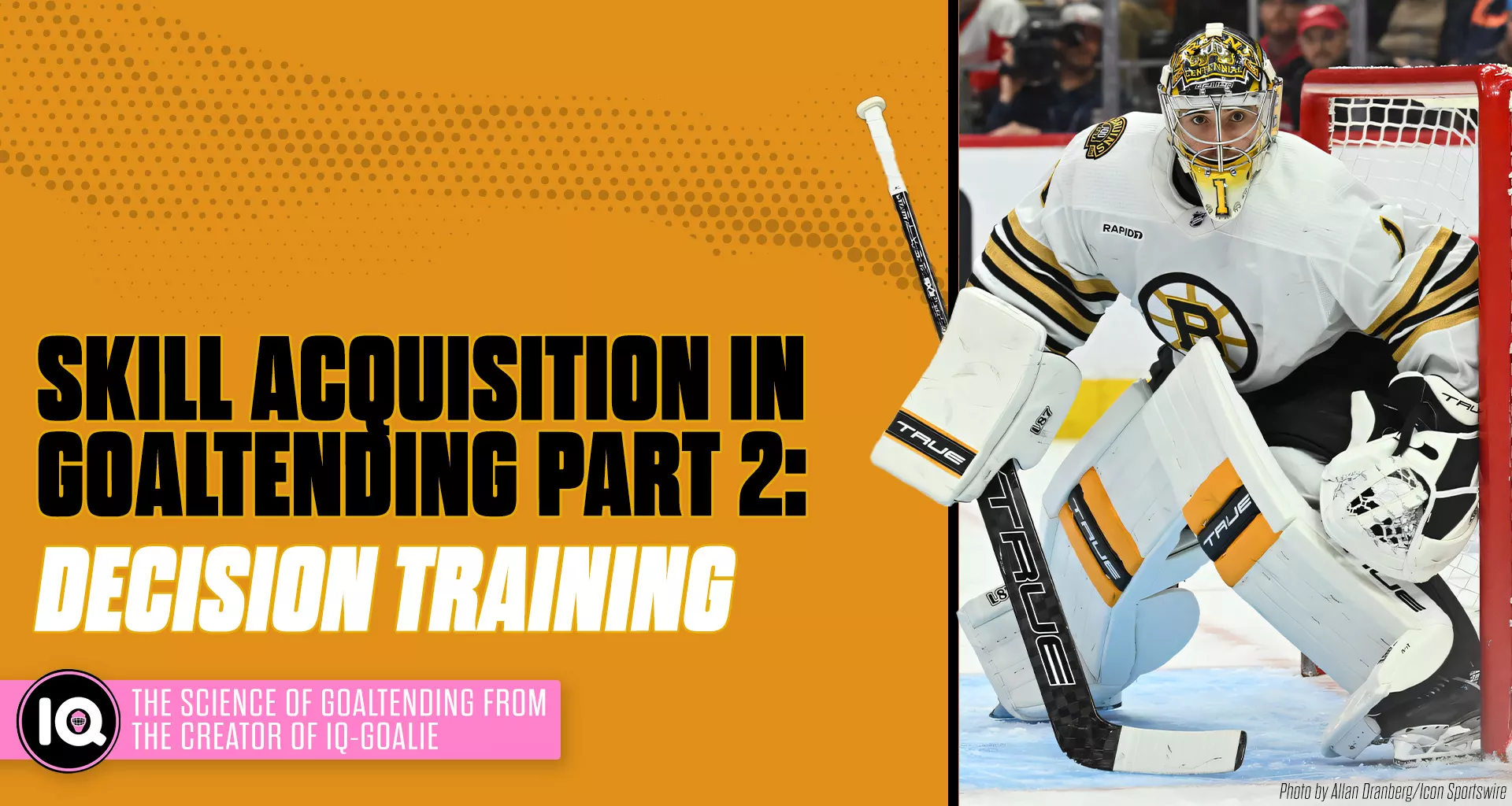
Skill Acquisition in Goaltending: Part 2: Decision Training
 This article in our Goaltending Science series is from Brandon Thibeau, inspired by his work as the founder of the IQ Goalie e-digest newsletter series. Instagram: @IQ_Goalie
Thibeau is a former Canadian Hockey League and Canadian University goaltender. He has a Bachelor’s degree in Psychology and a Master’s of Science degree in Physiotherapy. He is currently coaching U18 in Nova Scotia and is a Scout in the QMJHL.
As mentioned in Part 1 of this article, the way we train can be just as important for development as how much or how hard we train. Giving the brain the best possible chance of making a correct calculation in critical moments is the essence of training, practice, and preparation.
Knowing this, would we not want to practice in a way we know, based on evidence, achieves this goal? This is where many goalies and coaches can improve their basic practice habits to implement more Decision Training and less Behaviour Training.
Still ahead in this article:
The difference between Decision Training and Behavioural Training comes down to one analogy researchers use — and it involves Pavlov's dogs, a bell, and exactly why your practice habits may be working against you.
15+ years of goaltending film & coaching
Already a member? Log in
Think you're seeing this in error? Contact support
Keep reading
15+ years of goaltending film & coaching
Already a member? Log in
Think you're seeing this in error? Contact support