
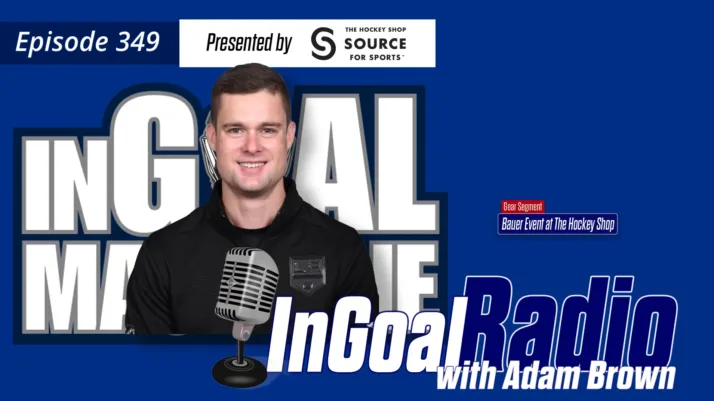
Episode 349: Los Angeles Kings goalie development and AHL goalie coach Adam Brown

Please subscribe and leave a rating — it helps us reach more goalies!


Los Angeles Kings goalie development and AHL goalie coach Adam Brown, speaking on InGoal Radio, emphasizes the challenge of bridging the gap between teaching technique and allowing goalies with different strengths and styles to play free. Brown, the son of a long-time NHL assistant coach, transitioned into coaching after his own playing career in minor pro.
- Adam Brown advocates for balancing structured technique instruction with giving goalies the freedom to play to their individual strengths and styles.
- Brown's path into goalie coaching was shaped by growing up as the son of an NHL assistant coach, giving him early access to high-level hockey environments.
- Mike Buckley is cited by Brown as a key coaching influence worth researching for goaltenders and coaches interested in goalie development philosophy.
- Junior tryout camps are examined critically in the Parent Playbook segment, weighing whether they represent genuine development value or a cash grab for young goalies.
- Dustin Wolf of the Calgary Flames breaks down a lateral power play chance, describing his decision-making on what he calls a '50-50 push.'
Episode 349 of the InGoal Radio Podcast, presented by The Hockey Shop Source for Sports, features Los Angeles Kings goalie development and AHL goalie coach Adam Brown.
Feature Interview
presented by NHL Sense Arena
In the feature interview presented by NHL Sense Arena, Brown shares stories and insights from a unique path as the son of a long-time NHL assistant coach that included getting to be in the room with some big names, his own playing days into minor pro, and the transition into coaching. He shares lessons from some of his early and current influences, including recent InGoal Radio guest Mike Buckley, and some exceptional advice on trying to bridge the gap between teaching technique and allowing goalies with different strengths and styles to play free.
Parent Segment
presented by Stop It Goaltending U
In the Parent Playbook, presented by Stop it Goaltending U the App, we dig into the truth about junior tryout camps — is it just a cash grab, or is it worth it for your young goalie?
Pro Reads
presented by Vizual EdgeWe also review this week’s Pro Reads, presented by Vizual Edge, featuring Dustin Wolf of the Calgary Flames breaking down a lateral power play chance and what he calls a ‘”50-50″ push. And in
Weekly Gear Segment
presented by The Hockey Shop Source for SportsIn our weekly gear segment, we head to The Hockey Shop Source for Sports, for a look at an exciting event coming soon featuring the Bauer staff and perhaps even a few pro guests.
Episode Transcript
Intro
Welcome back to the InGoal Radio Podcast. Woah. I am in control. No. But I'm in control.
So it's like the evil was that an evil laugh or
just goof? That sounded like Halloween to me. That was, the count from the Muppets is what that was.
Oh, well, that doesn't sound very evil at all. I just thought this was this is what happens when you let Woody into the control room. I am going to be driving the bus today. It's me, Kevin Woodley, along with David Hutchison. Daren Millard is busy.
Little playoff preparation for him and the Vegas Golden Knights. I told him, listen. I know it's busy down there, but if you want your shooters to feel like they will score on every shot, just calm me down. I'll come in, take your place as the practice goalie, and raise the confidence of everyone. It's, it's a great time of the year, Hutch.
Playoff hockey.
Very generous of you as always.
You know me. I'm always looking to make everybody else feel better. It's that time of year. Playoffs start this weekend. We still don't we are Wednesday, carry the one, Thursday, Friday, three days away from the start of the Stanley Cup playoffs, and we still don't know half the matchups.
I covered a game between the Vancouver Canucks and Los Angeles Kings last night. And at the end of it, the Kings were still in the locker room, players scratching their heads, trying to figure they could go anywhere from eighth in the Western Conference and the Colorado Avalanche in round one all the way to second in the Pacific and hosting in the first round of the playoffs Wild. Depending on the results of the final game of the regular season. So I would love to do a breakdown of all these matchups on this episode, but the truth is we don't know
We don't know what they are. There could be a few goalie coaches doing some very late night pre scouts before the weekend, aren't there, when they finally figure out who they have to pre scout?
I will, say this, my friend. They only have to focus on one. Well, I guess in some cases, they'll have to focus on two because we're gonna see some tandems in the first round. I think we're gonna see some teams use multiple. But as somebody who is currently in the midst of watching over 1,600 goals charting and breaking them down for nhl.com, I think I would take one or two right now.
Not that I do near the job that NHL goalie coaches do, but my god, I am on fumes right now. This is it's a fun project for nhl.com, but it might be the death of me starting in round one this year.
I don't even know how to comment on that. I'm sorry. It's so hard.
Sleep is optional. Sleep is optional. We'll all sleep when we're dead. Kinda like watching the first round of the Stanley Cup playoffs. We'll all sleep when we're dead because it's going to be chaos.
It's always exciting. Isn't it best time of years? I guess that's just the toughest part is sometimes it's the first round that's the best.
So here's the thing. Let's we won't do any specifics, but my question for you is am I completely wasting my time anyways? Like, are we at a stage? And I've had this conversation with a few goalie coaches. Yes.
I think there are some specific tendencies you can probably dial in on. But in an era where save percentage is down to .896 around the league, where every team is focused on quality, not quantity, do we think that maybe this is just now teams wanna get to their offense and what they do best and less about picking apart the specific tendencies of the opposing goalie? I've had that sort of posited to me by a couple of goalie coaches who are much like me in the midst of trying to do all these breakdowns, and yet I'm just not sure they get paid as much attention to as maybe I might like to think. Don't tell my bosses at the NHL because they pay me very well for these things.
It's a very dynamic game and in many respects, even offensively, you're reacting to what's being given to you And so setting up for what you think might be a tendency on a goaltender, is going to be a challenge, for a particular player to be able to exploit it. Look, you've only got some players on the team are even gonna wanna see that pre scout. So dynamic game, difficult to create the scenarios where you can exploit them, fewer players wanting to actually see the pre scout and do something with it, and then it's just hard to execute on those things anyway. So my guess is it doesn't make a massive difference. However, I do think it gives players confidence to know that no stone is unturned and they do have everything available to them to become successful.
You know, if you just said, hey guys, we're not gonna do a pre scout on this guy because there's no point. Yeah. Like, you know, we all know how to score in a goaltender. We go east west, we go low glove, we we exploit, you know, similar things on every goaltender. So there's no point.
Then the players are not gonna be feeling like they've been put in the best position to be successful. So I do think those pre scouts matter for that reason if no others. But look, it only takes one goal to make a massive difference in a game. So if you can exploit even the tiniest thing in the occasional situation, why would you not try to do that?
Well said, mister Hutchison. I think the one place you can maybe again, I don't know that you'd go out of what you do best to create it, but when you're up a man, when you have the power play, to me, that might be one area where you can try to do something that might play towards I mean, goalies have maybe less so, obviously, at the NHL level, but goalies have a side they're better to. Left to right,
right to left. Of course.
I mean, you do the charting and you see it. Most of them will have a side where, hey, it's a good push in control and another side where it might be a stick first dive. Mhmm. On a far more regular basis, I charted one this year. 40% of the 100 goals I looked at were on plays below the bottom of the face off circles.
So pop passes from behind the net, and that might be a defensive issue
for his
team as opposed to just what he's doing. But when you see a total that high, you gotta be thinking, hey. Like, let's work from sharp angles and below the net here. So it's it's interesting.
And should your I mean, look, to foreshadow the feature interview today and talking a little bit about understanding your team's defensive system as a as a goalie coach, I would assume the pre scout is not just staring at the goaltender and seeing that 40% issue. But like you said, it could be a systems issue, and that's probably on the goalie coach to identify that as well.
There you go. And thanks for getting me back on track, Hutch. Cause now that I'm in control of the bus here, I'm driving it right off the cliff. I forgotten to tell you, this is the InGoal Radio Podcast, and we are presented by our friends over at the Hockey Shop Source for Sports Langley. We have a featured guest this week.
Actually, we shouldn't call this the InGoal Radio Podcast. We should call this the Los Angeles Kings goalie department podcast because for the third week in a row, we have gone inside the Kings goalie world. We started with Mike Buckley, goalie coach of the Los Angeles Kings. And, hey. Awesome interview.
Great interview. And I talked to Anton Forsberg. Didn't run it that week, but I think I'm gonna put a story up because Anton Forsberg has quietly taken over as the number one. He won four in a row to get them into the playoffs. He is playing outstanding, and we heard Mike Buckley talk about the staring at the puck exercise, the breath work.
Forsberg points to that completely for why he's been so good that like, he feels like it's made a major change in his game. He's always been very technical, quote, unquote, Swedish goalie. His worked, but he's learned how to relax and play with a little less tension, and he credits a lot of it to Mike Buckley. So I'll combine those words with with what Buckley Buckley taught us, and maybe we get a little little article up over at InGoalmag.
I'd love to see that. This week. Just personally, I would love to read that.
Cam Matwiv, Slukinski last week won his American Hockey League, his professional hockey debut since we last chatted with him. So congratulations to Hampton.
Congratulations to him for sure. That's exciting.
And heading into the playoffs at the American League level, this week's featured guest, Adam Brown, who this is one of those ones where, no, folks, we aren't just going on a run on the Kings organization. But we had Mike who we've wanted to have on for a while. Then Hampton turns and signs pro and the Kings organization, fantastic from a media relations standpoint. They made that happen on short notice. And as part of that process, I was talking to Adam, who we've known for years, and the light bulb went off.
Hey, Woodley, you're an idiot. You haven't had this guy on as a featured guest yet. So we rectified that this week and it's another fantastic conversation.
Hey, It foreshadow the parent segment here. Can you imagine a junior hockey team in first place headed into the playoffs and they say, hey, got this prospect in town. Let's give him a game. Let's just break from what we've done all year that's got us where we are and put this kid in and see if he can play. Like, that's development that doesn't happen at the junior hockey level.
Incredible. Like, kudos to them. I mean, I know a lot of teams do that this time of year, but but junior hockey coaches, you might wanna wake up and watch what's happening at the professional level because that's development.
It is. And I think I I don't wanna put words in anyone's mouth, Hutch, but this the great irony of this is a lot of higher end junior hockey teams will probably tell you, we're not a development league when it comes to goaltending. We're a win league.
I I mean, I will give them this. The purpose of the Ontario reign is to develop players for the Los Angeles Kings. The purpose for junior T Max is to develop players for themselves, and they only get a short window. So the system is not set up for development.
Okay. So you're giving them an out there, but it does it is that is a pretty jarring juxtaposition when you consider the age of the athletes and what really should matter at that point.
I I would suggest it's not just goaltending. I think junior teams are not big on developing players, period. I mean, it's it's it's a little easier to to put a fourth line winger out there for a couple of shifts and hide them, but I've seen lots of junior teams where there are players stapled to the bench and only there because they have a minimum number of players they have to dress or whatever. Well It's it's really sad.
Well, as you mentioned, the Reign not the only team that did it. A little foreshadowing of my own here. Next week's featured guest got his pro debut over the past week. Adam Gajan signed with the Chicago Blackhawks. Can't wait to bring you that conversation from a young man we've had on before, but who has since changed the way he focuses on development and spent times at the Olympics.
So that's to look forward to for our audience next week. First, we got to get to Adam Brown, but first, we gotta get to
the Gear Segment presented by the Hockey Shop.
I wasn't sure where I was gonna go there. See, again, the wheels wheels off the bus. It's like an episode of speed around here. Woodley can't keep things going. Hutchison is just pulling it back in.
He is our Keanu Reeves, folks. Does that make me Sandra Bullock? Am I driving the bus?
I don't know, but I
don't mind me and Keanu. That's for sure.
That guy hey. He's a goalie. And he's cool.
He is a goalie.
He's cool. Alright. So we are gonna go to the Gear Segment with our friends at the Hockey Shop Source for Sports. They've got a special event coming up that that Cam is gonna tell us about. And no, folks.
Gear
It's not Tendy Fest. But before we get to that, a reminder, there is a ton, a ton of new gear coming in every day at the Hockey Shop Source for Sports. The Warrior Alpha line is there in store, getting ready to launch this summer. CCM Tacks. Oh, by the way, full CCM Tacks overview online at ingoalmag.com.
Cam has CCM Tacks in store. The stick, the pads, the blocker, the glove. So in addition to all this great new stuff that's set to launch at retail, Cam has to make space for it. And you know what that means? Sales on previous generations.
One of the things that he's blowing out right now, something we've reviewed and done an overview with, in the past on this gear segment, Bauer Reactor five. You remember the one that sort of has that it has that it's it's the second price point r five pro, but it's got the old Reactor graphics on it with their their digiprint on a second or lower price point product. 40% off. It's blowout time over at the hockeyshop.com. So make sure you check that out.
Obviously, creating space on the shelves for something new. So make sure you go check it out. And speaking of Bauer, they might have something to do with our Gear Segment today and a special event that Cam has to tell us all about. Let's hear from him.
Welcome back to the Hockey Shop Source for Sports. I'm here
with Cam Matwiv, and let's start, let's let them down easy here. Cam, we'll start with the bad news. We've hinted at this before on the show. No Tendy Fest this summer.
Yeah. Yeah. It's probably time we tell everybody.
No Tendy Fest. Okay. We're done with that. Sad Cam, no more. We don't wanna bring Cam down because, the good folks at Bauer have stepped up, and, they're bringing a show on the road to you in late May around the launch of their new fuse line, one we haven't heard much about or seen much of.
It kinda tough to figure out who's actually wearing it at the NHL and who's just got skin pads. So you tell me what's going on. Bauer in store. I believe it's May. Fitting, new product, featured guests.
So first off, tell me what's going on. How do people get in? Walk us through it.
Yeah. I mean, you you jumped again a little bit. So the May 23, which is Saturday. That's Saturday. That's kind of following your mind.
Twenty second is the launch of Fuze, but Bauer will be in store on the twenty third around for pretty much all day. It will be ten to 04:00 in the store. The reason why you should come out and check things out. So I I mean, there's Bauer's product manager. They're gear designers.
I have some pro services reps here. You can come and get fit specifically by them. Ask many questions. You know, talk about the new fuse line specifically. Even if you wanna talk about some of the older stuff, that's no problem too.
Fitting for chest, fitting for pants, even fitting for skates and helping out that way too as well. So a lot of awesome knowledge all available at your fingertips.
So I is confused because, we're gonna be a part of something on May 22. Are you telling me that's so exclusive that the general public can't get in?
It's it's it's almost still a little bit of a secret, so you have to kinda stay tuned with the
Oh, so there's
a contest coming. See, we're trying to build this up, Cam. Hype. Hype.
Hype. There is a contest coming. Yes. It will be, win your
Get off your get off your hype wallet and share.
My hype wallet.
God. You get those little, like, alligator arms, like, when the check comes. Just come on. Share. Let's go.
So that night, we haven't really announced it, but I guess it's happening here live right now, like, announcing it. There's going to be a bit of a we'll call it a VIP slash win slash evening with Bauer. Put it that way. So I'm planning on having a couple of Bauer pro athletes out, do a little bit of a q and a session, a chance to kinda learn why they like the Bauer equipment, you know, what what fuels them in that sense, and then also a chance to kinda do everything that you could do on the Saturday, but in a more exclusive fashion, we'll call it.
Will you be there, Cam?
I will be there both days.
Yeah. That makes it worth it right there. So how can people find out more as this gets announced? They just keep an eye on your social channels. Do they call you endlessly nonstop to find out?
Would that be a good idea?
No. That wouldn't be a good idea. But, no. If you wanna learn a little bit more, we have a our first initial post up on on our socials, so keep an eye out on those. And then for more details on getting yourself, you know, into that Friday night potentially, keep an eye on our socials as well.
We'll announce the contest on there within the next couple weeks here.
So the cool kids, Friday night, Joe Public, Saturday, May 23.
Yes. Which also cool kids can come too.
Yeah. But I'm not coming, so not not as not as many cool kids. I'll tell you that right now. Any prizes, giveaways? Come on.
I mean, they like to hear, you know, things a little bit closer to the chest here. So keep an eye keep an eye on our socials, but, we got a pretty nice potential potential prize. I'm sitting on my wallet for this one.
It's a place you're familiar with. It's why you walk so funny. You got that George Costanza wallet in the one hip, and you're constantly sitting on it. Cameron, thank you very much for your time and for filling people in. We we we let them down easy.
No attendee fest. No chance to mingle with us. But May 22, chance to win, to get in, and May 23, chance to find out what's the latest and maybe the greatest from the good folks over at Bauer. Alright. There you go.
In person, InGoal will be there, we believe. Bauer. At the Hockey Shop Source for Sports. May 23. If you're one of the lucky ones that get to get in early and get a little exclusive sneak peek the night before with some special guests, I believe we'll be there for that.
Looking forward to it. You know what I'm also looking forward to, Hutch?
What's that?
A little spring hockey in my CCM tax gear. Oh, really? Oh, yeah.
But we're trying to make the gear look good here.
Oh, we're not gonna let anybody see me in it.
Actually actually, if you look good out on the ice, that tells us a lot about the CCM tax gear.
No equipment is that good, my friend. No equipment is that good.
It is. I've seen you play, Woody.
Well, we've had we've got some feedback on it, including from Stuart Skinner of the Pittsburgh Penguins. He's been in it all year starting with his time with the Edmonton Oilers. He was wearing AXIS XF's skinned tax gear. We've seen the new Skinner skin? Skinner skin.
We've seen the new v shape. We've talked about the new core. We've got that overview, including some feedback from Skinner online at ingoalmag.com. So folks, if you've been hearing, you're excited about the new CCM Tacks, little Spider Man looking graphic, depending on how you wanna do it up on the customizer. Wanna know more about it?
How it fits? How it feels? How it performs? What's it designed to do? What are the changes?
Glove. That glove feels so nice. They've made so many improvements in their glove at CCM over the last couple of years.
Closure It's a standout
one. Yeah. Standout one. To the point where and listen. Admittedly, like, when they made some major changes six, seven years ago, they tried, they experimented.
They made the gloves a lot lighter. They experimented with things like removing finger stalls. Not all of those changes work, but now I think they've got it dialed in. And, you know, I was over at the Hockey Shop recently just sort of trying on some gloves. And I think CCM may have gone from the one of the ones that used to be harder to close, and that was one of the issues at retail.
Kids grab it off the wall and they can't close it. They don't buy it. They might be one of the best. Like, True and Bauer's have now become some of the stiffest, hardest to close off the wall, and CCM is probably up there, maybe with Brian's, is one of the easiest to close right off the wall. So some major steps, and we see that continue with the $5.90 break in the tax.
So folks, if you got any questions about it, head on over to the you can go to the hockey shop, Source for Sports. You can ask Cam for some advice, or you can head over to ingoalmag.com and check out our full overview of the new CCM Tacks site. Is it gonna be for everyone? No. Some people might prefer an EFlex line.
This is a very different style pad and we walk through all those specifics in our overview.
But the glove is I mean, I remember when we first got to try quietly the demo EFlex seven glove before it was, you know, out there and I remember being shocked about how perfectly it fit my hand and then this one's another step forward. Talking about being broken in, we had a a test session here locally with with our, tack set and goalies out in it. It was brand new. It was the first time this set had been used. The other goaltender came over to me and said, wow, that stuff looks like it's ready to go for a game tonight.
Like he could play in it right now. And so for for somebody who's very experienced, very knowledgeable to see that happening and to think that he'd be willing to put it on that night. I think that's pretty big statement.
Yeah. And like I said, like, this was a process for them. Right? Like, went back and rebuilt their gloves from scratch, and there were some misses in there. Like, the finger stalls, I didn't hate it, but buyers didn't love it.
And so they've gone back to having full finger stalls. They got a new material in the glove. It closes really nicely. Some breathability that we thought was marketing hype on the blocker side, but our Oh, the blocker. Our testers actually said it was legit.
Like, it felt more breathable. That matters, especially as we're heading into spring season. So like I said, some some some improvements up.
Yeah. Absolutely. I was I was about to give away the breathability thing. Actually, we don't even mention it in the review. We mentioned that it is breathable.
That's because the the ultra sucks. That I I wrote the review and I missed the detail there.
That's Well, no, I laid up the review on the site and I noticed what you said and followed up with with the tester. But yeah, there's a this small, small leather tab. What is it? Maybe an inch and a half long and maybe half an inch wide that secures the hand to the blocker board on the outside. And it's got is it three diamond shaped cutouts I think?
And and you mentioned that it's for for, for cooling, for breathability and I thought that's absurd. It actually No, I was going say it reminded me more of the old days in cycling equipment when they used to drill holes in some of the stuff just to make it lighter. I thought, well, you're not trying to make a blocker lighter that way, but like what's the point of this? Mention it to a guy and he's like, no. 100% it makes a difference.
I I don't understand. He wasn't even aware that that was one of the things that that this glove does.
So why we do the testing. Hey. Shout out to Stuart Skinner who replied to me on a game day. I thought he was still out after taking the puck to the eye. Sent the note the day before on a non game day because I'm not texting these guys on game day.
Mhmm. Got back to me the next day with a whole and we went back and forth by text for his feedback on on the CCM tax line for a while. Then I'm watching hockey that night, and he was starting. So he No. Really?
I thought he was still up with the eye, and that's why he was getting back to me.
Careful. Some stupid old coach is gonna be
like, you shouldn't have been texting on, the day of the game. You should be focused.
Yeah. To which I will reply, Martin Brodeur used to talk, to the media two hours before the puck drop. So Good boy, Marty. One of the best. One of the best.
Worked well.
So yeah. So make sure you check out our review, folks. We hope to have some more feedback, on the PWHL side and Ann-Renée Desbiens who matched Aerin Frankel with her seventh shutout of the season. PWHL record. She got a save percentage in the nine fifties in a one nothing win over Aerin Frankel and the Boston fleet.
Hell of a game. Was on TV here. Watched it. She's been wearing CCM Tacks all season. Hope to grab some feedback from her when she's in town in the next week and a half here in Vancouver.
Hoping to catch up with Gwyneth Philips from Team USA and the Ottawa charge. She's been wearing it. Probably a natural transition for her. She was in a Brian's pad that had a similar v shape. So we'll get some feedback from her.
She's playing exceptionally well. So, yeah, that's what we do over here. We try and get pro validation and feedback as well as from our own testers at all levels, including beer league plugs like myself to give you a feel. It matters.
It matters.
It matters.
Because beer leaguers are gonna buy it.
And we've got we've got lots more coming up. We were gathering feedback too. I know we've done the overview on the Alpha Surge as well, but we're gathering more in person feedback now that we've got that here. The glove, the blocker, and those pads. So many different strapping options.
It's taking a while to sort of dial it in, but one of the fun parts of the process and your individual preference will will sort of affect how you do it. So make sure you keep an eye out for that. We thank Cam for this week's Gear Segment, and we transition now. Not smoothly because we don't have Daren here and he's the king of smooth. We have me and I will well, speaking of smooth, segue, Dustin Wolf.
Dustin Wolf is smooth.
He is smooth.
He's so fun to watch. And he's
He is smooth.
He's our guest on this week's ProReads segment brought to you brought to you by our friends at Vizual Edge. Do you want the puck to look like a beach ball? Every goalie has that night here and there where the puck looks huge. You're ahead of every play. You feel calm, patient.
You're in total control. Then there are the nights where you're half step late. You see it, but you don't really see it. You're reaching, you're guessing, you're fighting it. That's not your technique.
It's your eyes and your brain not processing the play fast enough. Visual Edge fixes it. It measures how well your eyes track and process the game then gives you a custom plan that trains improvement. Three fifteen minute sessions a week on your laptop or tablet. That's all it takes.
It's what NHL goal is used to make the game slow down when it matters most. And you can get 10% off using the code InGoal, I n g o a l. But if you're an InGoal premium member, 20% off. I'm not gonna give you the code because you gotta be a member. Where do you find it?
You go to ProReads. Like this week's ProReads featuring Calgary Flames goalie, Dustin Wolf. Did you like this week's ProReads, Hutch?
I did like this ProReads. And, funny, we were just talking about the new CCM pads. Of course, Dustin wears CCM. And the end of the ProRead after he makes a great save, he slides about eight feet to one side, and I thought, well, that tells you something about the CCM pads. And not out of position.
This was well post save, and it was a a proper decision on his part, but that stood out for me.
Yeah. Well, interesting. You you know what? He is, he might be one of the few guys at the National Hockey League level who is wearing a softer flex option in his CCM pads, which is interesting. And obviously so Dustin Wolf, and this is what we get into it.
Right? Like, we would not you're we're not gonna talk about CCM Tacks with Dustin Wolf because he wears an EFlex because he prefers a softer pad, even softer than some of the EFlex guys. So, this week's ProReads featuring Dustin Wolf talks about a fifty fifty skater slide lateral. And I think in a lot of cases, most people are gonna try and beat plays on on their skates or slide. And Wolfie basically walks us through his decision making process on why he goes, I don't know how we say it, Hutch, like sorta, oh, let's use his words, fifty fifty.
Kinda he's kinda halfway on this one. So, it's a breakdown of a lateral play. There's several different elements he looks for that go into that decision. He walks you through it on video, why he comes across the way he comes across, and what some of the keys are. That's in this week's ProReads, all at ingoalmag.com, featuring Calgary Flames goalie, Dustin Wolf.
Speaking of soft pads, I think we missed something off the top of the show. Who wore soft pads and had a major announcement this week, Kevin?
Oh my goodness.
Mhmm. Wow. Softest.
This is the this is the problem with me being in charge. We miss major things. Daren, please come back soon. I know
I think we talked I think we talked about before the show, so I gotta wear this one just as much.
Oh, how did I miss the retirement of Jonathan Quick? Man. Yeah. You know, I think I got an audio clip of him talking about how soft his pads are? We I had this conversation with him last year.
Let me see
if I can dig that up.
I just suppose it feels like it's, like, part of my leg. Right? Opposed to just this pad that's resting in front of it. Right? So, yeah, that's I guess that's the best way to
put it. Right?
That's the No.
Totally fair. Yeah. Like, I Like, some guys like I said, it's that some guys wanna feel that connection. They want the pad to move with their leg as opposed to around it. Yeah.
Yeah. Not all guys are flexible enough to pull that off, though. Is that a big part of like, did you ever tinker, or has that just always been how you've worn it?
I mean, I was when I get newer pads, I usually wear them a little bit more loose.
Okay.
As they break in, I just kinda tighten them tight tighten them up. Right? You know, when you get them soft to a good spot where, you know, I like my pads a little softer. When it when it kinda hit that, then it's like
You might have the softest pads of the league.
I'm comfortable. Yeah. Well, I'm comfortable, like, strapping them tight and knowing that it'll it'll move with my leg and, you know, with all that post enhancement stuff and, you know, you don't you don't wanna hold. So yeah. Yeah.
So as I'm breaking in pads, it usually takes a couple weeks to kinda before I wear them in a game, but I'm kinda tightening them every every couple days. I'm doing them a little tighter, a little tighter.
He he loves cranking those things on tight. Would the Throwback. Will there ever be
Throwback.
Will there ever be another required
to wear brown pads all the time, really. Absolutely.
Like, his pads, like and and they stiffened up as the years went on, but not much. You could literally, like, grab them and, like, squeeze them down. Like, they were so soft. I've been in that room through through all of them. Covered their covered their playoff runs in the early years.
Remember him being on the cover of the actual we had a magazine, the actual InGoal Magazine in 2012? He was sort of the first guy that brought the RVH. Not the first guy to bring it to North America, but the first guy to popularize it. Huge. Like that cup run-in 2012 was sort of what made it what we heard from Anders.
Remember we heard from Anders Nelson saying that he had used it at an islanders camp, like, the year before. He'd learned it in Sweden, brought it to an islanders camp, and and somebody in the goalie coaching or goalie coach department told him not to use that because it's never gonna work over here. And then Jonathan Quick won a cup, and now everybody was doing it. Hold my beer. So the irony there is as old school as we think of Jonathan with his gear, that willingness to change and adapt was such a big part of his career, including essentially becoming the poster child for the RVH becoming popularized in the National Hockey League.
It's what a remarkable career it was. One of the one of the best American goaltenders of all time. Hall of Fame first ballot for you? Two cups?
Oh, yeah. No no no question. No question based on the cups, based on the longevity, based on where he is in American goaltending, and he changed the game. And like you said, not invented by him, but without him, it probably doesn't become popular like it is.
Good reminder. Good catch by you. We would have missed that this week.
Man, it's like
it's a good thing somebody's paying attention here.
Yeah. It's I I saw somebody make a post about their childhood being gone with all the guys who've retired. Carrie Price, Jonathan Quick, Ryan Miller Lundqvist. Lundqvist. Lundqvist.
Lundqvist. Lundqvist. Go down the list. It's oh, it's it's sad. For us to you shared a cover of one of our old magazines with with Quickie on it when he was just getting started, so that's making us really old.
Well, I mean and and so now I'm looking up at the office walls here where we have some of those InGoal Magazine covers. Thanks to the guys who have actually scribbled their their names on it for us, including that Jonathan Quick one. Holtby. I'm looking at Holtby.
Another one.
I'm looking at Jonathan Quick. I'm looking at Carey Price. I'm looking at Jimmy Howard. Another name on that list of guys who've retired in the last ten years. So major turnover in goaltending in the National Hockey League.
Crazy times. Well, speaking of turnover.
Couple of old men here shouting at the clouds.
Yes. Yes. While looking into the clouds, dreaming of days gone by. Wistfully thinking. Parent segment, my friend.
Mhmm. Let's go transition spring. Spring is a transition and with spring comes spring hockey, spring camps. Before we get to that, spring is also an opportunity to keep building your game even after the season ends, and you can do that with the Stop It Goaltending U app. Would you like twenty five years of NHL goalie experience at your fingertips on your phone?
You wanna tap into the goalie parenting expertise that helped Joey Daccord reach the NHL? That's what you get with the subscription to Stop It Goaltending U the app. All the knowledge from Brian Daccord has been an NHL goalie coach, scout, and director, as well as all the insights and expertise from his staff at Stop It, which includes a long list of veteran NCAA coaches. It's all delivered in easy to digest chunks, including five short daily primers, weekly style analysis, breakdown videos, and drills you can take onto the ice with your team and coach. Plus, you get a subscription to InGoal Magazine Premium.
It's all included. So check it out now at the App Store or Google Play and get the boast of both worlds with a subscription to Stop It Goaltending U the app and included a subscription to InGoal Magazine Premium. Hutch, parent segment?
Parent segment?
Parent Playbook
Parent Playbook. My bad.
Parent Playbook. I it's hard to make that stick, but there you go. We've talked about this, Woody, in the past. We've knocked it around from time to time. The question is, are junior spring tryout camps or or there's a lot of junior showcases out there on a similar vein, are they worth it?
Usually, some parent is saying, should I do this? Is there any chance? Is it just a money grab? And I do love getting this question because my answer is yes and yes. It is worth going and yes, it is probably a money grab.
Teams are making money on these camps. Look, it's not a secret and honestly, it's not a scandal either. Hockey is a business at every level now. There are problems with that we've talked about before, but that ship has sailed. If you're still at the stage where that fact makes you angry, I would just gently suggest set it aside because it's gonna get in the way of actually thinking clearly about what these camps offer for your kid, Woody.
I'm kinda like the Hulk. Everything makes me angry.
That is true. But sometimes we have to take a deep breath and and collect ourselves for our kids, Woody.
That's why I have you my So
we'll just start there. Can your goalie actually make a team at a development camp? Yes, it happens. Not a lot but it happens. It actually happened to our kid.
Sent him to a junior camp with almost no expectation of that outcome. He was 15. That's not why he went. He went because it was a chance for him to challenge himself, to measure himself against players many years older, and to see where he stood. And then they offered to sign him for the following season.
He was too young. Big surprise to all of us, but it led to a season of practices with the team and even a few games as an AP. Pretty cool opportunity. Here's what I want you to hear. That surprise only happened because we weren't chasing it.
We went in with low expectations and in my opinion, that freed him to just play. Another bit of a foreshadow to the feature interview today. I'll be honest, that age probably played a big role. He was a big kid, played and moved well and he was so young so they saw potential. So if your kid is younger, maybe it's not a bad thing to do.
It is a sad reality. The spring camp opportunity is a lot tougher for a 19 year old than it is for a 15 year old but that doesn't mean don't go if you're older. Again, expectations matter. Now look, all of these camps are not equal and the experience is going to be polarizing depending on how each kid does there and their family's experience. So do talk to families who've been to that specific team's camp before.
Not just hockey families in general, if you can, families who sent a goalie to the camp for the same organization. You'll have everything from great experience to total waste of time. Some will have too many kids. I once saw Woody a lineup not at a rink not far from you actually with more than a dozen goalies lined up at a net taking turns at an apparently BCHL camp. Brutal.
Others, in force sign up limits. I've even seen the first ad from a team goes up and they've already sold out all the spots for goaltenders. So they're being honest in that case. The information you can get from families is really useful. Reach out and collect some of that information.
But look, if you've done that homework and you can manage the time and money, and I do want to be clear, if you can't, that is okay. Nobody should be stretching themselves thin for a tryout camp. But if you can swing it, here's how I'd think about it going in. Your goalie is probably not making the team. Go anyway.
It's true. Teams often are already full or close to it. They know their goalies for the season. But if you're there for the experience and if a coach sees a good kid, they won't ignore them. The other thing that's true is maybe you're at a junior a camp.
I know junior b coaches show up at those camps to see what's happening out there. They wanna see kids maybe at a higher level to see maybe how they'd fit in with their level. You 18 coaches go out to junior b camps. The hockey world is a lot smaller than you think and people talk. Another reason, by the way, for staying positive if you don't have a great experience because people will hear you in the stands grumbling and complaining, and I've seen that cost goaltenders opportunities.
So back to what I was saying, a goalie who competes well and carries themself well at a camp where they weren't expected to crack, that gets noticed. Maybe not by that team, maybe not this year, but a door you didn't even know might open up and maybe you can walk through with nothing to lose. It's about the experience. You're getting multiple games over multiple days often against older kids or even if it's your own age group with kids from different organizations, chance to build relationships with some kids you're gonna see over the season. It's an opportunity.
And of course, low expectations, I should say, are not the same as low effort. Send them in to compete like they belong. Just don't send them in expecting or needing a specific outcome. Just go out there and have some fun. Let me know your experiences whether it's one coming up or a past camp experience.
I love hearing from everybody out there. Send me a note parents@InGoalmag.com.
So the answer is yes and yes.
Yeah. Just just go. Yeah. You're right. You're probably not making the team, but if you go in with that attitude but you still wanna have a great experience and you still wanna work hard, something good might happen.
You probably learn something along the way.
See, you're the reasonable voice in this operation, my friend. Because when you told me what you were doing today for parent segment, my first question was, are just gonna rip them for a cash cow?
You did say that. That's right.
But You know, the other PC didn't even say
Like, that that's okay. Just accept it for what it is.
It's a great way of looking at it.
It is. And you need gameplay, by the way, just to learn how to read the game. So it's, you know, relatively low cost gameplay.
And and hopefully, like you said, a chance to push yourself, like, if it's above your head, age group wise or skill wise, see where you rank.
And it's not so far above that you should feel scared off. Like, if you go to a BCHL, a junior a camp, it's not all BCHL current players. They're already on the team. It's guys who want to be there. So it's it's a tier below, but it's probably a tier above where you are right now.
And I have I will say this. I know a family that did one of those camps that had some negative experience at other ones. I'm not gonna name the teams where it felt like a meat market. And to your point, may have been may have even been the same team we're thinking of, the lineup of goalies and 12 guys at a net, and you're not even getting enough reps to show anyone anything anyways. Or or another one where great experience, wasn't a spot, but the team needed a goalie for some summer skates.
And there were members of the team not necessarily taking they were at the camp. I can't remember if they're taking part of it. They were involved in the camp. And he this young man made enough of an impression that he ended up going out with them for summer skates. And, yeah, hey, like, as a goalie, sometimes summer skates could you're out there as a target, but he ended up getting to play much much like yours like Maddie did to play against guys at a much higher level as a result of the impression he made.
He ended up signing with a different team a year later, more than a year later, but, again, it opened the door to another opportunity that he would not have had if he hadn't attended that camp. So there there are there are both sides to that. That's why the answer is yes and yes. But good on you for you know, it really is important reminding parents not to go in blind, not to go in naive, but there's still opportunity even with some of those admissions.
And as much as I said, ask others for their opinions. Just don't assume what everybody else is telling you is the thing either. I mean, the first person you bump into has had a negative experience. Don't assume that gonna be bad.
Well, you bump into me, it's automatically gonna be negative. Mister
It's it's funny. I'm glad you didn't mention the team and I I didn't mention the team that I saw either because there's also a ton of turnover in junior hockey. Teams get sold very quickly to so to label organization x as terrible for tryouts when maybe it was five years ago, now you got a new owner, new GM, new coach, could be completely different. So Good. Good.
Give it a go.
See that happens.
Good reminder. Good point. Also, to make sure try and talk to people that have been involved in it recently because that too can change depending on which parents you're talking about because everything around it changes. Mhmm. Great advice as always, my friend.
Now speaking of great advice, I think it's time for us to get to our feature interview. I have I was maybe delayed in introducing it at the start of this podcast, but let's not wait any longer. Before we get to Adam Brown, we do need to hear from our presenting sponsor, NHL Sense Arena, who have been Hampton Slukkinski
the LA kid, they use it. They do? It's funny. This I I tease you about not using the word segue every time you make a segue and here we've overused the word foreshadow. But earlier, I think we foreshadowed someone else because when I talk about NHL Sense Arena this this week as thanking them for presenting our feature interview, I want to mention that it is fun and it is serious, which is two things that we think are important in the position.
It is real goalies, and it is doing real mindset work. If you followed NHL Sense Arena over the last few years, you know it. They launched as a goalie training tool. They've been picked up by NHL goalies and teams. It itself has been rebranded as NHL Sense Arena, and the latest version is licensed through the NHL and the NHL PA to use the names of the players, the likenesses of the players.
It is incredible. But the addition that caught our attention recently is the Pete Fry, the goalie mindset guy module in NHL Sense Arena. Straight up, I had an AHL goalie excuse me, Woody. I had an AHL goalie reach out to me last week who uses Sense Arena, he said, should I be working with Pete Fry? To my surprise, he didn't know that Pete had modules in Sense Arena even though he uses it.
There is so much stuff in there. You can get stuck into your routines and maybe you don't go experimenting seeing what's there. So I said, go put your headset on, go work with Pete right now and see if you want to talk to him in person. I just think, like I said, it's testament to how much great stuff is in NHL sense Arena. Pete, who we've worked with closely almost as long as InGoal has been around, has built an integrated mindset training experience inside NHL Sense Arena, not just a motivational video tucked inside a menu.
It's a guided routine built around visualization and identity based affirmations delivered in VR where you're already isolated from the distractions and physically present out there in the hockey environment normally. Doing that work inside that same immersive space where you're about to face NHL caliber shots if you would like in is just completely different experience. It's designed for every level, minor hockey through pro. It is, as we've said, the same tool that NHL goalies are using, and it's available for you and your kids today. Check it out at sensearena.com and, of course, use the code I g m 50 to save even more.
Without further ado, an interview that takes us from childhood and being in
Feature Interview - Adam Brown
the locker room with NHL goalies and NHL goalie coaches to Francois Allaire camps to working with Bill Ranford in the National Hockey League and Mike Buckley, our recent guest. It is Adam Brown with a fantastic story, a fantastic path to pro hockey, and a little minor pro as a goalie, and now up to the highest levels as a goalie coach. One of our favorite guys to talk to, finally, on the InGoal Radio Podcast presented by NHL Sense Arena. Really excited to welcome to the InGoal Radio Podcast first time guest. And I gotta say, that's a that's a not on purpose omission on my part because I've had the pleasure of talking to our guest today, Adam Brown, many times over the years, and I actually caught myself when I realized we hadn't had a conversation in this format.
So my fault, much overdue. Welcome to the InGoal Radio Podcast. Adam Brown, currently working with the Los Angeles Kings and the Ontario Reign, American Hockey League goalie coach, goalie development coach. Thank you for spending some time with us today.
Thank you for having me. Like you said, we've had the pleasure of talking quite a few times, and, you know, I've been a fan of the podcast and, all the articles for a while. So it's nice to be able to, get on and chat for a little while.
And you've been featured in those articles in the past as well. So walk me through this time of year. Right? We just had, your recent, signing, Hampton Slukkinski on the podcast last week. He's coming in.
You're trying to get a team ready for the playoffs. You've got new goalies coming in that are new to the league. What's this time of year like in this role? How much are you balancing the current with an eye towards the future? Like, there's a lot going on.
Yeah. Exciting is the word that comes to mind for multiple different reasons. You know, obviously, getting Hampton here and finally being able to work with him full time. We've had very limited time in the past kind of going in and out to his college team, Western there, they were very welcoming, awesome staff. Let us come in and work with them during the season, but it's been just, you know, a few days at a time here and there.
To be able to have him now with us for the remainder of the season is really, really exciting. And then obviously, you know, going into playoffs, our team's on heck of a run right now, and they had a big win against Colorado in overtime last night who's, who's chasing us. So, or a few points up and and really working to try and get that buy in first place.
Now what's that Hampton said he and I I'm not sure if this is how it panned out, but he thought he'd be watching the game with you sort of bird's eye view, last night. What's that process like to watch it with a new guy and sort of see it or hear it through his lens while you're watching it through yours?
Yeah. It's exciting. And he was able to go and watch the Kings game with Bucks the other day. And then last night, really getting the experience he's gonna be he's gonna be playing for us here and getting games in Ontario. So for him to go and just see the environment and it's a little bit different what we have here because we we train in El Segundo, which is where the Kings train, and then we go up to Ontario to play our games.
So we only go out there for game day. So it's about an hour drive. You have your meal and your nap out there in Ontario and then go out, for the game. So it's a little bit different that way. So for him to get out and kind of see the routine and see what it's like and and kind of prepare for, what he might expect on that day was really good for him.
Let's get into your background a little bit. Played the game. Born in Calif walk me through Adam Brown's origin story as a goalie into the WHL, a little minor pro, and then that transition into coaching. How did it all get started for you?
You know, it's it's a little bit of a journey here, so bear with me. You know, my dad has been a coach in hockey for a long time, so we would always move and travel wherever he went. That was something that him and my mom agreed upon right from the start that they were never going to be apart. They were always going to be together. So I was actually born in Houghton, Michigan with his coaching at Michigan Tech.
I was there for about six months and then Adirondack and Chicago and California and everywhere in between from Vancouver to Arizona bounced around quite a bit. So I got to experience a lot of different youth hockey teams growing up, which I think was great because each place that I was, the hockey was a little bit different. Kind of the formidable age was in Columbus. He was there when when the team started. So that's kind of where, you know, it started getting a little bit more competitive for me where it wasn't just, you know, for fun, but that's where the stress of the tryouts and all that came up.
And
So you would have been like ten ten, 11, 12, 13 in that age range in Columbus?
Yeah. Yeah.
Okay.
Yeah. Exactly. So that that's where I started making my first triple a teams. And, you know, I was playing at the higher levels. I was always double a.
For a long time, played forward on one team and goalie on another team. And I played the forward team was always the lower team. I played with my sister for a long time. She was a really good hockey player when we were growing up too. So I did that for a while and then I made the full time switch to goalie.
And that's when, you know, I started progressing a little bit and making those higher end teams, like I said, and then moving out to California, which is a lot of people don't think of it as a hockey hotbed. I think it's becoming a little bit more now with all the players that are coming out of here. But at that time, there were a lot of really good players out here, but they were all on different teams. There were three different teams that everybody played on and it was really spread out the town. And it was actually my dad and Jeff Turcotte, who is Alex Turcotte's uncle, decided to merge the clubs together.
And we made one team out here. We called it the LA Selects, and we ended up going on to win nationals that year. And that was kind of the first taste of, okay, you know, I I'm a pretty decent player for for my age group. You know, I can I can hold my own? I ended up going to Dallas the following year playing for the Dallas Junior Stars, which was an incredibly run organization.
There was a gentleman that sponsored the team and he wanted players to play college hockey. And so we would go visit colleges almost every weekend and play in tournaments. And so that was a great experience. And that's when I started looking at college hockey for the first time. I was always major junior and, I want to play in the NHL mentality.
And then I'm like, wow, this whole college thing looks pretty intriguing too. I'm doing all these visits. And at that same time, my cousin, my dad's sister's son is Matt Duchene. He was playing in the OHL and my dad's whole family is from Ontario. So I'm like, you know what?
I want to play major junior. I want to go to the OHL. There was a couple of teams that were interested in me, were going to bring me into camp. But living in California at the time, I had to go through waivers in the Western League. So I ended up putting myself on the waivers to try and get to the OHL.
And that's when Kelowna picked me up. They said, come to camp and if it doesn't work out here, we'll make sure you get to where you want to go as you get through waivers, you get to the Ontario league. I had no idea what Kelowna was. Never heard of it before. As soon as I landed there, I'm kind of looking around.
I'm like, you know what? I kind of want to make this team. And so
then Kelowna in September is not that Kelowna in September is not a bad place to be.
Yeah. For anyone that's ever been there, it's, it's pretty spectacular, especially in the summer, with the weather and the lakes. And, obviously, the hockey culture that's there is is pretty incredible. So I was fortunate enough to work my way into the team. It was a battle with a goalie that they had drafted and I ended up edging him out and they committed to me for the time being.
But kind of like, if we need to make a change in the future, then we might have to make a change. And so that was a really big motivator for me. I'm deep down almost too competitive of a person. It doesn't matter if we're playing cards, whatever we're playing, I want to win almost to a fault at times. But, you know, I kind of took that as motivation and ended up having a really, really good start to my junior career and ended up playing there for four years.
My first year, I wasn't a starter, but had a lot of good players. We lost the Memorial Cup finals to Windsor that year, out of Kamloops. So that was really exciting and also heartbreaking at the same time. But ended up playing my four years there in Kelowna and then put a little bit of minor pro finishing off in in Sweden. And then when I was done playing, I just couldn't leave Kelowna.
You know, the heart was there and that's where I had the most buddies. And once you go there, it's kind of hard to leave. So I ended up just moving back and got in touch with the coaches there. And one of the coaches was assistant coach and goalie coach at the time. And he was looking to just become coach with the goal of being a head coach.
So he kind of brought me under his wing for that first year, and then I took over as the the head goalie coach there the following year. And, you know, without getting too long winded here, when I played there, my goalie coach was Kim Dillabaugh, who was the development coach for the LA Kings at the time with Bill Ranford. I'm I'm out in in the mountain in Kelowna the one day walking my dog. I get a call from Kim Dillabaugh. I hadn't talked to him in probably a year and a half or so.
And he said that the LA Kings were looking to hire and expand their goaltending department. Would I be interested? Passed my name along to Bill Ranford. I went through a pretty extensive interview process, mostly just hoping to get experience going through interviews and seeing what that's like. And I ended up getting the job.
And two years later, they made a change here in Ontario, ended up interviewing for that and and getting a job here. And that brings us to today, now in my third year with the Reign.
Incredible. You know, I didn't know about going overseas, but I saw in the Hockey DB that there was actually a stop with the Ontario rain in 1415 for at least four games. Everything full circle now.
Yeah. Yeah. It was it was pretty funny going back to the rink for the first time. They changed some things around, and it expanded quite a bit, kind of around the rink area. But as soon as I went back there, was like, oh, yeah.
This brings back some memories. It wasn't a long stint, but, it was definitely a memorable experience.
Okay. And so a level up now, obviously, in the American League. They were they were in the coast at the time, the ECHL. There's so many things there. One thing I wanna touch on really quickly for those that you you referenced your dad.
He's been coaching in the National Hockey League for over thirty years now. Newell Brown, probably one of the nicest. He was here in Vancouver, so I got to cover those teams and always goes out of his way to say hello when he comes through town in the years after just one of the great people in the game. What was your experience like growing up? You mentioned, you know, like, Duchene and and and the relationship there, relation there family wise.
What was it like sort of growing up and getting did you have a chance to sort of when you were a young goalie trying to get into it, did you have a chance to see practices or see how things were done at that level? Who were who were some of your guys that you looked up to from that standpoint as a young guy?
I was extremely fortunate growing up. Was around the rink all the time. All the teams were extremely welcoming. When I was in Columbus, I would follow the goalies around and even to the point where I'd sit back to them when they were getting dressed and it was the old school leather straps, maybe putting their pads on, they'd like, right, what number is this one? They're like, oh, number four.
They put it in the fourth slot. And so I was just always around the rink. I was a bit of a rink rat. And looking back on it now, realize kind of how spoiled I was in that sense. But you know, growing up in that environment, that was just that's what I did.
You know, I went to the rink with dad, and, you know, on my days off, I'm walking around. And even once we got to Anaheim, year that they won the cup, like, was the water boy. I'd set up the penalty box. I'd set up the benches, and I do all that stuff. And so, you know, even after they won, they called me mini brownie around there.
You they brought me into the celebration a little bit, which was absolutely incredible. And, you know, I was just so fortunate with that growing up. I think a lot of, you know, young hockey players and even older hockey players now would look back at that and be like, Oh my God, I can't believe you got to do that. So that was, you know, definitely something that brought the love of the game and just the love of being at the rick. From the young age, I got to see the camaraderie and what the locker room was like.
And the guys in the medical room shooting the crap and just chit chatting. And one of the funny stories that I remember is Ray Whitney was a guy that was always a personality in the room, and he was in Columbus when we were there. And it it was during the Super Bowl. And I went in and he was one of the guys that I would follow around. He kind of bring me under his wing and they had the squares up there.
And he's like, all right, which one do you which one do you want here? And I put one on there and he put it on mini brownie parentheses wit. Well, lo and behold, that one ended up winning. So I don't know what ended up happening to that money. I think probably went to my dad for maybe some Christmas presents or something, but that that's one of those funny stories that just, I don't know why I remember it, but it it, it was pretty meaningless, but it meant a lot to me at the time.
Do you did you gravitate towards the goaltenders? You talked about sitting with them as they're doing up the old leather straps. Was there a was there a point in that as you grew up where you started to look for more than just this is cool and not analyze, but pay more attention to how they did things, whether it's just the professionalism, the preparation, or even on the ice?
I think at at that age, I was more just fascinated by it.
Right.
It was such a unique position and the big gear, like, same thing as all kids do. Right? You know, you you see the guys in the big patches. Oh, what are they doing? And then it was once my dad came back to Anaheim and J.
S. Juguer was here. Francois Allaire was the goalie coach. I had gone to his camp once back in the day. It's where I got my first set of coho pads.
And that's when I really started paying more attention to the technical things and what he was doing out there and actually asking questions. And occasionally they'd bring me out on the ice and they'd show me a couple of things after practice. That's where I really started getting the appreciation for some of the more technical play and you know, how to actually conduct yourself on the ice.
Okay. So, I mean, you mentioned like being to a camp with Frankie. I mean, you're talking about, you know, one of the generational goalie coaches, right? We would argue, you know, along with the list with, you know, Mitch Korn and a handful of others should be in the hall of fame. Who were some of your influences?
I mean, a camp here, a camp there. How did you start to sort of formulate how you were gonna play the game? Who are some of the influences, whether it's mentorship or coaching along the way to how you played? And then how much of that translated or has shifted since you went over to the coaching side?
Yeah. It's you know, I like I said, I was fortunate to have a lot. Everywhere we'd go when there'd be a new goalie coach, there'd be someone around. My dad would always take me and introduce me and I would chat goalie for a little while, but it really was Francois Allaire. That was really my base that I had to grow up on when I learned goaltending.
And I think that's what really brought a lot of my knowledge to being a smaller guy and how much space I felt. He talked a lot about how much coverage you had, where you positioned yourself to have the most amount of coverage and playing big and using your size. And as a smaller guy, that really helped me with my game because I I felt I always played bigger than I was. And being able to watch Giguere, obviously, he's he's a good size goalie, but he looked massive in the net. And this was, you know, before the rule changes, there was there was a little bit of exercise here and there in certain places.
But it really taught me, you know, how to take angles from shooters and and how to position myself accordingly. So that was really where I got my foundation of my game.
K. You by the time your dad gets here to Vancouver, which would have been the heyday of Roberto Luongo, Olympics, run to the Stanley Cup final, obviously, biased myself, one of my favorites of all time, both to talk to, watch, and the way he approached the position. But you're already into your junior career at that point. Did you get a chance to be around him at all through summers or training camps or anything, or were you so busy in your own career by then that this the focus had shifted?
That was few and far in between for me. I was around a little bit during Christmas and a little bit at the end of the season once we were done, but that was more just as a spectator because at that point, they're in playoffs and, you know, you can't be having a 16 year old kid now. I'm not, I'm not 11, 12 anymore
Right.
As the little kid buzzing around the room, but that was more just as a spectator. I'd go watch practice or I'd go watch morning skate. But I had such a good resource at that time with Kim Dillabaugh as my goalie coach in Kelowna that after Francois Allaire was the next big influence on my career and really taught me kind of the. Not just the technical part of the game, but also how to think the game a little bit more. You know, I was always a decent reader, like my my instincts were always pretty good.
That's something that I had a little bit more naturally. I think maybe that's from being around the game so much, you know, but he actually taught me. It's funny. We teach motion here in LA. I know you talked to Bucks and that was a big thing that you talked about, but was the first one that introduced me to that, especially on two on ones.
And I remember the first day that he introduced it to me, I just about windmilled my stick down the ice because I was so frustrated getting backdoor tap ins on me all the time. But it taught me how to figure things out too. I remember him sitting there and we're just going through rep after rep and he's not saying anything to me for like 10 reps. And finally it gets so frustrated. I get to the point where I'm like, okay, I'm going to figure this out.
And that's something that I've now learned a little bit more in my coaching career. And again, I don't want to repeat things that Buck said, but because I listened to his interview was fantastic. But allowing the goal is to figure it out is such a big part of goal tending in. And I now as a coach start to have more memories of when I was playing, if that makes sense. Like I I almost forget situations and then now once I'm coaching them, I remember certain things that happened to me during my playing career more.
And that's one that at the time, you know, I just kind of went on to the next day and I was like, yeah, I figured that out. And then I forgot about it for a long time. And then now coming back into coaching, that's a really good reminder for me of times where like, it's okay for guys to get frustrated at times. It's okay to let them work through it. You don't always have to go in there and, oh, it's okay, you'll get the next one.
There is a time and place for that to help them with some of their mental toughness or when things aren't going well and be there for support. But you also need to allow them to figure it out and allow them to fail in order to succeed. And so those are some of those things that that I really draw back upon. I was never the highest level goalie, but I played at a high enough level where I can draw back on those experiences.
You you mentioned Kim. It's funny because we talked about Vancouver. I mean, Kim would have come up through GDI and in like, they're all intertwined in different ways. Right? Like, the the goalie world sort of everybody links, and you've had exposure to so many different philosophies over the years.
You mentioned Mike Buckley, like, we enjoyed that conversation here at InGoal with him so much. You talk about motion and the idea. I think the difference to me is when you talk about two on ones, you know, the idea of backwards fall off the rush is one thing, but using it in zone is quite a bit different. And whether it's recoil in Boston or or Mike teaching motion in Pittsburgh and now in LA, it makes so much sense on a lot of different levels. And yet, I'd be honest with you, I had gotten so sort of stuck, frankly, which is, no pun intended on the idea of set and square, and yet the games become so dynamic that you can literally get stuck out there.
How how have you as you've come into this organization and had different ideas come to you, how have you added and adopted those different things to what you teach?
Yeah. It's a great question. I my background is technical. From the Francois Allaire days to, you know, I was fortunate enough my first couple of years. I had Lyle Mast to support me.
He from Vernon, he was in Kelowna a lot, and he brought me in and he taught me a ton, you know, a lot that I still use to this day in terms of when I'm teaching technical foundations and how important positioning and body position is. But I've really learned that you don't always look for the technical solution. It's so easy for something to go wrong and be like, oh, my skate blade didn't get exactly to here, but it needed to be there where it's like, no, I I just needed to get there. A good example, like I was talking to Korpisalo after our game last night and and he's a heavy technical foundation goaltender as well from his entire career. And, you know, we're getting to the point where he's playing a lot more free now.
And I got I got two examples just from last night that that I think ties into this really well. One was a broken play that ended up behind the net where the guy wrapped it around and did kind of that fade away shot. And it happened so quickly that he didn't make a perfect connection with his post. He ended up boot inside the post, but he sealed. He got his back skating the ice and he reacted up to make the save.
And that was allowing himself to play free. And that's the biggest part. It's allowing yourself to not be perfect all the time, because if we go into a game trying to
be
perfect, it's impossible. You know, we we go through our goalie sessions and, you know, these controlled environments where you can be in the exact position you want to be with the exact timing that you want to be there because the drill is set up for that. The game doesn't happen that way. So it's allowing yourself to play free and allowing yourself to get the job done in a way that makes sense in that situation and not worrying about exactly what it looks like. The second example was he lost the puck in traffic for a second.
He ended up doing like a half butterfly one knee to the far side of the screen because that's where he picked the puck up and that's how he decided to react to it. And if he were to look for the perfect technical solution there, the puck probably would have gone it. But he allowed himself to see the puck and then react accordingly to make the save. And and I think that's such a big part of of goaltending now because the play does happen so fast. There's so much traffic.
Things happen so quickly that you need to allow yourself sometimes to just react and be a goalie.
How do you find the balance as a coach on that, Adam? Because doesn't mean we stop teaching trying to get them to the ideals, but maybe not at all times. And yet, as you said, the game's not perfect. We can't be behind it. Do you change the way you approach some of those drills?
So they're not always easy to connect to the post because you know what's coming. Like, how do you how do you help your goalies find that balance? I feel like this is a really tough, difficult, big picture question, but, you know, how's that evolved for you?
And I it's a great question, because it is difficult. And I think it is it does depend on the individual at times. You know, I know, you know, we got Portillo in here and he he didn't have any goalie coaching leading up to this point hardly at all. And so we had to add some foundation to him first and we had to add some structure and, you know, from there, then add the field and the reads and and kind of build that in. But I think it's it's how you set up your drills.
There's nothing that drives me crazier than, you know, stopping a drill because a guy mishandles a puck really quickly or the pass isn't exactly where you wanted it to be based on how you set up the drill. But allow them to play it out. Set it up where one puck is slightly in a more challenging position or one puck's a little bit easier. Maybe you set it up where depending on where the shooter ends up timing wise, it's gonna be desperation. Or depending where the shooter set, maybe it's a little bit earlier and we can come over with our structure.
But allowing them to read off that and really understand when they need it and when they can stay within their structure and ties back to letting them figure it out. Right. You can't tell them, hey, you need structure here. Oh, you got to compete on this one. No, Play the scenario.
Whatever happens, that's fine. We can talk about it later if you want to.
Because, yeah, you're right. You you need both, and they're the only ones that can determine when when they need to go to each one.
Absolutely. The amount of times that we watch video and I say, hey. What do you see here? I'm like, I'm sitting up in the stands. I can tell you what I see in video when I'm playing and pausing and playing and pausing.
But what'd you see in this situation? What was your read on this? Did you feel you needed to have urgency to get here? Or did you feel like you had time? Okay.
Well, what made you feel that way? Was it, you know, how can we enhance that read? Maybe it's going to a guy's back end and we can read that it was to his back end. We have a little bit more time next time instead of going to the goalie nine-one-one or desperation save. And and so those are are some ways that I like to try and incorporate the goalies within the video session and not
just talk at them, but actually talk with them.
I was just gonna it's funny because my next question was gonna be how do you use video in this dynamic? Or is is it a big part? Especially, there's not enough games to go around for everyone to get the same experience all the time. Or is there a way to sort of teach the guys maybe even that aren't playing through like, do you ever group discuss situations of what different guys are seeing?
But for that individual, what's the most important? And a lot of times it's the read element or why did we do this? How did this happen? And it's not like, oh, your left skate was three inches too far to the right. That's why you weren't able to make that save.
It's like, no, You didn't get across to the angle or, you know, you didn't do your job as honoring the shooter. You got caught in between worrying about the guy in the backdoor and really allowing them to trust their game and trust their positioning.
So it sounds like video like, we we hear this a lot. And then obviously, everything you've described is sort of why we do ProReads. It sort of started as me being sick and tired of the, you know, Instagram coaches saying he should have done this, he should have done that. I wanted to hear what the goalie was seeing and why he reacted. And it, you know, it sounds like sort of those conversations can be a real learning tool.
Some something you'd suggest for young kids to to do as well?
Absolutely. I I think that's something that's lost at the younger age right now and something that we're playing catch up on at the pro level is the understanding of the game itself. All these goalies that are coming up, like, I watched some of these goalies going to the junior hockey as 16 year olds, 17 year olds now, and I just watched them skate around the ice or do a goalie session. Like, this kid should be in the NHL. Probably most of these goalies are technically better than a lot of NHL goalies, but the NHL goalies understand how to apply their skills within the game a lot better than the younger ones do.
So we're almost playing catch up once they get to the pro level in terms of understanding the game and situations.
So if you could go talk to some of those kids you're getting now about how they approach things at a younger age, what would the advice be? Is it as simple as watch more hockey?
Yes and no. You can just watch hockey and not pay attention to what's going on, which isn't a bad thing either. There's nothing wrong with just watching and enjoying the game. But I think looking at situations and it's like, okay, you see you can see teams philosophies and their goaltending structure very quickly. The bulk of it, you know, for us, you can see, you know, we play a little bit more aggressive.
We play a little bit more towards the outside. We have an emphasis on rebound control, not letting pucks into the crease. And then you can see teams that really play inside their posts. You know, they play more percentages. Maybe they give a few more rebounds, but they know they're in position where they most likely can make the save on that rebound where, you know, we prioritize not giving those up in the first place.
And just, you know, looking for one thing, watching a game and say, I'm watching Vasileski. I'm going to watch how he positions himself in these scenarios. So off the rush, where does he position himself? On the PK, where does he position himself? And once we have an understanding of that, it's like PK, for example, why does he position himself there?
And then you can kind of see, well, their demon takes the backdoor threat so he can honor the shooter a little bit more or a team where, you know, maybe the demon doesn't take the backdoor threat and they leave the bumper open. I'm just throwing examples out there. Just looking for understanding and reasoning why they position themselves in certain situations. The biggest one I find is off the rush, you know, rush first entry. We talk about a lot and that's kind of numbers and attacking.
But so many goalies, every time the puck gets in the zone, they want to get out and have a ton of flow. But all of sudden that pass is made early or teams are looking to get the puck more in the middle of the ice. Now they have this big distance to cover to get back. And so it's just understanding why we do certain things in certain situations is the biggest thing to look for. And then you can relate that back to your game.
Oh, I had a play like this two games ago where they made that lateral pass pass off the entry and I was late. I was way too far out in the white ice. Maybe I should be a little bit more conservative with my depth in those situations. I think that's how they can learn their game and what their skills are. For example, a really quick athletic goalie.
Yeah, you can play out a little bit more, have some more flow because you know you have the power and speed to get across or maybe a bigger clunkier goalie that hasn't matured into his body yet needs to play a little bit deeper so that they can get across in those situations.
Or you could you could be like me, undersized and still clunky and never leave the crease for the exact same reason. But this is a trend we've seen, jokes aside, we've seen this around the league. Right? Like, recognizing then that early ice and then the early end like, why take that early ice if you don't know where that puck's entering the zone yet or that pass hasn't been made because you just leave yourself a greater pass. So more and more guys are setting up more neutrally until that puck actually gets into the zone, and then they'll take a step out.
It's it's been an interesting trend to watch around the league.
And it's really dependent on, your system of play too. Right? If if your your team's squeezing on the blue line all the time, you know you're probably not going to get those guys driving wide. You can be more conservative. Let them either kick the puck in or put it down in the corner and then just reset back to your post.
And your field of vision just opens up so much from there. When you're too aggressive, now you're missing the guy in the backdoor. You're narrowing that field of vision, and now it's hurting your reads as well.
Now it's interesting, like, it you know, the way this has changed, it it sounds like and and I think maybe this is just inherent for a lot of people, but it's really important to understand your team system and how you fit within that.
Absolutely. And and that's something that, especially on the penalty kill, I think is really important because there are still, some pretty significant differences in in penalty kills and how teams play it. You know, there's still the washing machine or the the forward interchange or whatever you want
to call it. Then a lot
of teams have gone to diamond, and then there's different rules off that. And clarifying, you know, what your job is in those situations is really important because the worst thing we can do as a goalie is is be in between. And that's where I'm not taking the shooter and I'm not taking the backdoor, but I'm kind of trying to play both. Now all of a sudden, I'm in trouble. Now I'm in no man's land.
So understanding with the and and talking to your defenseman, talking to your PK coach and saying, hey, you know, this is what I'm seeing here. Like, I I like this shot. I don't like that shot. You know, does this fit in our system? And, you know, especially junior age and, you know, high level minor hockey, that's that's conversations that you can have that's gonna save you, I don't know, 10 goals a season just by everybody understanding what their job is and what their role is.
And if there's a mistake made, that's okay. As long as that mistake is made doing your job.
That reminds me of a conversation we had with Andre Turnier way back when when he was an assistant in Colorado. We talked about being an assistant in Colorado, and they PK different for Jiggy Jaguer compared to how they PK for Varlomov based on their strengths and weaknesses. And so I'm guessing everything you're saying that applies to a goalie, doubly so for the goalie coach. Like, you can't just be coaching your goalies. You have to have understanding of how they fit within your system.
Would that be advice you'd if if you had a young goalie coach coming to talk to you and ask you about these things, is understanding team systems a massive part of the job now. Maybe it always has been.
Yeah. A 100%. It's definitely part of it. I don't think it should be your main emphasis necessarily as a goalie coach. I think you should be strong with your philosophies and and how you want your goaltenders to play, but then fit those within your team system for sure.
What's it been like? I mean, you have such a wealth of knowledge around you. I I love the way there's some organizations I always praise for how they do it. They just have, you know, departments and departments done right where everybody's talking and communicating. You've got Bill Ranford.
We talked with Hampton about sort of blocker side dominant or or the post play. Some of the different philosophies you've been exposed to, the conversations that you have with different goalies about trying these different things. What what's that process been like?
Yeah. It's it's been a lot of learning. Like I said, I I, you know, my technical background is similar to Bill's. And then Bucks has his psychology background that he's brought in that I've learned so much from. And, you know, I'm by all means, not even close to where Bucks is, but just taking a little bit of of what he does and try and incorporate that in terms of the breathing and how important that is and being present and the unconditional confidence that he talked about and all of these little details that have absolutely nothing to do with technical play or what you're physically doing in the net, but all about what you're thinking about and your mental game.
And then also the the letting the goalies figure it out, you know, not overcoaching. And the more that I've allowed myself to do that, the more I now see the benefits of. Almost under coaching the goalies and finding that balance of like at first you almost I almost felt like I wasn't doing my job. I'm like, I haven't talked to him for like five minutes. What am I doing?
We just went through a whole drill and I didn't say anything to him. Am I not am I not coaching anymore? And then you just see the benefits. All of a sudden it clicks for them and they figure it out. And you talk through it after you talk through it in the locker room after practice or whatever it is.
And they understand it, they're like, no, no, I felt that like I made that adjustment and a lot of times you see and I just remember doing camps in the summer now and I'd be working with a goalie and then they go in the net and they do a wrap and they look up at me like this mid drill. And I'm like, what's going on here? Do I have to go talk to them? And then you feel like you have to go talk to them because they're looking towards you. And that's where, you know, I think Buck said it in his interview.
They use it as a crutch. Right. They use you as a crutch instead of having the problem solving skills to figure it out. They're looking to you to tell them. Then they're not improving.
They're not getting better. Right. They're not learning that way. And so that's something that I've really taken to. And like I said, was was tough at first.
And I think Bucks alluded that to like it was it. It takes time to learn and find that balance of how much to talk to them and how much information to give them and how much to let them just figure it out.
Making goalies feel good about themselves, about their game is such a big part of the job at the pro level rather than always trying to fix things, especially in season. You don't want them overthinking. Is that part of that balance? And are there any other things like, I was fascinated by some of the stuff that Mike Buckley shared with us, like, on the psychology front. It sounds like you've learned a lot on that on that end of things as well.
It it it's a huge balance, especially in the American Hockey League. There's a lot of fluctuation in this league. We're we're a first place team right now that went through its fair share of turbulence, and we went through times where our guys were struggling. Or one guy was playing really, really well, and then the other guy would go in and couldn't win. No matter what they did, they play the best game, they give up four and lose.
And so finding that balance of, hey, you know what? We're doing a lot of really good things right now and our game's in a great spot. We're looking at the results thinking that we aren't playing well. But did our traffic management get better based on what we're working on? How were our reads tonight?
How's our positioning? We continue allowing ourselves to play this way. We're going to end up on the right side more often than not. It might not seem like it right now because the results aren't going our way, but just that that perseverance and trusting what we're doing and trusting the work that they are putting in is really important throughout the turbulences of a season.
I've talked about that before separating results from process in, especially when you get to the highest levels and everything's about results. You can end up if you don't, you can end up goalies chasing change for the sake of change when there's nothing wrong. Or it's a crazy game with a weirdly shaped object that bounces around on a frozen surface, stuff happens. How do you find that balance as a coach? Like, do you just know when, hey.
Like, my guy's off or everything's fine and we just didn't get bounces? Do you do you lean at all on analytics on some of that stuff? Or is it all more sort of, like you said, small goal setting and did we did we achieve those goals in this game?
Yeah. It's I I I think it's it's breaking it down and saying, k. What what didn't we like about our game? Well, I gave up five goals. Okay.
Which goal didn't you like? Well, you know, I I could have done this on this one. Oh, okay. But was it bad? Like, did you not like your positioning?
Did you not like your read? Like, which part didn't you like? And once you identify that, then you can say, Okay, well, let's work on it. You know, let's learn from this. Let's set it up and and go through the process this week.
And then next game, that's our focus. You know, we're going into that game and saying, I'm going to focus on my reach tonight or I'm going to I'm going to focus on making sure I see the puck in traffic all night as much as possible. And there's going be times where where it doesn't work out your way, but trusting that I was better at that tonight, this is working. And, you know, that's something that can really breed that confidence because then you see the results of that. And it might not be the next game, but two games down the road now you're like, oh man, I was seeing everything through traffic tonight.
And then now they look at it like, okay, I had that small goal. Obviously, my big goal is to win the game, win the championship, whatever it is. But my small goal was was to improve my traffic management. I'm seeing that goal come to fruition. Now I can set a new goal.
And, you know, that's something that Bucks referenced the inner game of tennis. I have a book that I really like as well. It's called Decoding Superman, and it talks about extreme sport athletes in the zone. And it's kind of the same premise, but they talk about setting those small goals that are achievable. And when you set achievable goals that are small, it makes you feel like you're making progress because you are.
And that progress might not be, you know, a shutout at the end of the game or even a win at the end of the game. But you know that you're checking those boxes and you're making progress towards where you want to be.
I love it. I love it. I don't have a specific, but when you get young coaches looking to follow your path, looking to get into pro hockey, even junior hockey where you started on a coaching basis, kind of advice do you offer them? Is that, it can be a fine line too, especially in the like, a tough way to make a living in in the lower levels of hockey, junior and junior a, and some of the lower tiers, but you have to cut your teeth somewhere. Finding that balance between just coach as much as you can.
What what's your recommendation for some of the young up and comers that ultimately wanna be where you are right now, Adam, and and keep moving up, but you know, have to find ways to get that experience?
Another good question. I think it's something that, you know, I've alluded to a little bit in terms of how much I've learned just in my three years since I've been here. And, you know, that's that's in the American Hockey League and something that I really take from Bill. He's a guy that is not set in his ways. He has his beliefs and his philosophies, but he's always open to learning.
He's always open to hearing someone out, hearing their philosophy and analyzing it. If he likes it, maybe taking part of it. And if he doesn't, not using it. But never go into a situation thinking you know everything or your way is better than their way. Right?
At the end of the day, once you analyze and, you know, you do the research or you try it or, you know, you have certain things that have been proven to work and, you know, and you're set on those, that's okay. But don't be set in your way so much that you're not open to learning new things because the game's evolving so quickly and things are constantly changing so much that there's always little nuances that you can learn for everybody. And so with young coaches, it's easy to get stuck coaching the same way and the same things all the time. And the more you're open to learning, the more you'll learn from yourself. You'll set up a drill and you'll see, oh, somebody did it this way.
And then you're like, oh, I don't like it exactly like that, but maybe I can tweak it this way. And all of sudden you learn something from it. Now the goalie goes in, they make an adjustment. You're like, oh, that makes a lot of sense. Let's look at that again.
And, you know, maybe you learn a new part of your game that way. So there's no right or wrong philosophy in Goal 10. There's so many different ways of playing the position that if you're open to learning, you're gonna be constantly evolving. You're not gonna fall behind it or get stuck. The same way motion keeps you moving, being open to learning, that's that's the coach's motion.
It it keeps you moving, and it it keeps from getting stagnant and stuck.
I love it. I love that. That that's what I love about the there is no one way. Even me learning from all you guys over the years and all the different things, there's always something new. I'll get stuck in what I think might work, but every week, we get to talk to somebody with new ideas, and it's it's just it's it's it's the best.
I love it. It's the best part of this is there's no one way to to do it. And if you do think there is, you usually end up getting stuck. So I and Billy's the perfect example. He actually came on one of our webinars during the pandemic to see what yeah.
I think it was the Bauer gear, what this was all about. So that when his goalies asked him, he knew what the new gear was about. I that type of lifelong learning is is something I think everybody should should strive for, and probably a pretty great example for all the coaches there in the LA system.
Yeah. And it's it's funny because I I think there's so many things that there are some distinct philosophies where
Of course.
You know, I look at it and I'm like, I I don't agree with that. But I like looking at it and and every once in a while, I catch myself saying in that situation, that kind of makes sense. And then, you know, maybe I look more into it and then and then at the end of the day, even if I don't use it, I've learned something from and I've gained knowledge in that situation, whether it reaffirms something I'm doing or it makes an adjustment into something that I'm doing. And and it just there's always something to take from it.
I love it. Well said, Adam. Thank you very much. We're like forty five minutes in here. I feel like you and I could keep going
for a while.
The fact the fact you had to check your watch tells me it was enjoyable, so I wasn't too much of a pain, which I typically am. But this has been awesome. Loaded with great advice, great insight. I know our audience is gonna absolutely love it. I feel like it's LA Kings month here on the InGoal Radio Podcast between you and Hampton and Mike Buckley, and I can't thank all of you, especially you today for your time.
It's been a fantastic learning experience.
I love it. It was awesome for me too. I'm, I always look forward to, when we get to chat, and this was, this was even better for me. So thank you very much for having me.
Well, the best part is if I cut it off now, we might have a chance at a part two down the road, my friend. Because as you said, it never stops changing and evolving.
There we go. I like it. I'm always ready.
There's so much good stuff in there. I I love the path. I've known Adam's dad, Newell, from the media side of things, him as as in a coach in the National Hockey League for years. Good people all around. Always great when they come through town and get to catch up with Newell.
And obviously Adam. I can't believe it's taken us this long to get Adam on the podcast. Just a guy who continues to learn from so many other great coaches and instill these different things in his teaching and his game. You talk to the goalies that are working with him down there with the Kings. Nothing but rave reviews.
A bright future ahead, but obviously already having a great career. So thank you to Adam for spending the time with us. What'd you like most about that one, Hutch?
A long list because I went upstairs yet again and said to Matthew, you need to go and listen to this interview because it is so good. I mean I mean, definitely the talk about staying out of the way of goaltenders and definitely the fact that he understands and can work differently with different goaltenders depending on what they're bringing to the table. And and that is, it's the art of coaching. It's being able to go beyond, just this is my curriculum and I will deliver it in the same way for for every student, which I think a lot of, coaches can be that way. Would love to talk to him more just about that idea of freeing somebody up to play.
When he went into the example of being able to break from structure, it's it's such a tough thing to be able to talk about. You have to give the guy the ability to play free, to break from structure, but you also have to give somebody the authority in practice to stick with structure even if they think it might not work because you need to know where that line is And how are you gonna figure out, you know, the goaltender that on every two on one slides across in the splits like it's desperation city. If you if you don't try and do that smooth, controlled, and with complete structure, how will you know when you can and you can't? I'd love to ask him that question. But I just liked how he analyzed a scenario, a specific situation and can imagine him sitting down with a goaltender and teaching them to be free because, yeah, too many coaches, guilty as charged for me as well, get so focused on, oh, his left foot was an inch ahead of his right foot and if only he'd been a little bit more set and squared, he would have made that save.
And that sends a guy into a spiral of overanalyzing everything on the ice. I'm I'm rambling because I'm excited by the interview, Woody. And but, yeah, we just love to sit down with Adam and talk more about it.
Part two. There you go. Part two. You're you're coming in for part two when we get him back on the show. I can't believe it took this long to get him on the first time.
I promise you folks, it won't be that long before we get Adam back. Every time the rain come through town, I try. This year was unsuccessful because I was traveling, but try and get out there just to watch him working with his goalies. And, of course, we do have some drills, I believe, online of Adam working with the goalies from the rain in the past. So make sure you check that out at ingoalmag.com.
When you were talking about if you go into the full splits and slide across in every two on one, you wanna know what I thought of?
What's that? Jonathan Quick. Because Yeah. Well, he's allowed to.
No. But early but early career, Jonathan Quick did not have success in the playoffs because he went to the athleticism so early in sequences and so often that teams targeted it.
And Oh. As they back to the pre scout discussion.
Well, that's interesting because but but, like, you talked to Billy Ranford, like but the key was evolving it without taking it away. And that line that you're talking about and that Adam talked about, like, it's it's just another example. Even to the end of his career,
he had that in his state. Right? Just from a different direction because he was all all athleticism and we pull it in from that way towards structure versus surely there's guys of structure that that we're pulling towards athleticism. It's Anton
Forsberg is not even necessarily quote unquote an athleticism. It's just being able to relax within your structure. Mike Buckley and Anton Forsberg in that conversation. So we've taken the Kings thing full circle. Three straight guests out of the Kings department.
We talked about Jonathan Quick at the beginning of his career, the end of his career. I haven't gotten much right as the host this week. I have stumbled and bumbled much like how I play goal while guiding this. Little verbal hiccups here, some words that probably weren't placed properly there, some really ugly segues, but I think we can wrap this all up and tie it in a bow with the LA Kings. Start a quick, end a quick, all the different guys involved.
The only thing we're missing is an an encore performance from Billy Radford. So we'll have to queue that up in the next couple weeks.
We have. The only thing that hasn't been quick
is this podcast. That's because Woody's
in charge. Ramble, ramble, rubble, rubble.
Here we go. Hey. I joined you.
That was fun. That was fun, Hutch. Daren, hurry back because it's a little less chaotic when you're in charge, my friend. We miss you. But best of luck with the playoffs.
And like I said, the offer stands. If the shooters are struggling to score, put me in net coach, I will increase their confidence. Until next week, enjoy the InGoal Radio Podcast.
Comments
Comments are for InGoal members.