
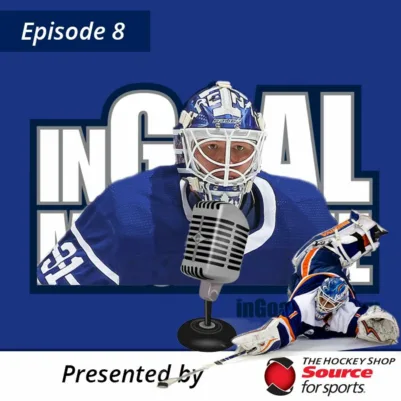
Episode 8 Frederik Andersen and Thomas Greiss and Bauer 2X Pro

Please subscribe and leave a rating — it helps us reach more goalies!


Frederik Andersen has spoken about the concept of learning to be 'comfortable being uncomfortable,' a mindset shaped in part by a visit to observe Navy SEALs in training. Thomas Greiss, meanwhile, addressed the tactical side of goaltending in a reader Q&A, discussing how he uses baiting to influence shooters during play.
- Frederik Andersen credits a visit to Navy SEAL training as a key influence on his mental preparation and comfort with adversity.
- Andersen's off-ice development focuses on learning to be 'comfortable being uncomfortable' as a core mental framework.
- Thomas Greiss breaks down his strategy for baiting shooters — a deliberate tactical approach to influencing offensive decision-making.
- The Bauer 2X Pro is reviewed in detail at The Hockey Shop Source for Sports, covering its key features for goaltenders.
In this episode we chat with Leafs #1 Frederik Andersen about his training and learning to be “comfortable being uncomfortable” including the influence a visit to see Navy Seals in training has had on him. As. bonus, Thomas Greiss answers a reader question on baiting shooters.
Weekly Gear Segment
presented by The Hockey Shop Source for SportsWe visit the Hockey Shop Source for sports to go through all the features of the new Bauer 2X Pro.
Episode Transcript
Intro
Presented by The Hockey Shop Source for Sports, this is InGoal Magazine Radio, the podcast Episode number 8. I'm Daren Millard. Welcome into our domain. Today, we are getting comfortable by being uncomfortable, and that's what this whole podcast journey is all about. We're figuring things out, you are figuring things out.
It is a process and we are going to chat with Frederik Andersen on what he's doing on the goaltending side of things. We will also chat with Thomas Greiss of the New York Islanders on reading shooters. He is one of the most unique goaltenders in the National Hockey League when it comes to the shootout. That's where he kind of gets his claim to fame when it comes to reading shooters, but there's a whole new genre of of that type of skill when it comes to goaltenders. And we are going to have our Gear Segment chatting about the Bauer 2X line as we bring in the cofounders of InGoal Magazine, Dave Hutchison and Kevin Woodley.
And Kevin, Source for Sports and the Hockey Shop, doing a nice job supplying you with an opportunity to to look at this Bauer line along with other lines, and they've been on board with our title sponsor.
Yeah, Daren. On the ice, we had one of the first sessions you've seen. Well, I guess if you follow our social media, you would have seen it. But you're gonna hear about it today. One of the first times on the ice testing out the new Bauer 2X Pro line, the pads, the the glove, the blocker.
It doesn't launch until May, but the customizer was launched this past Friday. And, I know a lot of goalies out there have had a chance to play on it. I had a look. Pretty cool, actually, because it's not just a picture of the pads. Bauer's new customizer for the 2X Pro line is actually kinda like a a three d rotating pad that you can kinda spin around as you change the color zones on it or change some of the features.
You know, almost like a live animated pad on there. And I'm sure there's a lot of people, a lot of goalies that wasted a lot of time this weekend playing with it. Unfortunately, they weren't all as lucky as us and actually got to take it on the ice and have a little fun with it. And, well, we spent about an hour and a half first session on the ice with the Hockey Shop Source for Sports, and then when we we went back to the store, back to the physical location in Surrey, Vancouver area suburbs, the Hockey Shop Source for Sports. And I gotta tell you, this is like you go into that store where we report the record the podcast, and it's the kind of place that a lot of goalies could spend hours in.
There's an entire floor down on the basement level that is totally dedicated to goaltending. If you live in the Lower Mainland, the Vancouver area, you know what I mean. You've definitely been there. You've definitely wasted some time there looking at all the gear. They have one of the best selections.
That's why I have shopped there for years, and I'm pretty lucky that it's in my backyard. They're the best at what they do, whether it was the skate shop, getting a sharpening that you can trust. People travel from all over the Lower Mainland to get their skates sharpened there, or the goalie guys. They have expert advice, the best brands, huge selection. And it's not just like, I'm lucky.
It's in my backyard, so I get to visit them in person. But it's not just for everyone that lives here in the Vancouver area, all over the world. If you're a goaltender, you can check them out at the hockeyshop.com, and, you know, you'll be able to check out the latest and the greatest. We talked about the CCM eFlex four last week. They've got a complete review, including on ice work that they did with that online.
And this week, and it's already up on their website, we had a look and we talked to them about the Bauer 2X Pro. And even though it's not on shelves yet, you can actually order custom Bauer two x pro from the hockey shop from thehockeyshop.com. And if you order it now, they actually are Bauer's taking custom orders. They're not making any promises or guarantees about delivery, but I know last year with the two s pro line, if you ordered in the early going right after it launched to the public, goalies were actually getting it ahead of the retail launch. In this case, that'll be in mid May.
So there's a chance if you're ordering custom and you get on top of it, you can actually have it in your hands before it even hits retail, before anybody else has seen it. You can kind of be the first at your rink, to have that on with the custom order. So make sure you call Cam and the guys at The Hockey Shop Source for Sports. That's thehockeyshop.com for all your Bauer 2X Pro needs. And, of course, when we get a new launch like this, that means last year's stuff is on sale.
And so look for Bauer 1X Pro line from two summers ago. Look for that to go on sale at thehockeyshop.com and locally at the Hockey Shop Source for Sports on around March 15.
And if you pop in, tell them that, that Kevin sent you. Right?
I'm not sure that's a good thing. Like I said, we all kinda know that guy that goes into the gear store and, you know, he grabs every pad off the shelf, and they literally have hundreds of pads on the wall that you can access easy, flexes all the sticks, grabs the new gloves, and flaps them open and close, pulls the mask on, see how it fits, ask annoying questions. We all know that guy at the store, and I you know, I may be that guy at that store. So I'm not sure they actually like me there, and it's not gonna get you a discount yet. We're working on it.
We're working on an InGoal podcast discount. But but for now, if you tell them you know me, they'll at least be nice to you, if not me, because the truth is I'm actually just a giant pain in the ass.
Hey, Hutch. What's the what's the most time you spend just hanging out in a in a hockey shop, trying on gear and and just looking at straps and all that kind of stuff? Like an hour?
Oh, it no. It's hours. It's multiple hours. It's and it sounds like we're setting this up just for our sponsor, but it's at the hockey shop.
No. It isn't. Yeah.
And we have been surrounded by gear that's been brought out in streams. And to be honest, it's it's more for my son than for myself. But but the way they look after him and all his needs are are spectacular, there's no no place I'd rather go. I I I look back and as we're talking about the customizer, I don't know how many folks go back to my vintage, but I remember sending away for the the printed catalog every year from Coho or other companies like this. It was a it was a real treat.
Amazing now that you can just do it in front of you online and and customize your own gear and drool over what it is that you might like to have soon. Times sure have changed, but I don't think the attitude has.
That's the thing, guys. You don't even need a computer anymore. This baby that Bauer's got for the 2X Pro line is fully mobile. We got people sending us messages telling us that they're playing with this on their phone, doing the full three-dimensional sort of rotate, flip around the pad, and do all your customization that I was telling you about. You don't even need a computer.
You can do it on your commute now. It really is the ultimate time waster. And, you know, speaking of sort of being the the guy that hangs out in the store, I remember Johan Hedberg, former Canucks and Pittsburgh Penguins goaltender, now the San Jose Sharks goaltending coach. I remember him once calling me a geek of goal tending, and he said it was a term of endearment, and I should wear it with pride. And to me, that's all about what we're talking about here is being that guy that goes in the store and checks out the latest and the greatest and plays around with the pads and wants to touch it and feel it and see how it works.
And I think that that's, you know, that's a label that that that goalie nerd stuff, that's a label we gotta wear with pride boys.
Yeah. I'm I'm I'm with you. I I go for I start at the pads, then I go glove, and I check some upper body and stuff, and I finish with with sticks. It's just it's just bizarre. I don't I don't spend as much time on skates for some reason.
Let's let's get into news of the day. Oh, and we're gonna I'm gonna pass along some information about something I learned about the Bauer lineup that I checked in with with Woodley on in preparation for this episode that I knew nothing I didn't know existed. So that's that's also coming up. But Jacques Plant is in the news as he matches or Jacques Plant is matched by Carey Price for the all time Habs victory list. Who who's the best Montreal Canadian of all time?
And I'll throw a Waugh, Dryden, Plant, or Carey Price. Woodley, let's start with you.
Oh, come on. I was gonna defer to the old guy on this one. This is right up his alley. So I I wanna hear what Hutch has to say about this first.
Yeah. Well, I I didn't play back in the day of George Vezina, but I but I did grow up playing the game when Ken Dryden started. And he holds a special place in my heart for that reason, but I still remember as a kid everybody in the schoolyard slamming him because he got to play behind that vaunted Montreal defense. And I don't think we've got the ability to adjust for team rankings back then in the same way that we do right now or team performance. But he he doesn't rank first on my list.
I think for me, it it is Jacques Plante, another guy that influenced me a little bit growing up. I still remember reading his book on goaltending, still sits on my shelf here at home. I did have the privilege of watching him play. Not for Montreal. I'm not that old.
But for me, it was his ability. Well, two things really. I mean, you can look at the stats Montreal, which are spectacular. Wasn't it five Stanley Cups in a row, I think? But for for me, it was his ability as an innovator in the game at a time when it was so difficult.
And I I don't refer just to the mask. I refer to the way he played the puck and so on. That's important. I think also for me the way that he did it for a number of teams, he wasn't just a Montreal goaltender, but he he did it much like the guy who matched him this weekend, Marc Andre Fleury. He did it for more than one team and I think that means a lot as well to me.
Don't forget, and a couple of names on that list too, Daren. Another another couple of guys that meant a lot to me. Bill Dernan, I was always fascinated by the ambidextrous goaltender wearing gloves that would allow him to to block and catch with both hands. I wish I could have seen him play. It would be amazing to see how that affects you in a game.
And George Hainsworth is always mentioned for the shutout record. Although I don't think a lot of people realize that he captured that record over a time when the forward pass was introduced to hockey. I wonder how many listeners even realized that there was a time forward passes weren't legal in hockey. And that one I find fascinating because, of course, it really is almost impossible to compare goaltenders over generations. I think if Carey Price were to stop stop in with any of those teams, he would be unbelievably dominant.
But but that forward pass element really underlines the fact that that we can't compare eras. But if I have to pick one, it's it's definitely Jacques Plante, guys. Yeah. We went through this exercise at nhl.com recently with a
bunch of writers with as as Carey approached, matching Plante for the most wins by a Hab goaltender, and it really kinda forced me to take a look at it. Couple of riders went ahead of me. Tim Campbell picked Jacques Plante. Mike Zeisberger out of Toronto picked Patrick Roy. And I really liked his argument and some of the points that he made when it came to Roy in terms of not having the supporting cast that some of the guys before him did, like Plante, like Dryden, and the lack of run support.
And I think you could probably make the same case for Carey Price now. But you're right, Hutch. You can't really compare shot quality across eras. And, I mean, Jacques Plante, the first three years of his career, we didn't even have save percentage recorded. But I do think, you know, despite those missing years for Plante, you can at least kinda take a look and compare how each guy's save percentage was measured against the league average of the day.
And, you know, it was just a couple years ago that the NHL went back and kinda did this all the way back to Plant's fourth season, which is, I think, 58, 59. And we saw the numbers when they ran them. Jacques Plante had a .920 percentage, and people like, holy smokes. Like, wow. Look at those numbers.
This guy that's incredible. And yet when I went and looked at the NHL average for that year, it was nine nineteen. So I ran that through with every guy to sort of see where they fit in this equation. And what I came out with was Ken Dryden with an almost Dominik Hasek like level of dominance compared to his peers and well above the other three that we've mentioned, as part of this exercise. So, you know, for Dryden, his save percentage was I believe it was .0283
So almost .03 three above the NHL average during his seven full seasons with the Montreal Canadiens. Roy was next, and he was .0175 in his full ten seasons in Montreal. And Jacques Plante was actually behind that .0099 in eight seasons in Montreal, and Carey Price in twelve seasons so far is .0058. So when you take a look at those numbers, you know, like, Dryden's dominance is almost at a Hasek like level. When people talk about the greatest goalie of all time, for starters, was in that conversation, so that may be why he jumps to the top of this list, but that's more of a career, and we're just talking right now about Montreal.
But people use that argument that Hasek's the all time best because he was so much higher than his peers when it came to save percentage while he was playing, and you could make a similar argument with Dryden. That said, when you when you look at all these numbers and you think about the fact that Carey's at three fourteen with a full third of his career left to go, and the amount of wins if he continues on the pace he's on right now and, you know, the fact he's got a Hart and he's got a Vezina, I don't know if you can compare cups anymore because it's that much harder to win in this era than it was for a lot of these guys in the past, except maybe Roy. But I think as dominant as Dryden was, by the end, this could kind of this argument kinda kind of all be moot, and it'll be a slam dunk that Carey Price by the time his career is over may be the best Montreal Canadiens goaltender of all time.
Couple of things there. Patrick Roy and Jacques Plante both moved on, and Ken Dryden quit early. So those three basically didn't spend their entire careers, and I know Dryden did, but you know what I mean about moving on and retiring early. Those three didn't spend prime to next step of their careers a Montreal Canadien uniform. Carey Price to me is going to end up being the greatest of all time because he's going to spend that length of time in the Montreal Canadien uniform.
It could very well be, Daren. And that's why I kinda left that little caveat at the end of, at the end of my story for that at my segment or my contribution to that nhl.com story is is you're right. Price may very well be the best, and this conversation could be moot. I mean, even the fact that he's on the Montreal Mount Rushmore of goaltending with a third of his career left to play still, you know, staking his claim to most of these records, thriving in the shadow of those other greats in an era where scrutiny is unrelenting, yeah, absolutely. Carey could be the could easily be the best by the time this is said and done.
Although the way things change in the National Hockey League, who knows? Because Marc Andre Fleury was thought to be a career Pittsburgh Penguin, after the cups, and and that changed because of a rookie that came in. Flower also brings Jacques Plante to the conversation as as he passes Jacques Plante for the wins list, and the we're talking all time wins now. Where is is he a sure bet first round, Hall of Famer, Marc Andre Flurry?
I think so. I mean, by the time he's done with the way Vegas is playing and the way he fits that system, Marc Andre Fleury could be, like, top two in the NHL all times in terms of wins. I mean, 35 wins a year for three more years. We're over 500, and we're talking about we're having a conversation about catching Martin Brodeur for the wins record. And that's a conversation I don't think we ever thought we would have.
And, you know, frankly, he's probably the only guy that even has a shot at that, in my opinion, at the wins record. So you combine that, even with the save percentage that is, you know, maybe lower than, you know, noticeably lower than a guy like Roberto Luongo. And even though Marc Andre Fleury, beyond the world junior, the only other time that I remember him representing Canada at a big international tournament was as the number three goalie in Vancouver in 2010 at the Olympics. To me, with all those wins, Stanley Cups, yeah, to me, it's a slam dunk that he's I still think for sure that the answer is yes.
The question is not not everybody ahead of him is is in the Hall of Fame. So there's there's a you know, that that that's where where it goes. But I agree with you.
And why is that? Why is that? Because they're some of those numbers as a shooter are pretty automatic, aren't they? Why is it when you're a goaltender, some of those aren't quite as automatic?
We're talking Curtis Joseph and Chris Osgood. Guys are in the top 10 at higher end wins, and Chris Osgood has cups. So yeah. But, I mean, to be honest, I think the Hockey Hall of Fame is probably a little biased against goaltenders. Otherwise, we'd have a goalie coach in there by now.
So don't don't get me banging that drum and start throwing around names like Francois Allaire and Mitch Korn and guys who other guys that should be in there.
But but but here you're arguing apples to apples. You're out you're arguing all time wins and goalies. So it's all it's you're you're all in the same category. I'm just saying that that's a reason why you might you might say, may maybe he's not. No.
Cups do mean something and two different teams and likability.
And and I think a lot of it often ends up coming down to the narrative. As Kevin said, they might be biased against goaltenders. I think it means they definitely don't have a lot of goaltending experts voting on this, so the narrative matters so much. With Osgood, we know the narrative was was rarely favorable to him, unfortunately. And and with Flurry, it certainly is.
I don't think anybody's ever said that he wasn't a piece of the success of his teams.
Chris Osgood, 401 victories, and he's not in the hall of fame. Grant Fuhr, Glenn Hall, Tony Esposito, Jacques Plant ahead of him up to four thirty seven are all in the hall of fame, and then you get to Marc Andre Fleury at four thirty eight. Curtis Joseph is fifth all time and is not in the hall of fame and was one of those guys that represented Canada on the world stage. Doesn't have the cups, but lost that ninety six World Cup and then started team Canada's run at 2,002. So there there there's the big outlier.
I think he belongs there.
And Cujo doesn't even get mentioned in this debate a lot of the time. To me, put them all in. If you're top 10 in the NHL and wins all time, put them all in.
Should be like golf. Right? Golf, you got a points list. By the way, Marc Andre Fleury's partner, Malcolm Subban, I'm gonna throw this one at you, on the weekend, allowed a disputed goal against the Calgary Flames. And after the period ended, it was a late goal in the second period, went over and had a an run-in with Dan Halvorsen, the official.
Sure looked like they like Billy Martin, New York Yankee manager bumping the umpire. He only got a deuce for unsportsmanlike conduct, but what was your take on it?
That's tough. And at the end of the day, just can't happen. I mean, we we love Malcolm Subban here at InGoal Magazine. He's been really gracious to us with his time. As a matter of fact, the day before that game in Calgary, Vegas was here in Vancouver.
He wasn't starting where he was. He was out late in a game to escape, but he took some time, walked us through some of drills he'd been doing that day, showed us how he tapes his stick, walked us through the whole thing on video on a segment that we'll be sharing. So, again, like, fans of Malcolm Subban. But at the end of the day, that's when you cost your team penalty minute. Didn't cost him a goal.
They killed it. But that's that's crossing a line that you just that you just can't. When when you take a penalty like that and leave your team short handed, those are the kind of things that may not sit well in a locker room either.
Well, and it's also a sign that there's more simmering underneath that than just the one play. For somebody to lose it that bad on a single goal, you you you gotta feel his frustration. Fleury is in the net all the time. And, finally, he gets an opportunity against the top team in the West and and, you know, maybe maybe the pressure was bubbling underneath, but you you gotta find a way to to be more composed than that.
You know, Hutch, his his coach mentioned that after the game, that that it's a pressure situation and he and he basically said he hasn't played a lot and it puts more pressure on him and his and his coach really I thought Gerard did a great job of acknowledging that. Didn't take him off the hook at all. Yep. Actually agreed with the with the call from the video room, but but did but did respect the the position that Malcolm's in.
Yeah. It's a tough one. You gotta feel his frustration.
Let's not forget. Malcolm Subban isn't the only goaltender that's been frustrated to have a little bit of a snap against the Calgary Flames. I mean, it was just a week earlier between these two teams or within the week that Marc Andre Fleury was staring down David Rittich. And the center of it all tends to be one Matthew Tkachuk who had a hat trick against Subban the other night. And a guy who's done a great job is doing a great job of getting under the skin of goaltenders everywhere.
The call that Subban wanted yeah. I know not a lot of people are gonna agree with this. They're gonna think the call was was correct. The contact was outside of the crease, but you could argue that he's in the crease, that he he has the right to that space if he's there first, and there was contact with his glove, and the glove is where the puck ends up going in on the glove side. And, you know, maybe this is a bigger topic for another day, but, you know, this is this is part of a trend.
I mean, I predicted it when they started the video review. Predictably, they were going to lose more goals than they were comfortable with because by the letter of the law, a lot of this contact is technically goaltender interference. And so they shifted that standard because they were losing too many goals. And now I think you could argue we've gone too far the other way and that by not discouraging that contact around the edge of the crease and and in the crease in some cases by taking away goals, you're getting too much of it again. And I think we've hit a point where we're we're almost back to open season on goaltenders in my opinion.
I like the call. I I like the call. I thought they got it right here. You're of the was outside. I know.
It was contact was slightly outside the crease. I and I under but I get why Malcolm was sour because he would have felt like he was bumped his where his feet inside the crease? Yeah. But his glove was outside. And anybody like, Woodley, what would you have done?
We've heard we've heard some great stories about you. What would you have done?
Oh, I would have been a total snap show, but it wouldn't be directed at the referee. Oh, no. The guy cutting through the crease might have been modeling the latest goaltending composite stick between his legs, but, no. Not the referee. I'm just kidding.
I'm I'm not actually like that anymore, you guys. But, honestly, like, is an interesting sort of case study because we've talked to other goalie coaches and goaltenders around the league that have backed off with their positioning in part because of the way the game is being called and the way these interference calls have trended and the way it's led to more contact being allowed, around the edge of the crease. And when we talked to Billy Ranford, in the podcast, a few episodes ago, I've talked to him a couple in over the past couple of years about the way they've backed Jonathan Quick off of some of his initial depth and some of his positioning has become more passive, more neutral relative to his old sort of aggressiveness, but still he's backed off. And that's not a style thing. That's not them worrying about wear and tear.
That is specifically them recognizing this trend in terms of the goals that are allowed and making sure that if that contact is gonna be permitted above the top and around the edges of the crease, that they're not getting caught up with those players and that they're playing just behind it and making sure that they can still move. And you juxtapose that to the Vegas Golden Knights, and we've we've talked about their preferences in terms of goaltending position, a little more aggressive up around and even above the top of the crease. And I think if they're gonna play there, this is something they're gonna have to have a little think on because they're gonna have to live with either the contact without complaint and accept that they're not gonna get the benefit of those calls, or they're gonna have to make some adjustments and start to play behind it, knowing that getting caught up with players is no longer automatically a goal waived off. And so you either you either change how you're gonna play, I I honestly, I don't see that happening for Vegas. They've had so much success, or you live with not getting those calls because we've seen it.
Other teams have made that adjustment.
Which brings you back to the to the intro, and Daren threw out that phrase being comfortable being uncomfortable. I think from a mental aspect, it's so important for a goaltender in a situation like that to be comfortable with that situation. I think you have to accept that that's something that's outside your control and you have to let that go and play the position. It's some guys just aren't comfortable in that situation and they wanna fight and they wanna they're they're out there thinking about the rules and where they are and you've just got to realize that that's now part of the game and put it behind you and get playing.
Wow. Episode 8 and Hutch just nailed his first perfect segue.
Didn't try to. Didn't try to.
You have to be able to battle. You have to be able to get through difficult situations in goaltending and in life, but but that does not apply to shopping for your gear. Because InGoal Radio, the podcast is presented by The Hockey Shop Source for Sports in Surrey, BC, thehockeyshop.com. Check them out. They have aisles, rows, racks, tons of goaltending gear.
Go get your skates done by Cecil and then spend some time just wandering around seeing what's new, what's different, the other lines, maybe stuff that you don't use, but you can, check out just if you're curious. It's all over at Source for Sports in Surrey, the hockey shop, hockeyshop.com. If you can't get there in person, go online like I do. They have all the customizers there and what's really cool is all their reviews of the latest lines. I went through the CCM, the Vaughn and the Bauer over the course of the last weekend.
Feature Interview - Frederik Andersen
Frederik Andersen, he's a Bauer guy. He is the number one goaltender of the Toronto Maple Leafs. He's a battler. Doesn't look that way in the sense like he's the number one goaltender of the Toronto Maple Leafs. He's at the top of the mountain, right?
Well, Frederik Andersen was drafted by the Carolina Hurricanes, didn't sign, went to Anaheim, established himself as a National Hockey League goaltender split time before signing that long term contract to become the top guy with the Toronto Maple Leafs. Kevin Woodley spent some time with Anderson recently and starts the conversation, which gets into this whole Navy SEAL stuff and different safe selection and not being predictable, starts the conversation talking about whether or not all this work is about being comfortable, getting comfortable with being uncomfortable.
Okay. I think that's a fair fair way way to put it. I think just it's it's such an unpredictable game. And and when you do set up drills in practice, it's usually it's very controlled, and it's very it's very dialed in to to to work into us on a specific thing. But I think what we've been trying to do is just work on a few different different ways to do things, especially one one thing would be different types of post loads and and ways to use use the post either because I used to always try to do my my toe and my the the the the part of my on my pads on the on the on the post.
And what we found was it's not really it's not realistic to do that every single time. And what we tried to do was just play around with different different ways. I know some goalies like to do the the scoop inside, the almost like the shin inside of the post. Kinda like. Basically, like like, he does it.
He does it very well, and it's something he probably looks like he prefers. But I think sometimes for me, it just sometimes you miss the post or or things happen quicker than you than you than you like. And that way, it's nice to to be able to to work out of that position too. And the same goes for for hitting right on the skate blade with the post. So I think just small things like that would be something we worked just to try do different things.
And and another thing is that the shooter don't don't don't get the same look every time either. So I think that's something that I've I've liked this year and been able to, yeah, to just feel comfortable in more in more different situations.
So if you had your idea like, your ideal sorta this is how I'm most comfortable would probably be with the sort of that toe box, the bottom of the pad along the post. But the idea being, I can't get there every time. If it's a scramble, it's not I mean, I guess this game isn't perfect. So rather than just wait till that happens, you're actually working on getting comfortable in situations that in the past maybe you didn't felt like, hey. This isn't what I prefer.
Is that does that sound like a good summary of that?
Yeah. I mean, let's say let's say you have one thing you prefer that you you you do to a to a 100% comfortability and and you're only at 50% on the other two or but if you can work two of the other ones up to to to close to the same and feel feel 100% comfortable in every every situation, then you have no really no no no things to worry about. You just you just go out there and play. And and obviously, you try to do what you can to feel feel where you you're best suited to make the save. And if you don't get it, you can work from from that and you can you can recover and and still be be be somewhat in control.
We hear a lot of from goalie coaches, about practice making perfect, perfect practice making perfect. But in some ways, what you're doing is practicing non perfect situations, which is kinda what the game presents you a lot of the time.
if you can if you can find a way to to still make make saves and and feel comfortable when you're not perfect, then then you're gonna have you're gonna have a better chance of saving the puck, which eventually is at the end of the day, it's what what matters.
Yeah. Exactly. Like that we talked to before talked about before, it's it's a fast sport, and you're you're really yeah. It's I mean, it's it goes faster and faster. And and if you can if you can find a way to to still make make saves and and feel comfortable when you're not perfect, then then you're gonna have you're gonna have a better chance of saving the puck, which eventually is at the end of the day, it's what what matters.
Right? It doesn't it doesn't matter if you you hit the you hit your perfect spot on the post, doesn't save the don't save the puck, and you're still gonna be upset and and and down and down a goal. But, yeah, I think the the key for me was just to to try to, again, be comfortable doing doing things a little bit different sometimes and and not being, yeah, being being scrambly if you if you didn't get the right Okay. Yeah. The right connection with the post or or something similar.
Have you ever done that before where you're like like because it I mean, I I gotta be honest. I I never thought of this before. We do tend to practice the perfect situations. A lot of times, the goalie knows where the shot's coming at the end of multiple multiple movement patterns. Getting outside that comfort zone, I think, is important.
Probably a lesson for a lot of young goalies because most schools and clinics and camps are sort of structured for that you know where it's going environment.
Yeah. Exactly. I think, so my first first time really getting a a goalie coach that had a lot of experience was the Francois Allaire camp in in Sweden a couple times. And I think I was around 15. And it really it's it's a great he's a great goalie coach, of course, and he has a very specific ways to to try to to to play. And Yeah.
It always seems like when you do that, you have that great foundation. You're gonna obviously make a lot of saves. But if you don't if you can't do it perfect every time, you might not it not it might not be suited for you. But so that's where you gotta you gotta find what you what you like to invest in and still maybe work on some other things as well.
I was gonna say practicing against these guys, it probably comes in handy. I mean, the way this team moves the puck, the dynamic skill, their ability to hide releases, I mean, some of the best in the game and not just one or two. As a goalie, what's the challenge of seeing that on you're just coming off the ice here in practice in Vancouver. What's the challenge of you know, how do you sorta gear up for that? Does it make it easier when game situations come and it's not these guys?
Like, how do you approach that, seeing the best in the world on a daily basis?
Yeah. I mean, I think it's just everyone's release is so much different. And just on our team, we have a lot of good different guys that are that are great elite shooters and and shoot it differently where we look to see Austin and then Willie, for example, their their shot is very different, but you get to see them every time. And it's you don't really have time to to make the perfect save with them. You just gotta you gotta let your instincts kinda lead the way and and get in the right get in the right position and try to take up as much as a set area you think he's gonna shoot at and and then react a little bit, of course, as much as you can.
So that's that's really the challenge with them. They're they they shoot it so quick, and they can change their their angle and where they wanna shoot at, instantly. And, yeah, it's it's pretty impressive to see, see all those different types of releases.
Talk to me a little bit about the mental side. I think, you you know, at At InGoal myself in the past, it's easy to focus on the technical side of the game in part because it's easiest thing to see or break down on video and stuff. But what have you done over the years to get comfortable in this environment, the pressure that comes with playing in Toronto? I'm not sure. I heard there might have been a trip to see Navy Seals even this summer.
Yeah. I mean, I've I've always been been the type type of guy that wanted to just explore some things and see see if you can pick up a few things from from other guys. I love watching other goalies and especially yeah. Any any great goalie, I would love I'd love to watch and and pick up stuff. So even even when it's not my a comparable goalie to me, the way I play, but just just from learning.
But but that whole thing was was just more the the mental part of it and and that you you always hear how how mental stuff it can be to be to be over deployed or or doing doing their doing their training and all that stuff. So I just kinda reached out to I know my trainer and my and Steve Briere. They both they both support me really well to to try to make things like that happen and just, yeah, just go down and talk to them a little bit and try to, yeah, try to try to learn a little bit from them on on some key things that they that they that they kinda teach to to make guys last through that that type of environment because that's it is a really hard, hard job to be to be in those, different camps or or overseas, of course.
Emergency response programming, is that kinda ERP? Is that the type of training? Were you there during hell week? Because that are you trying to basically for them, it's life and death. For you, it's stopping a puck, but are you trying to train your body to handle it the way they manage to handle those situations?
Is that part of this process?
It's really a I think it's a it's a way of training your mind to to be able to take a second before you make your, your instant reaction. And it can be a way of, learning how to to to to get rid of stress. I think one of the key things that I took away from it one of the one of the key things I took away from it was was probably controlling what you can control. Like and and really don't worry about anything else because it especially in Toronto, it's it's a big big market, and it's something that I had to learn, coming coming in and just, not worrying about everything else. And it's same in a game.
You can't as a goalie, you're you're reactive and defensive player. You're you don't get to dictate the game, really. You you gotta react to what what's what happens in front of you. And if you can just, yeah, stay stay alert and stay ready. And and then once you see them coming down, you you you react accordingly.
And instead of, like, when you when you get in your own head a little bit, you you start hoping to make to to feel a puck and make a save, and and that's when you start, yeah, diving everywhere and and and feel out of place. And I think if you just the mental part of just being comfortable and and being ready for that next one, and that's really that's really all you can do. And then I think I've done a couple times this year where where we've had a tough first period and and being able to to reel it back in and and just kinda reset and make things, have things come to you instead of start chasing the game.
It's usually easier to say but harder to do. Is there actually a physical element to that sort of getting comfortable knowing what your body how it feels when when you're in that state?
Yeah. That's the that's the the trick and the I think the I don't know if there's one one perfect formula for everyone, but I've I've I've You
went to school? Were you did they teaching you how they do it? Did you learn any lessons there?
I I definitely had some some some conversation with them. I don't wanna go too too Yeah.
No. I don't wanna give too many secrets. Okay.
I don't wanna give away all the state secrets of of the US military. No. I think, yeah. I mean, some of the things that really, really help for me is it's just, yeah, the the the emergency response stuff for you when you can you can take a deep breath or something like that. And and I've worked a little bit with with breathing techniques as well to to either calm yourself down or or get ready and and amp up a little bit.
So that's, that's another thing that I I found that I that I benefited from. So, it might not be be be the same for everyone, but it's different different small re refocusing, practices that you can you can help to to just, yeah, reset and and really realize what what you gotta do. And
Is that why you dump yourself in a bucket of ice that we saw on Instagram?
That was one of the that was one of the things actually. So it kinda teaches you to to to gain your gain your breath back in a in a very stressful situation. Obviously, you you're not gonna feel that same same type of panic when in any in any game probably, but but you will feel some sort of stress and and that that ice cold water will will will simulate a very stressful situation where you gotta focus to to gain your, getting your breath back and and just, yeah, calm your mind down.
That's awesome. Now, okay, we'll get away from state secrets. You talked about watching other guys, watching other goalies, and learning from them. Just from a fun perspective, who's your favorite guys to watch around the league?
I actually loved watching Jonathan Quick in in LA when I was in Anaheim a lot because we we used to get those games. They would they would come in. Teams would come in and play them or or us first, and then the night after, we we get to play them. So I used to watch, yeah, watch him play a lot. Carey Price is obviously very smooth and technical and and and fun to watch as well.
So those two are probably the the most fun to watch that in in recent memory. Are you like, how
much do you watch these days?
Like, the is do do you have to get away from it, or do you find watching other teams is an element to get away from as long as it's not you?
I I actually was always told that when you when you move to Toronto, like, I try not to watch TV or watch Sports Center and all that stuff, but but I actually found that I like I like having a game on when I'm when I'm at home at night before a game or something just to cause it's it's it's what I grew up doing. It's I remember being back home as a kid. You're you're hearing one of your parents yelling from the living room and when there's finally some some hockey on TV and you're sprinting to watch it. And then it's it's very rare in Denmark that they have some some some some hockey highlights on TV, but it's something you you you love the sport, and I think you you can't you can't get away from that. I think you gotta keep keep that keep that love for the game.
And and I think it's something that helps me just just to kinda see what what's going on a little bit, watching different games and use it as good entertainment too because it's it's a great sport, and you get to watch other guys. Obviously, they're all competitors, but you you're able to, maybe to pick up a few things and especially as a goal, you you tend to focusing on the other goalies a little bit and and see if they're doing something you can pick up and and and use.
Sounds like you still have that love for the game. Like, is that what started it for you? Like, that type of passion to watch hockey and wanting to be a goalie. I know your dad played as well. Is that kinda how it started?
Yeah. I think just being being born right into it. I think he he took me on the into into the rink whenever he he felt I was able to walk and put me on the skates, hung around, sat on his pads and in the locker room like that. So I've always been been fascinated by, I think, the goalies and, yeah, I just just love just love watching it and out there and even even playing out until he told me I was or he he kinda caved in and said I could play goalie, but, yeah, I just always had to offer the
Still love the gear too? Are you still love getting the new stuff even though you're kinda dialed into one setup, or does that kinda go away over
time? Yeah. That I lost that a little bit, I think. I do love I do love Masks? Masks, I've been I've been having an easier time breaking in, which is which is the main reason I don't like new gear anymore or at least pads.
I I used to love pads and but these are I've been I've been feeling better in in very broken in pads more so than same with chest. I used to always use to wear the same chest and and pants too. I don't like I don't I don't love switching those out, but but gloves actually, I I find that I like pretty new, which is kind of weird. It it used to be the other way around usually where you get the old the old broken in gloves hand handed down from the other older goalies back home. So but, yeah, I think mask is is fun too because you get to work with Dave Hart and create some some cool stuff.
Love the Batman stuff, by the way. Hey. Last one. I'm taking you way too long, but we really appreciate your time. A lot of people are gonna enjoy this.
Mads Sogaard. You watched the World Juniors. I was here covering it. It's funny. I watched him the first couple games, and I thought, man, for a big goalie, he sure is aggressive at times.
Turns out he got a similar message from you through his dad. And I watched him a couple games later, and he was really contained. And then just at the end of a long scrum, I asked him, do you feel like this was your best game so far? And he said, yeah. Because I got some advice from Freddie Andersen, and I played a little more contained.
I was a little more in control. Walk me through. Do you would you remember that? You remember telling your dad that you know you had that impact on it?
I actually do. I didn't know was that it was gonna be, like, that that impactful. But, obviously, being with my dad being on with the team and and helping the goalies, he I just kinda told him what I saw. I think he definitely has the makings of a great goalie in his size, and and he can and, yeah, like, as I saw, I think he once you start playing great great team great teams like Canada and kinda get routed a bit, you you start thinking you gotta do more than you need to. And and and I think just
That rarely works in goaltending, does it? Nope.
It does not. Very rarely do. So I just kinda, yeah, text my dad and just put gave him my observations, I guess. So maybe maybe I can be a goalie coach afterwards. But that's that was, I guess, nice that he he he felt like it helped a little bit, and I'm sure my dad would would work with him and and try to, yeah, try to calm him down a little bit.
And and and I think you could say the same with with any goalie once you start chasing the game. You're you're already a step behind.
Listen. I think there's a lot of kids that probably all all welcome hearing that advice from Frederik Andersen. So, Frederik, thanks for taking the time to talk to us today.
Yeah. No problem. Anytime.
There's a whole lot there. And a credit to you, when the Toronto Maple Leafs pop into Vancouver and there's all that media around, you still found a way to get them. So nice job. You you weren't just jumping into a location without a lot of media. So Woodley, nice job.
Your takeaways starting from the very top and the whole comfortable being uncomfortable and and and take us through that.
Well, I think comfortable being uncomfortable was sort of my takeaway from talking to him. Like, we chatted a little bit before we did the interview just to figure out actually, ironically, what he was comfortable with sharing. Right? Obviously, sometimes you get details and information, and not every goalie wants all of it to be public. And so after talking that little preamble with him before we started the formal interview, like, it all kinda just made sense to me.
All the work he was doing felt like it was about getting comfortable in uncomfortable situations, and that's the you hear his first answer. I mean, that was kind of a fair assessment, and he agreed with that, and off we went from there. I guess the one takeaway that I had, I mean, lot of people will focus and I did in the story because it's sexy, the Navy SEALs and going there to observe and learn the different tactics that they use to sort of overcome some of the most stressful mental situations you could imagine and how they deal with that. But to me, the really big thing for goalies and goalie coaches and goalie parents and everyone else is the work he's put in with Steve Briere this year and their approach to save situations that he talks about wanting to make sure that he's not always focused on not even just the perfect save execution, but even his preferred save execution. And there are a lot of different examples for him in terms of the way they've done this work, but the one he was comfortable sharing, because obviously you don't want to give everything away, but the one he was comfortable sharing was post play.
And so Freddie's a guy we've all know about RVH. It has, there are multiple ways to go into the post and you can, each one sort of has strengths and weaknesses. You can go in as he preferred with the toe box or the bottom edge of the pad against the post and the skate inside. That was that was sort of his default because he felt he got a decent push out of it. And you have a perfect seal, no puck sort of going in off the skate and between the post and the bottom of the boot.
And that was his preferred thing. But rather than always trying to perfect that, when they looked through tape and looked at other goalies together, they realized that it's not always perfect. You're not always gonna hit perfectly on the net. Sometimes you're gonna hit there in a scramble and the shinny your pad's gonna slip inside. Sometimes it's gonna be the skate on the post.
And you have to rather than always trying to groove your preferred, you have to get better at grooving imperfect situations, and they've really worked hard on that. And when you watch Freddie in scrambles now, you know, there's there's no panic there if he doesn't hit it exactly how he wants to hit it every time he feels comfortable. And I think the added bonus, and he hinted at this was, you know and and this is gonna suck for me when I gotta do my nhl.com playoff previews on every goalie and looking at all the goals, but they feel like he's presenting different save selections in similar, at least similar spots on the ice, depending on the situation. It's going to be that much harder for opposing goalie coaches to pre scout him because he's unpredictable in terms of the different types of looks that he's doing now on purpose, right? Like there's an element of predictability in goaltending that goes against goaltenders if you're always doing it the same way, especially at the NHL level, especially at playoff time when goalie coaches are pouring over hours and hours of tape at every goal and all these saves, and he's changed it up a little bit this year.
And so I thought that to me was the biggest takeaway and full credit to Steve Briere, who's, you know, as as Freddie talks about and has talked about with me before, like, I love that fit for him in Toronto with Briere because they're cut from the same cloth. They're always gonna look for every little And Freddie's a guy who's always sort of no stone unturned. Right? Whether it's the books he reads he talked about, going to Navy Seals, the work he does in the off season, he's always looking for an edge, and he's found a way to do that without turning himself inside out doing too much.
Some of that work, Kevin, I think you've told us in the past is involved hitting with Major League Baseball players when he was in Anaheim, didn't you?
Yeah. No. And he's saying that's through his and we should give some some love to his off season coach as well, Scott Prochaska, his sort of trainer. He got him into it was the Anaheim Angels at the time. Yep.
And got into the hitting cages and talked to the coaches and some of the visual exercises they do to be able to read the, like, the the spin of the ball on a pitch. And I can't remember. Give me a famous Anaheim Angel
I think it was you you were talking about Albert Pujols. Yeah.
That's right. It was Pujols, and he was watching Pujols. And Pujols, in the middle of hitting a bunch of reps, all of a sudden says, hold on, hold on. There's a scuff on that ball. And so full speed pitching, he's able to identify through the ball spinning and through the rotation, not even trying to read the label, but identify a little scuff.
Sure enough, they pull out that last ball he hit and there's a and there's a scuff on it. So, you know, again, no stone unturned looking for how other athletes do it. Navy SEALs, another example, how other professions do it, how they find that little edge and will that can that work for me? Don't force it, but if I see something I like that I think can help me become a better goaltender, I'm going to embrace it.
Hutch, you've gone through the whole comfortable being uncomfortable part of things with the military in your background. So what do you think Frederick from observing this gets out of it?
Yeah. It's an interesting question. Yeah. I went through the Canadian Forces Combat Training Center out in CFB Gagetown in New Brunswick and finished as an infantry officer through that training. It was I think as as Kevin qualified our friendship with Carey Price in the last episode, I'm gonna qualify that and say I'm no Navy SEAL, but but did get to experience being very uncomfortable.
At the height of it, it was spending a week of, of training with a grand total of three hours sleep and it was all very physical. And I think what you take away from that is just this sense of calm because it's almost cliche, but you learn that you can get through anything and and that you can push through anything. And then everything else just becomes so much easier. And whether you can observe that or not, I I don't know. It was it was interesting that he brought up some of the techniques that these guys use without being specific about any of them.
I I wouldn't say that I learned anything technique specific, but it was very coincidental that as I was driving this weekend, I was listening to a podcast, and I heard a an investment banker of all professions speaking about learning some of these techniques for being comfortable when uncomfortable. And he talked about dousing his head with ice cold water and his reaction to that. He talked about something as simple as as you're about to head into something uncomfortable clapping his hands twice and saying, let's go. Just a bit of a mental reset, and and we've talked about mental resets here before as well. So I think the whole thing is is really fascinating.
Kevin, I I I would have been curious to be standing beside you to ask a follow-up question because as they were talking about this, it reminded me of of us sitting through a session, looking at a I think the term was recovery skating where in the middle of a skating drill, the goalie coach would jab at the pad of the goaltender as he was down on the butterfly to spin them half a turn or something and having to recover immediately out of that so that you learn that in any crazy scramble on the ice, you've got a way to recover to the post in in some manner. And I've I've tried that with young goaltenders. It's a it's a whole lot of fun, but it's also a really important skill so that when you're on the ice, in any situation, you're able to to get back to home base because, life on the ice is not a simple prepared goaltending drill as we've talked about before.
Yeah. If you did that to me, I'd just scream goalie interference and lose my crap and chase you down the ice, Hutch. But interesting you mention and interesting you mentioned the ice bath because when you talk about, you know, again, ways of sort of training the brain, that was one of the things. We all saw Frederick Anderson on Instagram around the Leafs sort of all star break dunking himself into an ice bath and then working on his breathing. And that, you know, again, that was evidently Scott Prochaska, but that's something that he said came out of the observations of the Navy SEALs and led him to a company called XPT Life.
And XPT is Extreme Performance Training, and this lifestyle system was actually developed by the husband wife team of Big Wave Surfer. I'm a big fan, like massive fan. Laird Hamilton and his wife, Gabby Reese, who's a former professional volleyball player and model, and they have this company XPT Life. And so, you know, you learn how the you see and you observe and you figure out how these guys sort of prepare themselves mentally to deal with this extreme duress, and then you go seek out ways to train yourself that way. And that's kinda what Freddie did.
You know, he said for sure that that that that that ice bath with the Laird Hamilton group was absolutely a direct result of what he learned and wanted to try something new from his time observing the Navy seals.
You ever big wave surf?
Yep. If by big wave, you mean up to my hips.
I can't I I mean, a little wave scares the heck out of you. You feel like you're going, like, a thousand miles an hour.
I am big time amateur hour family surf guy every time we go to Maui, like, total tourist surfing. But when I watch that big wave stuff or even, like, anything overhead is those guys are incredible. Like, just the the bravery is unbelievable. Forget stopping pucks, man. Like, no control over anything life in your hand stuff with big wave surfing.
They are amazing.
One final note on this. Do you think the whole Navy SEALs observation and that experience would would help somebody in the situation that Malcolm Suban just went in, just tying those two situations together? Or is that just an extreme, unique environment?
I think going through taxing leadership training can give you that ability because you learn very quickly that the person who panics is one that won't be followed by others. And I don't I don't mean that to be specific to Malcolm. I I do mean that to specific to a military situation that
Perfectly fine.
The guy who can remain calm in all situations is the guy that people wanna follow.
I I'm not sure that the two don't go hand in hand, and you you might see something a little bit more to that. Other people wanna see that fire, though. They wanna see that that reaction, and and they they need it. Forwards, we always talk about getting into the game, a big hit, something like that. Maybe some goaltenders are are are just like that.
But you can have calm fire. You can have calm fire. Gosh. Maybe that's a new T shirt or something. But as as Matthew Tkachuk backed through Marc Andre Fleury, I can assure you that was a fiery move, and he was perfectly calm as he did it.
He he tried to make it look as relaxed as he possibly could. You can be fiery, but at the same time completely under control.
I I I I wanna see the guy that just loses his mind and then and then needs that.
Well, it's good entertainment value.
Yeah. Old school. Right?
That's what we're in this for.
Gear
Freddie is in Bauer, has been for a few years now, and the 2X Pro line is the subject of our Gear Segment as we head out to the the Hockey Shop Source for Sports in Surrey as Kevin Woodley spent some time talking Bauer.
Alright. We're back at the Hockey Shop Source for Sports here in Surrey with Cam Matwiv. I promise I'm gonna get that name dialed in sooner rather than later. But for now like, listen, people. I'm telling you.
I'm going to put it on Instagram how you spell it, you will know my problems. Anyways, last week, we had the launch of CCM eFlex 4. This she this week, Bauer 2X Pro, the vapor line. And in addition to launching sort of letting everyone see the customizer, you can actually order these through the Hockey Shop Source for Sports. Get your custom order in now, and I know they're not promising on deliveries, but I know last year with two S Pro, they were actually getting them before the massive retail launch where everyone saw it on store.
So there's a tip for you guys. Let's find out now though talking to Cam. You've had this on the ice. What you like about this pad? What are the improvements?
What are the differences from, say, a 2S pro to a to a 2X pro? Who's this pad for?
For sure. Now there there's quite a lot of info to cover kinda with these guys and, you know, in my opinion, why they're better than last year's model, the one x. But that said, I mean, a a goalie that's looking for a pad that's now flexible, hard rebounds, very active and reactive tight on the leg. But, again, that big active rebound, which is gonna we're definitely gonna highlight here, definitely geared towards that goaltender. You know, hey.
What's the difference between a 2S compared to a 2X now, for example? That flexibility of the pad itself. Again, I wouldn't say response on the leg because I did found that the 2S quite responsive, but it's the feel of the pad. It feel more connected, less of almost like a 2X4. We'll call it that.
More compared to something more flexible that you find, like, say, from a Vaughn or something else like that.
I I think I think from a fit perspective and the flex, like, I think more traditional. And I know we got this from our models that because we've done our photoshoots with it as well, and that means putting people in it and in skates and doing a little modeling. I did a little modeling myself, and those are the pictures that no one will see the face because they cut it off. But when I had those pads on, that's what I felt too. I felt like this pad has more of a traditional pad feel, but, of course, what you get as a bonus, and we've seen this with other brands with other lines, when you go to the soft flex feel, you also get a soft rebound.
You get a softer pad. What I like about this is you've got that that quick sliding with the cortex skin. You've also got that active rebound with the cortex skin. So it's kinda the attempt here is the best of both worlds. Traditional feel and flex, modern sliding and active rebounds.
When you had it on the ice, did it kinda feel like that matched those claims?
For sure. I mean, even for myself, like, I I find I need more time to recover.
I need those bigger rebounds. I'm not gonna say why because you're getting old like the rest of us now, but that's we'll we'll see the video later. The hips used to be more flexible, but
I need more time to to get set and get recovered into my next position. And especially with that core tech face, that's that's what this pack could provide me, and I really, really like that feel. And it's also a trust factor with the pad. You know you're gonna get a nice hard rebound out of it consistently every time.
I think, you know, it's it's important to know that that's not just for us amateurs. We joke about being old and liking more time to recover. But, you know, I was talking to Linus Ullmark this, when they were through town with the Buffalo Sabres this year and asking him why, you know, why he switched to the Bauer. He's in a 2S pro, so he likes a, you know, a a stiffer flex profile than than 2X. But the big reason he switched is he felt comfortable in the pad.
He loved the rebounds, and we've heard that from other goalies at all levels. So, you know, it's a legit thing. The puck coming off there more active, gets past the shooter, sticks in front of you a little quicker, tougher to corral rebounds, and like you said, for a goaltender, it gives you more time to recover. I think that's true at every level. Sliding with that hard inner edge and with that skin you found with the Cortex, again, same thing.
Just much like the two s pro, this is a pad that, again, soft flex but fast slide.
Yeah. You're not gonna sacrifice your slides by switching pads here. So, you know, again, if you're a 2S user currently and just looking for a bit of a softer pad, you're still gonna feel at home in the performance value of the 2X for sure. I mean, you can even hear the hard surface on the mic from there as well. One of the biggest things that I do wanna touch on with this and how they've have modded it from 1X to 2X, is actually down to the late channel portion, especially right at the boot.
They've added elastics to the calf cradle and, like, other side of the leg channel as well. This creates more flexibility and more responsive feel in the pad rather than feeling very stiff on your leg. This is, again, how in my view, how they got some more of that traditional feel out of the pad for sure.
Well, that definitely matches what I feel. I never I we never got a chance to test one x. We did a preview, but not a review. And so looking back at the one x, I can see now that it's fixed and you see those elastics and that sort softness of that calf wrap around your leg, you really do get that connected feel. For sure.
Exactly. And, I mean, again, on the topics of elastics, you might as well cover as well the toe ties. Having switched these, we'll call it elastic toe ties for now, You really can see that snap back on top of your skate, which I think we also got a video of.
Yeah. We'll we'll show those videos through your social media channels. Again, The Hockey Shop Source for Sports, thehockeyshop.com. Check out all their Instagram, social media, Twitter, as well as we'll have them at InGoalmag and ingoalmag.com and our social media channels. Any other key points on this one in terms of the differences to me?
One of the other, you know, at least from 2S to 2X is the angle of the boot. That was one, you know, we see it's called they've got a label on it. On the side, they call it the free flex 100 degree boot. At the end of the day, more of a flat flex boot than a steeper angle you have on the 2S. Correct.
It sits very flat on your skate,
and you will notice when you kinda pull on the boot, especially with the elastic toe ties, you can still get that proper angle so you're not busting rebounds right back to the shooter. But, that said, again, it really attest to how flexible this boot is as compared to a 2S pad for sure.
Now the knee area is similar to two or sorry, to 1X with the angled sort of cut out on the knee stack to allow you to sort of make it a little easier to sort of get those knees together and get that seal, but they've changed the outer wrap. They've made it removable, whereas on 1X, it wasn't. And, as a guy personally who likes to go with that quote, unquote, carry price strapping where you pull that knee lock down to the outer calf, this allows you, rather than just having the flap sitting there loose, if you feel like you want it off there to free it up, this is way easier to do now, and and it wasn't really an option in 1X.
It is here. That's correct. Yeah. On a couple pads that we actually had coming to the shop, we had to basically, we'll call it surgically remove that outer flap so they could get that feel. But here, it's a quick clip.
You can take it in and out. One other note too that's worth pointing out is that you'll see Quattro return back to the knee cradle. It's just a little bit of their grippier suede material in particular. Nice compliments for the knee as well.
Curve profile, that's the one big difference too. They call it the dynamic flex core. We can sort of see how flexible it is, but it's got more of a rounded profile when you look at the side of it compared to that straighter edge of a 2S Pro.
Correct. It's not as steep as an angle. So especially for myself that has a little bit of trouble with that hip flexibility and getting that flare, this really helps to seal off that five hole form.
Glove. Different break. For lack of a better term, if you're coming from the CCM side, I'd compare it to a 590. A little bit more all the fingers pulling into the palm, full hand closure, a little bit of a a flatter surface area in there. Whereas with the 2S, that's was more of, yeah, more of a 600 break, again, to use the CCM terminology, but more of a rather than the fingers into the palm was more sort of fingertips to the edge of the thumb like a first baseman's mitt.
This is a this has got a different flex and a different feel, but it closes nicely right out of the box.
Extremely good closer out of the box, and I think that's the biggest thing to highlight and underscore on this one. But that said, the overall feel and shape of the trapper is quite a bit different than the 1X. It's a great advancement to me. It it almost feels like a flat almost finished spec style of the glove with how much it will flatten out as a presentation towards the shooter, but you still get a quick snapback for its closure for sure.
Okay. And moving quickly onto the blocker. Any key differences here from from the past model or maybe key differences from two s?
I would give more of a fair comparison from 2S to 2X here. In terms of for the 1X model, it's actually sharing only its actual Cortex material and the actual Curve X composite. The shape hasn't changed much, but we've gotten rid of that binding. It's less of that traditional look, and it's more advanced up to what I would say the 2X almost looks like in that sense.
K. Now we're gonna have time over the coming months to go over the rest of the line, the Vapor 2X pants, and a lot of people excited about the Vapor 2X chest protector that's come out. You had that on the ice today. We'll talk about that. There's a Vapor 2X stick.
We're gonna go through the whole line over time. But for now, if people want and the stick as well. For now, though, if people wanna get on the customizer and play around and they wanna place an order, they can do that through you at the Hockey Shop Source for Sports and thehockeyshop.com. And is there a number they can call if they've got some questions, they're going through the customizer and they're not sure about things? There are a lot of custom options on there.
Write down, you know, if you don't like the HAL toe ties, the monster toe ties, you can get a different one. They're all available on the customizer. How would they get ahold of you to do that?
So honestly, the best way if via email would be just sales@thehockeyshop.com, or you can just call our house number, which is (604) 589-8299. Real simple to remember.
K. Perfect. And we'll highlight a few. The one thing that this we're not quite there yet, but March 15. Now that 2X pro is out, March 15, the sale will start on 1X pro.
And keep an eye on the social media channels, and and and we'll let you know when those are available and available at a discount. Thanks, Cam. Thank you, Cam.
Woody hanging out at The Hockey Shop and Source for Sports. Again, I'm I'm really jealous that you get to go through that. I'm just curious. Couple of things I wanna throw at you. When you're talking about the break of a glove, and CCM has really pioneered that or I don't know whether they they've they've dominated that whole break process.
How many different breaks does does the Bauer glove have?
Well, I I don't know that they've dominated what I what they've because every company has multiple breaks. Like, Vaughn's got multiple different options. You know, every company sort of have gloves that fit and close differently around your hand.
I guess we just use the 590, 600.
And that's, they've created a common language around it. And frankly, I think we were part of that. Like we've multiple times in InGoal over the years, we've run a segment where we explain what a 590 is, what a 600 is, what a 580 is. And so that's why, you know, we tend to use that as a common language because people understand that a 590 is a straight break sort of right, you know, where the fingers sort of close into the palm of your hand and the pocket sort of sits above next to the thumb. Whereas the 600, which is the Bauer 2S Pro is more like, or like a Vaughn 5,500 closes where almost like a first baseman's mitt where the tip of the index finger comes to the tip of the thumb and that that pocket is more sort of out extended beyond that beside you.
It's glove positioning, personal preference, how it closes on a stick. These all play factors or are all factors in in which a goalie prefers.
Do you know what the most popular is?
I I mean, I do believe the most pop actually, that's a good question. Let's ask the manufacturers that. I believe for I've always thought the the the single break, the 590 with more of a fingers in a palm. There are a lot of guys that I like that one personally from a puck handling standpoint. I find it's easier to sort of in a Turco grip, close it around a stick versus the sort of finger that first baseman's mid field.
But, you know, with carry for years was wearing the 600, he switched to the 590 this year. That popularized that type of break. And some people, like you said, guys that played baseball, they're more comfortable with that first baseman type of closure. So what we try and do, you know, is, you know, again, CCM, if they standardize the language, that's why we refer to it. But what we try and do is let goalies know when we do these reviews, how this glove is gonna close on their hand.
I've actually always been a 590 guy or that single break, You know, well, they're all single breaks, guess, the most part, although the 580 kind of the pocket flips up, like almost like at a separate angle. But I've always been a 590 guy. I've been in the Bauer 2S pro for a year now, and it's, you know, it's more like a 600 brake, more like a Vaughn 5,500 brake. And not only have I gotten used to it, it hasn't hurt my puck handling, not that it's great to start with. I think it might be the best glove Bauer's built up to this point, but having the 2X Pro on and feeling the way that closes, closes even easier than the 2S out of the box.
It took a little while to break that one in. I'm excited to try the 2X pro line for a lot of different reasons, and one is because it is a break that I've traditionally felt more comfortable in. And yet saying that, I've I've sort of gotten it adjusted to the different break angle and love the glove on the 2S pro as well.
You're in Bauer right now. You're set. Right?
Yeah. We did. I kept the the 2S pro line. We did our reviews. We did our testing.
We try and get, like, at least 10 different guys in the gear before we write a review. If it's just me and it's just my opinion, I have personal preferences. I have biases. So we try and find guys who like certain styles. Like, I have testers that I know like a soft, flexible, traditional pad.
So I knew 2S pro as a sort of stiffer prototypical, quote, unquote, butterfly pad probably wouldn't get great feedback from that group, but I still wanted to make sure one or two of them tried it to hear, you know, what their response was. Again, everybody has personal preferences on equipment. We try and make sure we check-in with guys whose preferences we know and we know do fit a new line and guys that we know don't fit a new line to just sort of hear the different voices and what their experiences are so that we can hopefully relay that back to our readers. But I did keep in the two s pro. You know, Bauer 1S OD 1N, the first generation of sort of their new line with the cortex skin, which slides so well and produces these active rebounds.
You know, it was that was such a new technology. It was a very different fitting pad, and there were some elements of it that, you know, that they needed to evolve, and they did evolve them in the 2S line. We wanted to spend a full year in it. First three months, we had multiple testers. We had it on the ice like four or five times a week.
Sometimes they were in the first couple weeks, there were six, seven days a week. We had those pads on the ice with different people to try and get as much feedback as possible, to try and make sure that we were testing the durability. But from there on, I kept it and played with it for an entire year so that we could get some durability feedback. And I play three, sometimes four times a week. So and through the summer as well.
So we're a full year in. Haven't had any durability. Actually, we'll do that on the on the on the website soon where we walk through sort of some of the wear points. But a lot of the questions or a lot of the issues that came with the OD 1N 1S line, haven't had any of those in terms of wear and tear on this pad. We've had a lot of, you know, positive feedback.
And like I said, I'll share I'll share what the pads look like now on social media here this week so people can see for themselves. But to me, Bauer's done a really nice job sort of shoring up a lot of the questions that came with the first version of this pad. And I'm I'm excited to try 2X pro because it is a more flexible pad, as Cam explained. When I put it on as part of our photoshoot, just put it on for a little bit to sort of feel it in skates, it really felt to me like a traditional pad the way it snugged around the leg. And yet, you know, I've I really like the performance aspect of like, the active rebound's legit.
I like the performance aspect of it. I like a puck that goes off my pad ending up in the corner instead of back of the slot, and I'm looking forward to try that and the sliding in a more traditional fit pad. I'm not the demographic. I like a stiffer pad than 2X pro is, but I'm curious to see how that pad feels with all those modern aspects of performance and that traditional fit.
Is it closer to wooing the person who likes a stiffer pad to get into that 2X line?
Do you trouble? It's I I you know, and that's a good question. I think it's more about having the option. Like, I do think that traditionally saw more flexible pads have often been associated with the word soft. And it's probably we like to say more flexible, but a softer pad, a more flexible pad.
But traditionally, that means softer rebounds as well. And what I think Bauer has tried to do here is maintain the sliding by having you heard Cam tap on the pad, that super hard inner edge, which helps produce that really quick slide, and having a material on it that's gonna produce active rebounds. I think they're going for the best of both worlds here. So that guys that want that flex feel still get those performance benefits. And like I said, we're we're early stages here.
Just had them on the ice the one time with the Hockey Shop. But, you know, in the coming months, we're going to do the same thing we did with 2S Pro. We'll have it on, you know, five, six, seven days a week for the first month or so to get feedback from all different types of goaltenders and see if they enjoy the same, you know, sort of first impressions that we had, whether those first impressions last over time.
Clarification question because I don't know the exact way that you guys test everything. When you say the pads on the ice four times a week, is that the same pad with with different people?
We try and find testers who are gonna be on the ice. Like, so it's a balancing act, and it's actually a lot of work because I gotta get pads from one guy to another. If I know a guy if I know a guy has two games in three days, you you want them to get comfortable too. And this is the other thing we do is we don't we encourage them not to test multiple pieces at the same time. So when we get a new line in, we'll get pants, we'll get chest and arm, we'll get masks sometimes, skates.
I don't want the goalie testing all those things at once because they're not gonna be comfortable. Wear your usual chest and arm, masks, skates, pants. Try the gloves and the blockers. And if you're not comfortable with the glove, throw your old glove on. Play a game with just those pads or just the glove if you're not comfortable with the pads.
What I try and do is we try and find guys that have a lot of ice time in a short period of time. Let them at least get used to it a little bit, especially in the first few weeks. Maybe over the course of five days, if they can get four skates, they'll go out and they'll take extra skates. They'll play a little shinny as well as their league games, or we right up to junior levels. Like, we have guys that play junior a that have sessions with their goalie coaches.
If they know they're gonna have a busy week, they'll take the pads for as much as the whole week as long as you know, like I said, in the first month, I wanna make sure they're out there as often as I can because I'm trying to cram feedback before the launch. And then after that, like, we've had sets where we've had junior guys take a set out for an entire month, so they're getting practices on a daily basis. And we really try and mix the range. Not that we only mix styles. We try and make sure that we have goalies, you know, from beer league like me right up to, as I said, like in the summers, we've had pros coming back for the summer that are curious about a new line come into what we like to call the Goalie Garage, which is my house.
God bless my wife for putting up with it. But come in and grab a brand they haven't tried or something new they haven't tried and take it on the ice for a week. A lot of our testing is from pros and minor pros. And I don't mean NHL guys, although we're on the ice with them in the summer too, but guys coming back from Europe, and they'll test the gear with us for a week, ten days, get it out as much as they can, and give us their honest feedback. And some of them, you know, have switched in the past from one brand to another or one model to another because the features that they read about, they truly felt really were, you know, they when they were on the ice, they felt the benefit of those features.
Beautiful. So I have to fess up here. I sent you guys a text message on the weekend and I was confused because I was on the Bauer Customizer, and I was going through and I was picking my colors, and I was doing all my adjustments, and then it came to medium XL, large, it was like I was shopping for a pair of jeans, basically. That's that I was on the that that website. And and I couldn't figure out what the what the large XL, double XL meant.
So I sent you guys a note saying, I'm I'm not seeing thirty four plus two or anything like that. Where's that part and what does this XL mean? And you clarify it for me. So where first of all, clarify it for our audience because Well, mean,
they changed everything with the OD1N line. Right? Like Yeah. So it really was different and innovative. And and it's kinda cool because, well, we'll have Henrik Lundqvist here this week, and I've talked to him about this.
He was part of this process. The truth about the OD1N line is they were originally trying to see if they could kill a rebound. Could they have a rebound? Like, there's two things you want as a goaltender. You either want a rebound that sits right there, like inches in front of your pad that you can cover easily, control play, and, hey.
If it's sitting an inch from my pad, nobody can chip it over from there. Or you want a rebound that rockets off and gives you lots of time. The initial intent of the project, the OD1N project, was to find a dead rebound. That's tougher to do. Well, you could probably find materials that do it, but it's heavy.
They ended up going the other way, and it was actually Lundqvist's part Lundqvist was part of that feedback that was like, wow. These rebounds are like rockets. I love it.
Was that the one where he was trying score in the, like, put it in the, the other net? Was part of the
marketing that led to it, but there were a lot of sessions. I've seen the pictures of Henrik out there in gear that looks nothing like it does now with the I mean, with customizable graphics coming this summer as well for for Joe Blow and Bauer. And we've seen what they've been able to do at the pro level and and CHL and NCAA level with these custom graphics. But these were sort of much more, like, pro like, what you'd think of a prototype. Like, you know, just basically not pretty all the time, just about the performance.
And Lundqvist out there testing these, and it was his feedback that actually led them to chase the active rebound. But anyways, they changed everything. And part of what they changed in their manufacturing process being different, you weren't building these things to with, you know, a quarter inch here. You weren't cutting here. It was very much a manufacturing process, and that meant creating sizing tiers so that they were building certain sizes and not having to add an inch here for a plus one or plus two or plus three, which we used to see in the NHL before the the rules came in to get rid of plus three.
Cough. Cough. May have even seen the odd plus five in the NHL before they brought the sizing chart. But so that yeah. They the small, medium, large, extra large, and those they do have equivalents.
I believe large is roughly a thirty four plus two. They have their sizing chart. You can check their website to see what it is. And, know, you it's it's it's made for some interesting sort of you know, even at the NHL level where, you know, your sizing chart and and the way they measure a goalie's leg, they have a calculation based on floor to knee and then knee to thigh that creates each individual goalie's max size pad, and it's right down to the quarter inch. Well, Bauer's not right down to the quarter inch.
So this has been part of it, you know, watching this closely. You know, much like we don't have pennies in Canada anymore, does the cashier round up or round down when you owe them 98 cents or 97 cents? And, you know, a few stories here and there about goalies maybe getting to round up when it's closer to the next size up versus the next size down. And if you're a goalie in the NHL and if you wear that equipment, you're allowed to round up, but the other company has to custom build it right to the exact quarter of an inch. Be interesting to see if, you know, maybe some guys decide to switch because my pad can be just that much taller wearing a Bauer.
Thanks. Thanks for being patient with that inquiry because I was I was truly confused. I'm I'm used to being things having things way more complicated and and medium, large, extra large, I can get. That's my language. I understand it.
So it's perfect. Gonna change the pad model for everyone, might as well, why not change the sizing too? It's like a lot of things about that line. A lot of people in the visual were just like, at the beginning was like, ah, it's different. Too different.
Right? Too Well, if you're gonna change it, change everything. And I think a lot of people just adjusted to those different expectations. This is this is the way it is with this pad.
Big rebounds. My coach used to tell me when people would say that was a bad rebound or a big rebound, and my coach would out of the phrase, any rebound from Daren is a good rebound. It means he actually mixed in a save. Thomas Greiss is is the next subject of our our listener questions, and Kevin had an opportunity to catch up with the New York Islander goaltender.
Feature Interview 2 - Thomas Greiss
So I had this listener question from me, like, three weeks ago, and I'm like, this one is definitely Thomas. He wants to know what goalies can do to bait shooters, set guys up. You're one of the few guys I know that will still go a little old school sometimes. What like, do you ever do that? Like, do ever, like, show something and then take it away?
Is that all kind of a lost art do you think in goal?
I think it definitely gets tough on tougher because, you know, the players have a lot of deception too, and if you give them too much, then they can hit it pretty quick. And they can still, like, pay a little high low off. You know, it's definitely a thing you'll probably try a little bit more practice, but, you know, just give a little bit leeway. You can't make it too obvious, but, yeah, it still works.
So maybe, like, be shifted over to one side, show more net on the other? Yeah. And when they put their head down, then you move over into it kinda thing?
Exactly. Or you just wait for it, you know, until release comes. Hence, you hope they actually shoots and you just move aggressively into that one.
Or in your case, in a shootout, you just stay on your feet.
Yeah. Or you just stay there. You go. If you're the right spot, you don't have to move. When
you do that, when you stay on your feet, whether it's in practice or horse around in the summers, do you see the shooters go, oh, crap. What's this?
Oh, yeah. It's you know, like, most guys in practice know what I'm doing already. Like, they they're used to me right now, so they're that surprised. But yeah. No.
It's definitely fun. You know, it's something different. You gotta mix it up once someone have a little fun.
So walk me through that one.
Boy, like, shooters, I tend to stand a little narrower at times. Not all the time, but at times, and pushing yourself angles. And, you know, sometimes it's just too hard to go down quick enough, so you just stand up.
You you knew you had a when you have a hunch of guys going five hole, you'll stay up like that?
Yeah. This Like, thing is still coming out so far, so it's tough to shoot around me. So, you know, he just closes it all down.
How much how much did the bench how much do you hear about that, say, from either your own bench or guys around the league?
From my own bench, the guys are just, you know, just think it's hilarious and just laugh too about it.
Of course, save that Greiss is talking about there was against Chris Letang, final round of a shootout, November 1 against the Pittsburgh Penguins. And let me tell you, if you have a chance, you gotta Google it and look that thing up, man. Like, do a search. Greiss, Penguins, shootout save, Letang, because he literally kicks his heels together, like, total old school. Misses the stick, just clicks the skates together, closes it like a v, and stops the puck to win the game.
And it was a beautiful performance. He threw out a throw out a diving poke check at Sydney Crosby in in overtime on a breakaway in that same game. So it was, as you heard, vintage Thomas Greiss. We've had a chance to we've had a chance to see that in action ourselves, and it's always a treat. And, also, a thank you to Aaron Jameson who sent the question and that sorta sparked us to take that question into the room.
We knew it had to be Thomas that would answer it for us, but the question, as a more experienced goaltender himself, he wanted to know how goalies make things hard for shooters, how they force them to take low percentage shots, or whether they still bait them into making they think making them think they have an easy goal and things like that. So thank you, Aaron Jameson, for the question. It got us a great fun response and allowed us to reminisce with Thomas Greiss about some of his more unique saves, shall we say. And, we appreciate everyone who sends questions to us here at InGoal.
Baiting shooters is always dangerous to me because the coach is just waiting for you to get scored in that spot that that you're that you're baiting the guy. But, Greiss is the way Greiss goes about it is, I don't know, overly simplistic and almost like mocks the shooter. It's it's it's fascinating to watch, especially in the shootout, Woody.
You should I mean, I mean, Hutch can speak to this too. I mean, forget what you see in We've the we've seen him do this to, like, elite NHL shooters in a camp in competition drills against other goalies, and basically, like, three nets around. And so if you make a save, you get to dictate who the shooter goes at next, and it's like a little shootout competition. And we're talking, you know, like, like, the goalies are like Doobie, Rhymes, high end NHL goalies. Eddie was there.
And shooters like Andrew Ladd, Tyler Myers, Justin Schultz, like, guys who can shoot. And Thomas Greiss two years ago or three years ago was the first time we saw him do this. He won the whole thing and he never butterflied once. The only time he hit the ice, halftime he didn't hit the ice at all. The only time he hit the ice was, like, in a two pad stack.
And I'm telling you, the shooters had like, we talked about predictability and goalies not showing the same looks. These guys had no idea what to do because he wasn't doing what they expected him to. It threw him. They were shook.
It was amazing to watch it. So much fun. The guy has so much fun on the ice. I wish I'd been able to hear that that answer to that question before we saw that three years ago. Because because, Daren, you talk about it being so simplistic, but I'm not sure it was at the time.
I don't think I realized three years ago what I was watching until it developed. And, oh, what an incredible character. But as Kevin said, yeah, he he just refused to go down and and he owned it. And it was a fascinating shootout to watch because I remember one of the coaches running it. It might've been Ryan Seer.
I can't remember Kevin skating over to the bench and we'd been watching the shootout go on for twenty minutes probably. You're out of the thing when you let in only two goals. And we've been at it for about twenty minutes. And he skated over and he said, you know, if these were midget triple a or junior goaltenders, we would have been done fifteen minutes ago. The way these guys were owning NHL shooters was was unreal.
The first time that I saw him do the whole stand up and and just basically just stand there with his legs together in in a shootout, I sent you guys notes saying, did you guys see what Thomas Greiss just did? And it was like yeah. Yeah.
Yeah. Seen
that before. We we we we've been down this path before.
We have, but not in an NHL game. Unbelievable.
Outro
No. Yeah. But it was just it was it was amazing that there's the there's the whole backstory to how Thomas Greiss does things. The the listener the listener feedback's been fun, hasn't it, Woody?
Yeah. No. Love it. And keep those questions coming. Hutch, give them the address where they can ship us questions because we've got some big names coming in this week.
If you listen to it and respond quickly enough, Henrik Lundqvist and then Corey Schneider will both be guys we talk to for upcoming podcasts, and that means it's your chance to get a question into those two guys.
So send those questions to podcast@InGoalmag.com. That's podcast@InGoalmag.com. Smooth.
Beautiful. It's been fun talking Jacques Plante today. Thanks to Frederik Andersen, Thomas Greiss for stopping by. You, the listener, for your interaction. Make sure you keep your skate to the post on that reverse VH, your crease clean, and your stick on the ice.
We hope you've enjoyed InGoal Magazine, the podcast. InGoal Radio, the podcast, is a presentation of The Hockey Shop Source for Sports in Surrey, thehockeyshop.com. Check it out today.
Comments
Comments are for InGoal members.